- A sturdy support: a kitchen counter or a heavy chair to hold on to.
- A firm, non-slip surface to stand on.
- A few minutes of guided balance exercises most days.
- Foam balance pads and balance boards: only once basic exercises feel easy, and ideally with a physical therapist's guidance.
- A stable cane for walking practice: a self-standing cane like the Ready Walker, with a four-point base, can give confidence on walks while balance improves.
General information, not medical advice. A doctor or physical therapist can recommend the right balance program and walking aid for your parent. In an emergency, call 911.
Balance naturally declines with age. Muscles weaken, reaction time slows, vision and inner-ear changes make it harder to stay steady, and some medications add dizziness. The result is a higher risk of falls. According to the CDC, more than one in four adults aged 65 and older falls each year.
The good news is that balance can be trained. Regular exercise is one of the best-proven ways to reduce fall risk. This guide covers:
- what a balance trainer is
- which tools make sense for older adults, and which don't
- a safe set of starter exercises
- how to progress
- how walking aids fit in while balance improves
Our pick: the Ready Walker Cane
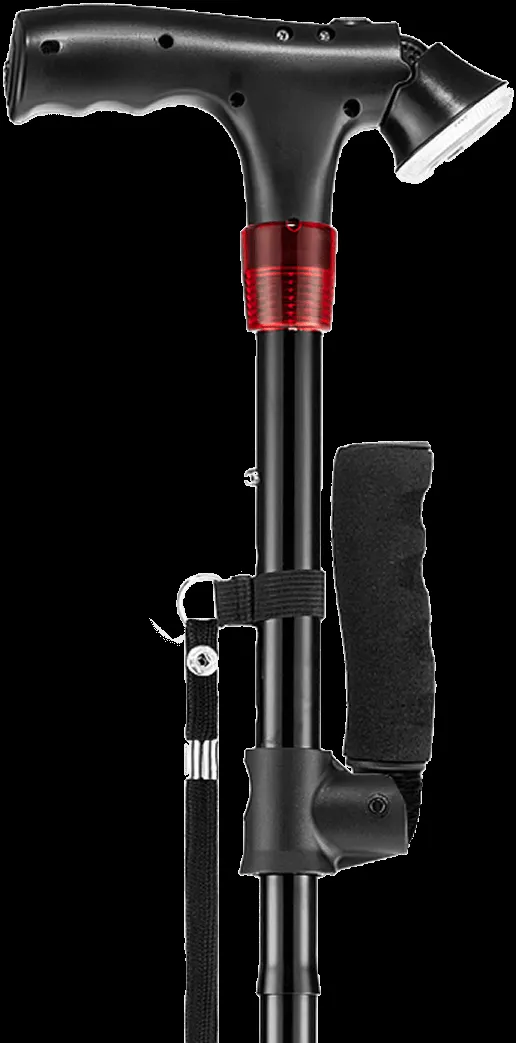
Self-standing folding cane with a 4-point pivoting base, a second handle for standing up, LED light and alarm. Supports up to 300 lb.
Check today's price →$59.99 · ships from Ohio · 30-day guarantee
What is a balance trainer?
"Balance trainer" can mean two things:
- Equipment: foam pads, wobble boards, balance discs and half-dome trainers that make standing less stable, so the body has to work harder.
- A program: a set of balance exercises, often designed by a physical therapist, done regularly to build strength, coordination and confidence.
For older adults, the program matters far more than the equipment. Most people get excellent results with nothing more than a counter, a sturdy chair and a few minutes a day.
Which balance tools are suitable for seniors?
| Tool | Good for | Caution |
|---|---|---|
| Kitchen counter or sturdy chair | Everyone; the safest starting point | Make sure the chair can't slide |
| Non-slip exercise mat | A stable, cushioned surface | Thin and flat, so it isn't a trip hazard |
| Foam balance pad | Progressing once floor exercises feel easy | Use with support within reach |
| Balance board / wobble board | Fit, active seniors under guidance | Higher fall risk; not for beginners |
| Stability ball | Seated core work | Can roll; not for standing |
| Self-standing cane (e.g. Ready Walker) | Walking practice and daily walks | Fit to the right height |
What are safe starter balance exercises?
Do these next to a counter or sturdy chair, holding on as much as needed:
- Weight shifts: stand with feet hip-width apart and slowly shift weight to one side, then the other. 10 times.
- Feet together stand: stand with feet together for 10–30 seconds. Repeat 3 times.
- Heel-to-toe stand: place one foot directly in front of the other, as if on a tightrope. Hold 10–30 seconds, then switch.
- Single-leg stand: hold the counter and lift one foot slightly. Hold up to 10 seconds per side.
- Heel raises: rise onto the toes and lower slowly. 10 times.
- Sit-to-stand: stand up from a sturdy chair without using the hands, if possible. 5–10 times.
The National Institute on Aging recommends combining balance, strength and endurance exercise. More routines are in balance exercises for seniors.
How do you progress safely?
- Hold on less: move from two hands, to one hand, to one fingertip, to hovering just above the counter.
- Hold longer: build up from 10 to 30 seconds.
- Add head turns while standing, slowly looking left and right.
- Close the eyes briefly, only with the counter within reach.
- Stand on a foam pad once all of the above feels easy.
Progress gradually, over weeks rather than days. If an exercise causes dizziness, pain or a near-fall, step back to an easier version and talk to the doctor.
Are balance boards safe for older adults?
For most beginners, no. Wobble boards and half-domes are designed to be unstable. For someone with weak ankles or poor balance, that can lead to exactly the fall you're trying to prevent. They can be useful later for active, fit seniors, especially under a physical therapist's supervision and with something solid to hold. Start with floor exercises and a foam pad instead.
When should you see a physical therapist?
- After a fall or a near-fall.
- When your parent feels unsteady, dizzy or afraid of falling.
- After surgery, a hospital stay or a new diagnosis.
- When walking has become slower or shuffling.
A physical therapist can test balance, design a personal program and recommend the right walking aid. Medicare may cover outpatient physical therapy when it's medically necessary. Our guide to occupational therapy for seniors covers related help at home.
How does a cane fit into balance training?
Balance exercises build steadiness over weeks and months. In the meantime, daily walking still has to be safe. A cane gives an extra point of contact with the ground and confidence on uneven surfaces. That confidence often means a parent keeps walking, which is itself excellent balance practice.
The Ready Walker is a folding cane with features that fit this stage well:
- Pivoting four-point base: it stands on its own when you let go.
- A second lower handle: helps push up from a chair or bed.
- Built-in LED light: for evening and nighttime walks.
- Quick height adjustment: no tools needed.
- Strong frame: supports up to 300 lbs.
It costs $59.99, ships from Ohio and has a 30-day money-back guarantee. Read our Ready Walker cane review and choosing a cane for balance problems.
A steady partner for daily walks
Ready Walker: self-standing folding cane with a four-point base, second handle and LED light. $59.99, ships from Ohio, 30-day money-back guarantee.
Check today's price →$59.99 · ships from Ohio · 30-day guarantee
How do you fit a cane correctly?
- Stand up straight in everyday shoes, arms relaxed at the sides.
- The top of the cane should reach the crease of the wrist.
- When holding it, the elbow should bend slightly, about 15–20 degrees.
- Hold the cane in the hand opposite the weaker leg.
Full steps in how to measure cane height and how to use a cane.
How do you set up the home for balance practice?
- Clear a space near the kitchen counter with no rugs or cords.
- Wear supportive shoes with non-slip soles, not socks or loose slippers.
- Practice when someone else is home, at least at first.
- Keep a phone within reach.
- Make sure the room is well lit.
Shoes matter more than most people think; see non-slip shoes for seniors.
What does a simple weekly routine look like?
| Day | Activity |
|---|---|
| Mon, Wed, Fri | 10–15 minutes of balance exercises at the counter |
| Tue, Thu | Light strength work: sit-to-stands, heel raises, wall push-ups |
| Daily | A walk, with a cane if needed, on safe, even ground |
| Weekend | A gentle class such as tai chi or chair yoga |
Tai chi in particular has good evidence for improving balance in older adults. Many senior centers and community programs offer free or low-cost classes. The Eldercare Locator can help you find local programs.
How do you keep a parent motivated?
- Tie exercises to daily habits, like doing heel raises while the kettle boils.
- Track progress: seconds on one leg this week versus last month.
- Exercise together on video calls.
- Celebrate small wins, like walking to the mailbox without stopping.
- Focus on goals that matter to them: gardening, visiting grandchildren, traveling.
What else affects balance?
Balance problems aren't only about muscles. Ask the doctor to check:
- Medications: some cause dizziness or drowsiness; see medications that can cause falls.
- Vision: outdated glasses or cataracts.
- Blood pressure drops when standing up.
- Inner-ear problems causing vertigo.
- Foot pain or numbness.
Treating these can improve balance as much as exercise does.
What mistakes should you avoid?
- Starting on a wobble board before mastering floor exercises.
- Practicing alone in the first weeks, or without anything solid within reach.
- Exercising in socks on smooth floors.
- Pushing through dizziness instead of stopping and sitting down.
- Doing too much at once, then quitting because of soreness.
- Using a cane at the wrong height, which can make posture and balance worse.
Short, regular sessions beat long, occasional ones. Five to ten minutes most days is a great start.
What if your parent is afraid of falling?
Fear of falling is common after a fall or near-fall, and it often leads to moving less, which weakens muscles and balance further. Gentle, supported exercise is one of the best ways to break that cycle. Start with the easiest movements at the counter, celebrate small improvements and let confidence grow with strength. A stable cane on walks can help too. Our guide to fear of falling in the elderly has more ideas.
How soon will your parent notice a difference?
Many people feel steadier within a few weeks of regular practice, especially when standing up from a chair or turning around. Bigger changes in strength and balance usually build over two to three months. Keep a simple log of how long your parent can hold each position; seeing the numbers improve is one of the best motivators there is.
The bottom line
For most older adults, the best balance trainer is a counter, a sturdy chair, good shoes and a few minutes of guided exercise most days. Add a foam pad later, and save wobble boards for fit seniors under a physical therapist's guidance. While balance improves, a stable, well-fitted cane keeps daily walks safe and confident. The Ready Walker's self-standing four-point base, second handle and LED light make it a strong choice at $59.99 with a 30-day guarantee. Talk to the doctor first, start easy and keep going. Steady progress adds up.
Our pick: the Ready Walker Cane
Self-standing folding cane with a 4-point pivoting base, a second handle for standing up, LED light and alarm. Supports up to 300 lb.
Check today's price →$59.99 · ships from Ohio · 30-day guarantee
Frequently asked questions
What is the best balance trainer for seniors?
For most, a kitchen counter or sturdy chair plus guided balance exercises; foam pads come later.
Are balance boards safe for elderly people?
Not for beginners. They're designed to be unstable and are best used by fit seniors under a physical therapist's guidance.
What balance exercises are good for seniors?
Weight shifts, standing with feet together, heel-to-toe stands, single-leg stands, heel raises and sit-to-stands, next to a counter.
How often should seniors do balance exercises?
A few minutes most days, plus regular walking and some strength work.
Can a cane help with balance?
Yes. A well-fitted cane adds a point of contact and confidence on walks while balance improves.
When should a senior see a physical therapist for balance?
After a fall or near-fall, when they feel unsteady or afraid of falling, or after surgery or a hospital stay.

Laura Bennett
Laura Bennett is the pen name of the Aging Parents at Home editorial team at Iqueda Media LLC. We write for adult children who want to help their aging parents stay safe and independent at home. The team researches daily-living and safety products, reads the official guidance from public health and safety organizations, and checks prices, policies and buyer feedback. We are not doctors, nurses or physical therapists. Her guides are built on official public health and safety guidance, manufacturer information, checkout and return policies, and buyer feedback, and are updated when offers change. More about Laura.