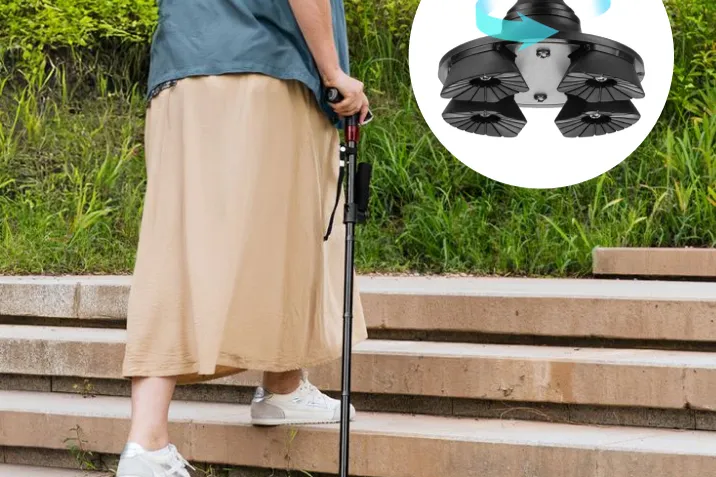
"How to use a cane" is searched more than 12,000 times a month in the US, and for good reason. A cane can make walking safer and more confident, but many people hold it in the wrong hand, set it at the wrong height or use it in a way that throws off their balance. A cane used incorrectly can actually make falls more likely.
In this guide we cover the basics recommended by orthopedic experts: which hand to use, the correct height, how to walk, how to handle stairs, how to sit and stand, and how to choose the right cane.
General information, not medical advice. A physical therapist can fit a cane and teach the safest technique for your parent's specific needs.
Which hand should you hold a cane in?
This is the most common mistake. According to the American Academy of Orthopaedic Surgeons (AAOS OrthoInfo), you hold the cane in the hand opposite the side that needs support. If the right leg is weak or injured, the cane goes in the left hand.
Why? When you walk, your opposite arm naturally swings forward with each leg. Holding the cane on the strong side lets it move with the weaker leg, sharing the load and keeping your body balanced, just like natural walking.
How tall should a cane be?
AAOS recommends that when you stand up straight, the top of the cane should reach the crease of your wrist, and your elbow should be slightly bent when you hold it.
- Too tall: pushes the shoulder up and makes the arm tired.
- Too short: makes you lean forward and bend, which hurts balance.
Measure while wearing the shoes your parent usually walks in. Adjustable canes make this easy: most adjust in seconds without tools.
How do you walk with a cane?
- Stand up straight with the cane in the hand opposite the weaker leg.
- Move the cane forward about one small stride.
- Step forward with the weaker leg, so it lands about level with the cane.
- Finish the step with the stronger leg, stepping past the cane.
- Repeat at a slow, comfortable pace. Look ahead, not at your feet.
The cane and the weaker leg move together; the strong leg carries the next step. Take shorter steps on slippery or uneven ground.
How do you use a cane on stairs?
The easiest way to remember it: "Up with the good, down with the bad."
Going up
- Hold the handrail with your free hand.
- Step up with the stronger leg first.
- Then bring up the weaker leg and the cane.
Going down
- Hold the handrail.
- Put the cane on the lower step first.
- Step down with the weaker leg.
- Then bring down the stronger leg, which carries your weight.
These steps are from AAOS. Always use a handrail when one is available, and if there's no handrail, consider asking for help or using the stairs less often. Handrails on both sides of the stairs are one of the best fall-prevention upgrades; see our fall prevention guide.
How do you sit down and stand up with a cane?
Sitting down
- Back up until you feel the chair against the back of your legs.
- Reach back for the armrests with both hands (lean the cane nearby or use a cane that stands on its own).
- Lower yourself slowly.
Standing up
- Scoot to the front of the chair.
- Push up from the armrests with both hands.
- Stand fully and get your balance before taking the cane and walking.
Standing up is one of the riskiest moments. A cane with a second, lower handle gives an extra push-off point, which many people find helpful.
What are the most common cane mistakes?
- Holding it on the wrong side.
- Wrong height, usually too tall or too short.
- Putting the cane too far ahead, which makes you lean forward.
- Worn rubber tips that slip. Check and replace them.
- Leaning on the cane like a walker. If you need that much support, a walker may be safer.
- Hooking it on furniture where it falls over, then bending down to pick it up.
- Rushing, especially to the bathroom at night.
What types of canes are there?
| Type | Best for | Notes |
|---|---|---|
| Single-point cane | Mild balance support | Light; falls over when let go |
| Folding cane | Travel and occasional use | Stores in a bag |
| Quad cane (four feet) | More stability | Stands on its own; can be heavier |
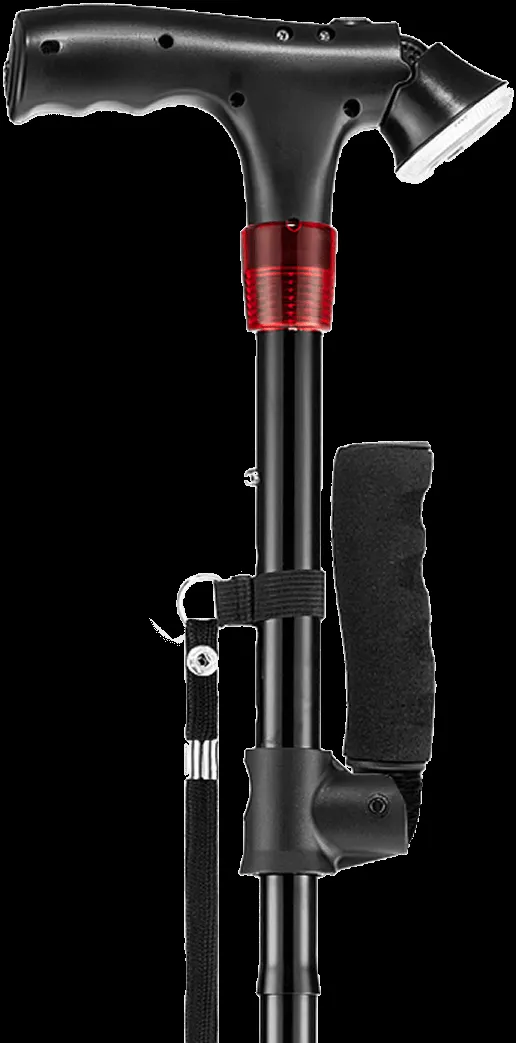
| Self-standing smart cane (Ready Walker) | Extra stability plus everyday features | Pivoting four-point base, second handle, LED light, alarm, folds |
| Walker or rollator | Significant unsteadiness | More support than any cane |
Which cane do we recommend?
If your parent needs light support and wants something that helps in the moments that matter most, we like the Ready Walker Cane. According to Ready Walker:
- Its pivoting four-point base adapts to stairs, curbs, grass and cracked pavement and lets the cane stand on its own.
- A second, lower handle helps you push up from a chair, bed or toilet.
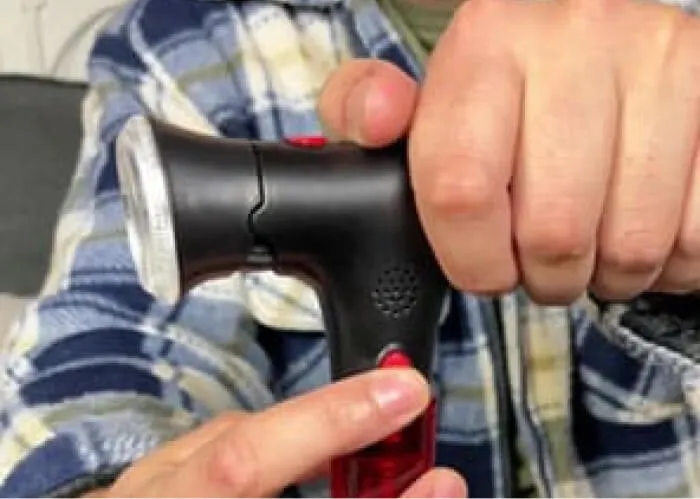
- A built-in LED light lights the way at night.
- A built-in alarm attracts attention nearby.
- It's height adjustable without tools, so it's easy to set to the wrist crease, and it folds for travel.
- It's made of aircraft-grade aluminum and supports up to 300 lbs.
It costs $59.99, ships from Ohio and comes with a 30-day money-back guarantee. Read our full Ready Walker cane review.
Our pick: the Ready Walker Cane
Self-standing folding cane with a 4-point pivoting base, a second handle for standing up, LED light and alarm. Supports up to 300 lb.
Check today's price →$59.99 · ships from Ohio · 30-day guarantee
How do you keep a cane safe?
- Check the rubber tips or base pads regularly for wear.
- Make sure height adjustment buttons are fully locked.
- Keep the cane within reach of the bed and favorite chair.
- Wipe the base after walking in rain or snow.
- Recheck the height if shoes change.
How do you help a parent accept a cane?
Many older adults resist a cane because it feels like a sign of getting old. Try focusing on what it allows rather than what it replaces: walks in the park, trips to the store, visits with friends. Let them choose a style they like, and practice together at home first. A physical therapist's recommendation can also help, since it comes from an expert rather than family.
If they're also struggling with daily tasks like opening jars, small tools can help there too; see how to open a tight jar. And if they walk alone often, read personal safety alarms for seniors.
When should you see a physical therapist?
- After a fall or near-fall.
- After surgery or a hospital stay.
- If walking is getting slower or more painful.
- If you're unsure whether a cane or walker is right.
- To learn strength and balance exercises, which the National Institute on Aging says help prevent falls.
How do you use a cane outdoors safely?
- Take shorter steps on uneven ground, grass and gravel.
- Watch for curbs: step up with the stronger leg, down with the cane and weaker leg, just like stairs.
- Be careful on wet leaves, ice and snow. A wider base helps, but slow down and avoid icy surfaces when possible.
- Carry a light for dusk and dark paths, or choose a cane with a built-in light.
- Rest when tired; fatigue makes falls more likely.
How do you open doors with a cane?
Doors are tricky because you need a free hand. With a standard cane, hook it over your forearm or lean it against the wall, open the door, then take the cane back before walking through. A self-standing cane makes this easier because you can let go and it stays upright. Step through slowly with the weaker leg and the cane together.
How do you use a cane safely at night?
Many falls happen on the way to the bathroom at night. Keep the cane within reach of the bed, sit on the edge of the bed for a moment before standing, and turn on a light or use a cane with a built-in LED. Motion-sensor night lights along the path help too. For more, see our fall prevention guide.
Why does practice make it safer?
When your parent first starts using a cane, practice together at home: on flat floors, around furniture, through doorways and on a few stairs with the handrail. Walk beside them on their weaker side for the first few times. Once the pattern feels natural, they'll be more confident outdoors.
If anything feels awkward or painful, stop and check the height and hand again, or ask a physical therapist to watch your parent walk. Small corrections make a big difference.
A few minutes of practice now can prevent a lot of worry later.
Confidence grows with every short, safe walk.
Related guides: walker vs cane, the best cane for seniors and quad vs single-point canes.
The bottom line
Using a cane correctly is simple once you know the rules: hold it in the hand opposite the weaker leg, set it to wrist-crease height, move it with the weaker leg, and remember "up with the good, down with the bad" on stairs. The right cane, fitted and used well, can make walking safer and help your parent stay active and independent.
Our pick for light, everyday support is the Ready Walker Cane. Check today's price on the official site.
Sources
- American Academy of Orthopaedic Surgeons (OrthoInfo). How to Use Crutches, Canes, and Walkers.
- National Institute on Aging. Falls and Fractures in Older Adults: Causes and Prevention.
- Official Ready Walker product page, checked October 2026.
Frequently asked questions
Which hand do you hold a cane in?
In the hand opposite the side that needs support. AAOS explains that if your right leg is weak or injured, you hold the cane in your left hand.
How tall should a cane be?
When standing up straight, the top of the cane should reach the crease of the wrist, with the elbow slightly bent when holding it, according to AAOS.
How do you walk with a cane?
Set the cane about one small stride ahead, step with the weaker leg, then finish the step with the stronger leg.
How do you go up stairs with a cane?
Hold the handrail with your free hand, step up with the stronger leg first, then bring up the weaker leg and the cane. Remember: up with the good, down with the bad.
How do you go down stairs with a cane?
Put the cane on the step first, then the weaker leg, then the stronger leg.
What kind of cane is most stable?
Canes with a wider, multi-point base are more stable than single-tip canes. A self-standing cane like Ready Walker also stays upright when you let go.

Laura Bennett
Laura Bennett is the pen name of the Aging Parents at Home editorial team at Iqueda Media LLC. We write for adult children who want to help their aging parents stay safe and independent at home. The team researches daily-living and safety products, reads the official guidance from public health and safety organizations, and checks prices, policies and buyer feedback. We are not doctors, nurses or physical therapists. Her guides are built on official public health and safety guidance, manufacturer information, checkout and return policies, and buyer feedback, and are updated when offers change. More about Laura.