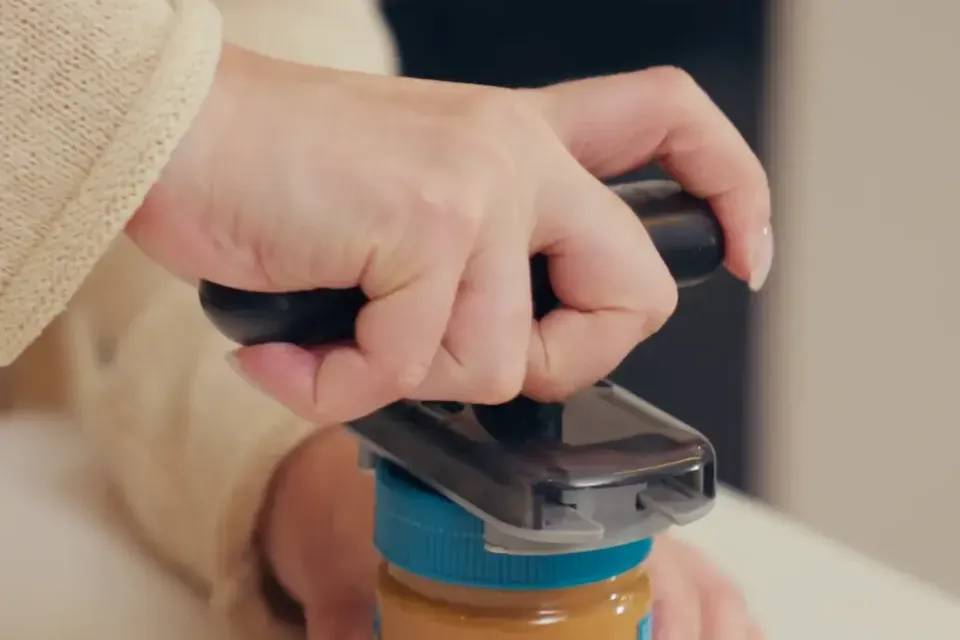
"How to open a jar" is searched about 8,000 times a month in the US. Everyone has fought a stubborn pickle jar, but for older adults with arthritis or weaker hands, a tight lid can mean skipping a meal, waiting for help or using a knife in a way that isn't safe.
In this guide we cover nine easy tricks that actually work, why jars get stuck in the first place, what to avoid, and the easiest options for hands that hurt.
Why are some jars so hard to open?
- Vacuum seal. Many jars are sealed while hot. As they cool, a vacuum forms inside and air pressure pushes the lid down tight. That's the "pop" you hear when it finally opens.
- Sticky residue. Sugar, jam, honey or sauce on the threads can glue the lid shut.
- Tightened too hard after the last use.
- Weaker grip. Grip strength declines with age, and arthritis makes twisting painful.
Most tricks work by doing one of two things: releasing the vacuum, or giving you more grip and leverage.
Which 9 easy tricks open a tight jar?
- Break the seal with a spoon. Slide the tip of a spoon (not a knife) under the edge of the lid and gently lever it up until you hear a pop. Then turn.
- Use a rubber grip. A rubber jar pad, a dish glove or even a wide rubber band around the lid gives you much more grip.
- Warm the lid. Run warm (not boiling) water over the metal lid for 30 to 60 seconds. Metal expands faster than glass, which loosens the lid. Dry it before turning.
- Tap the lid edge. Tap around the edge of the lid with a wooden spoon to loosen sticky residue and break the seal.
- Hold the jar low. Hold the jar against your body or in a lower position, so you use your arm and shoulder, not just your wrist.
- Turn the jar, not the lid. Hold the lid still with a grip pad and turn the jar body instead; some people find it easier.
- Use a towel. A dry kitchen towel over the lid gives extra grip.
- Ask the right tool to do it. A jar opener that grips the lid and gives you a longer handle multiplies your force.
- Prevent it next time. Wipe the threads clean before closing, and don't over-tighten.
What should you avoid?
- Prying with a knife. Knives slip and cause cuts. Use a spoon.
- Banging the jar on the counter. Glass can crack or shatter.
- Boiling water on the glass. Sudden temperature changes can crack it.
- Using your teeth. A common way to chip a tooth.
- Forcing through pain. The Arthritis Foundation's advice is simple: if it hurts, change the way you're doing it.
What's the easiest way to open jars with arthritis?
For people with hand arthritis, twisting a lid puts pressure on the small joints of the fingers, thumb and wrist, exactly where it hurts. The Arthritis Foundation notes that opening jars, caps and similar items can be difficult and painful with hand arthritis, and recommends assistive devices like jar openers. Its guide to self-help arthritis devices includes jar openers among the simple tools that make daily tasks easier.
The principle is to use leverage and larger muscles instead of finger strength. That's what makes a lever-style opener so much easier than a rubber grip.
Which jar opener types are there?
| Type | How it works | For weak hands |
|---|---|---|
| Rubber grip pad | More friction | Helps a little; still twisting |
| Under-cabinet gripper | Lid wedged in a V-shape; turn the jar with both hands | Good; needs installing |
| Electric opener | Motor turns the lid | Easy, but bulky and often size-limited |
| Adjustable lever opener (Cap Crack) | Clamps the lid, long handle gives leverage | Very easy; works on many sizes |
For a deeper comparison, read jar openers for seniors: which type is easiest.
Which jar opener do we recommend?
Cap Crack is an adjustable, manual jar and bottle opener designed for people with hand and wrist pain. According to Cap Crack:
- Adjustable to open any size jar or bottle, from water bottles to large sauce jars.
- Ergonomic handle that fits the palm and gives leverage, so you use less effort for more torque.
- No batteries, cords or electronics to break.
- Durable plastic build that won't rust or crack and weighs under a pound.
- Easy to use for adults of any age, with no complicated instructions.
Buyers with arthritis describe exactly what families hope for: one 68-year-old with arthritis in her thumbs says she can open her water bottles again "without calling my husband every time." It costs $29.99, or $19.99 each in the 5-pack, with a 90-day money-back guarantee. Read the full Cap Crack review.
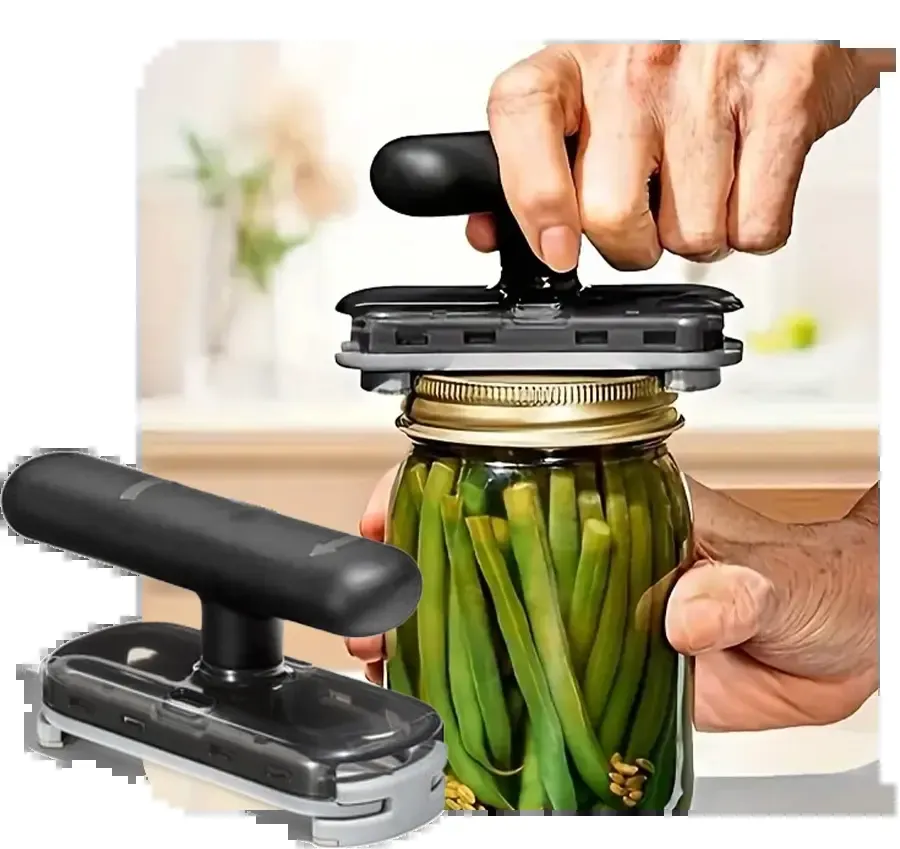
Our pick: the Cap Crack Jar and Bottle Opener
Adjustable, no-battery jar and bottle opener with an ergonomic handle that gives leverage, made for hands with arthritis or weak grip.
Check today's price →$29.99, or from $19.99 each in bundles
How do you open tight bottle caps?
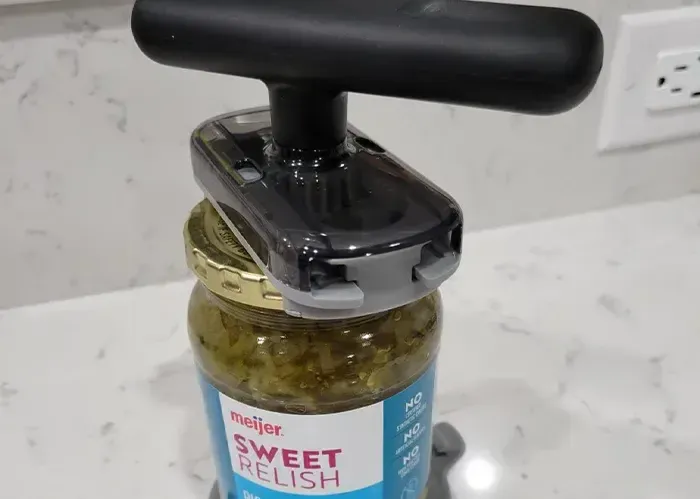
Plastic bottle caps on water, soda and juice can be just as hard for weak hands. A rubber grip helps, but an adjustable opener that also fits bottles, like Cap Crack, is easier. Some pharmacies can also provide medication bottles with easy-open caps if you ask; keep in mind those caps aren't child-resistant, so store them carefully if children visit.
Why do small tools matter so much?
Opening a jar might seem minor, but it's part of what lets a parent cook their own meals and live independently. When simple tasks become hard, many older adults quietly stop doing them, and that's when families start to worry. The National Institute on Aging notes that most people want to stay in their own homes and stay independent as long as possible. A $20 to $30 tool that keeps the kitchen accessible is one of the easiest ways to support that.
Other small changes help too: keeping everyday items on low shelves, lever-style door handles, easy-grip utensils and a safer home overall. See our fall prevention guide.
What other kitchen tips help weak or painful hands?
- Use larger, padded handles on utensils and tools.
- Choose lightweight pots and pans with two handles.
- Slide heavy items instead of lifting them.
- Store jars with the lid just snug, not tight.
- Pre-open new jars when you visit, and leave the lids lightly closed.
- Ask an occupational therapist for more ideas; the Arthritis Foundation notes they can recommend devices and techniques.
What about medicine bottles?
Child-resistant medicine caps can be especially hard for weak hands. Ask the pharmacist about easy-open caps; just remember to store those bottles safely if grandchildren visit. A pill organizer filled once a week by a family member can also reduce daily struggles with caps.
When should you look for more help?
If your parent is struggling with jars, it's worth noticing other daily tasks too: buttons, door handles, pots and pans, getting up from chairs, walking safely around the house. Small tools solve many of these problems, and an occupational therapist can suggest more. For mobility and safety, see how to use a cane correctly and our Ready Walker review.
Why do these tricks work?
Most tricks either release the vacuum or increase your leverage. Prying the lid edge with a spoon lets a little air in, so the pressure difference that holds the lid down disappears. Warm water makes the metal lid expand slightly more than the glass. A rubber grip increases friction so your hand doesn't slip. And a lever opener increases the distance between your hand and the center of the lid, so the same effort produces much more turning force. Understanding this helps you pick the right trick for each jar.
How can you make jars easier before they reach your parent?
When you visit, open new jars and bottles and close them gently, so they're easy to reopen. Choose products with easy-open or flip-top lids when shopping for your parent, and transfer foods into containers with easy lids. These small habits, together with the right tool, remove most daily struggles with lids.
How do you turn it into an easy habit?
Keep the opener next to the jars, put a non-slip mat on the counter where jars are opened and teach the spoon trick to the whole family. Once these become habits, a stubborn lid stops being a problem.
How do you organize the pantry for easier access?
Store the jars and bottles used most often at waist height, label shelves clearly and keep the opener on the same shelf. Fewer reaches and fewer searches mean fewer strains and less frustration, which matters when hands and shoulders are already sore.
A tidy, well-lit pantry also lowers the risk of tripping or reaching too high, two common causes of falls at home.
Small changes add up.
The bottom line
Most tight jars give up once you break the vacuum seal and get a good grip: a spoon under the lid edge, warm water on the lid and a rubber pad usually do it. For arthritis or weak hands, the easiest solution is a lever-style opener that does the hard work with leverage instead of finger strength.
Our pick is Cap Crack: adjustable, no batteries and easy on painful hands. Check today's Cap Crack price.
Sources
- Arthritis Foundation. Expert Q&A: Tips for Opening Devices.
- Arthritis Foundation. Self-Help Arthritis Devices.
- National Institute on Aging. Aging in Place: Growing Older at Home.
- Official Cap Crack product page and checkout, checked October 2026.
Frequently asked questions
What is the easiest way to open a tight jar?
Break the vacuum seal by gently prying the lid edge with a spoon, then grip the lid with a rubber pad. For arthritis or weak hands, an adjustable jar opener that gives you leverage is easiest.
Does running hot water on a jar lid help?
Yes. Warm water makes the metal lid expand slightly, which can loosen it. Keep the glass itself out of very hot water and dry the lid before turning.
Why are some jars so hard to open?
Many jars are vacuum-sealed, so air pressure holds the lid down. Dried food or sugar around the rim can also glue it shut.
How can seniors open jars with arthritis?
The Arthritis Foundation suggests assistive devices like jar openers that spread the force across larger joints instead of twisting with the fingers and wrist.
Is tapping a jar on the counter safe?
Gently tapping the lid edge can break the seal, but don't hit glass hard on a counter. Tap the lid with a wooden spoon instead.
What jar opener works on all sizes?
Our pick is Cap Crack, an adjustable, no-battery opener that fits small bottles to large jars, from $19.99 each in bundles.

Laura Bennett
Laura Bennett is the pen name of the Aging Parents at Home editorial team at Iqueda Media LLC. We write for adult children who want to help their aging parents stay safe and independent at home. The team researches daily-living and safety products, reads the official guidance from public health and safety organizations, and checks prices, policies and buyer feedback. We are not doctors, nurses or physical therapists. Her guides are built on official public health and safety guidance, manufacturer information, checkout and return policies, and buyer feedback, and are updated when offers change. More about Laura.