
- Pull the tamper ring with a tool, not fingers: hook it with a spoon handle or pull it with kitchen pliers.
- Grip the cap with a rubber pad or a jar-opening gripper for more friction.
- Use an adjustable opener that grips the cap and gives leverage.
- Hold the jug steady between your knees or against the counter so both hands aren't straining.
- Leave the cap loose after the first opening if no one else will spill it, or transfer milk to an easy-pour pitcher.
- Buy smaller containers (half-gallon or quart) that are lighter to lift.
For people with arthritis in the hands, the plastic milk jug can be a surprisingly hard opponent. First there's the tamper ring, a thin plastic tab that has to be pulled off. Then there's the cap, small and slippery, especially with cold, wet hands straight from the fridge. Then there's the weight of a full gallon. Many older adults end up asking for help, stabbing the ring with a knife or just leaving the milk alone. This guide explains why milk jugs are hard with arthritis, simple techniques and tools for the tamper ring and cap, how to pour safely, what to buy instead and how to make the whole fridge easier to manage.
In this guide:
- why milk jugs are hard with arthritis
- removing the tamper ring
- opening the cap
- tools that help
- pouring and lifting
- easier containers
General information for families, not medical advice. If hand pain, swelling or weakness is getting worse, ask your parent's doctor or an occupational therapist for advice. Never use a knife to cut tamper rings; kitchen cuts are a common injury. Call 911 in an emergency.
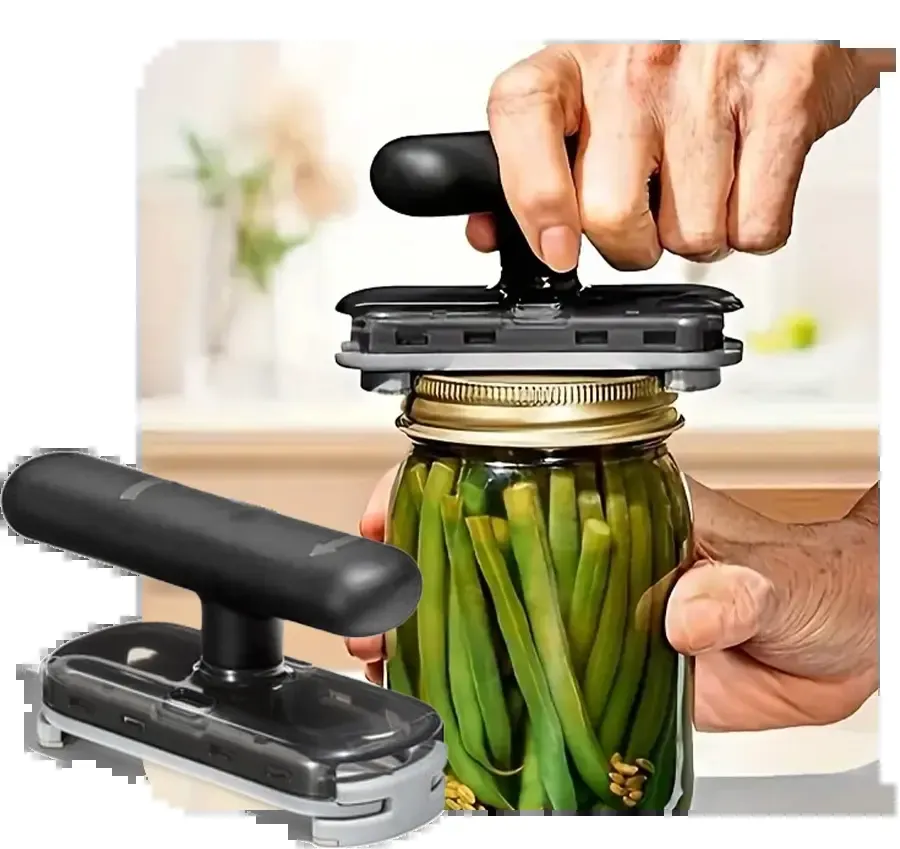
Our pick: the Cap Crack Jar and Bottle Opener
Adjustable, no-battery jar and bottle opener with an ergonomic handle that gives leverage, made for hands with arthritis or weak grip.
Check today's price →$29.99, or from $19.99 each in bundles
Why are milk jugs so hard to open?
- Small caps need a tight pinch grip, which is often the first thing arthritis affects
- Tamper rings need strong pulling with the fingertips
- Cold, wet surfaces are slippery
- Heavy jugs: a full gallon weighs over 8 pounds
- Twisting strains sore wrists and thumb joints
Hand arthritis is common; the CDC's arthritis facts show how many adults it affects. For a broader look, see weak hands in the elderly.
How do you remove the tamper ring?
- Look for the pull tab on the ring.
- Hook it with a tool: the handle of a spoon, a bottle opener or a key works well.
- Pull with kitchen pliers or a rubber-coated gripper if the tab is stiff.
- Peel it around the cap gently.
- Never use a knife, which can slip.
Some people ask the store to remove the ring at checkout, or have a family member remove rings when unpacking groceries.
How do you open the cap more easily?
- Dry the cap and your hands first.
- Use a rubber jar gripper or a piece of shelf liner for extra grip.
- Use your whole palm on top of the cap rather than pinching.
- Stabilize the jug on the counter, against your body or between your knees.
- Use an adjustable opener that grips the cap and gives leverage.
The Arthritis Foundation shares tips for opening containers and using devices that protect the joints. See also how to open a jar with arthritis.
An easier way to open milk and juice caps
Cap Crack is an adjustable, no-battery opener with an ergonomic handle that grips caps and gives leverage, so less hand strength is needed. $29.99, or from $19.99 each in bundles, with a 90-day guarantee.
Check today's price →$29.99, or from $19.99 each in bundles
Which tools help most?
| Tool | Helps with |
|---|---|
| Rubber gripper pad | Slippery caps |
| Adjustable cap and jar opener | Tight caps of many sizes |
| Multi-opener with ring puller | Tamper rings, pull tabs and bottles |
| Kitchen pliers | Stubborn tamper rings |
| Jug handle or pouring aid | Lifting and pouring |
| Easy-pour pitcher | Daily pouring without the jug |
More ideas in kitchen gadgets for arthritis and jar openers for seniors.
How do you lift and pour safely?
- slide the jug to the edge of the counter rather than lifting it high
- pour with two hands: one on the handle, one supporting the bottom
- keep the glass on the counter, not in your hand
- fill a smaller pitcher once and use it through the day
- store milk on a fridge shelf at waist height, not low or high
Which containers are easier?
- Half-gallon or quart jugs or cartons: lighter
- Cartons with flip spouts: no tamper ring, but test whether the cap is easier
- Shelf-stable small cartons with straws or easy caps
- Milk delivered in glass bottles with simple caps in some areas
See easy-open containers for seniors.
What other containers cause trouble?
- juice bottles and water bottles
- pill bottles; see how to open a pill bottle
- cans; see how to open cans with arthritis
- jars of sauce, pickles and jam
- pull-tab yogurt and creamer cups
How can your parent protect their hands?
- use larger joints, like the palm and forearm, instead of fingers
- avoid tight pinching and twisting when a tool can do it
- warm stiff hands with warm water before tasks
- do gentle hand exercises the doctor or therapist recommends; see hand exercises for arthritis
- take breaks during kitchen tasks
How do you make the kitchen more arthritis-friendly?
- keep a cap opener in a set spot near the fridge
- store heavy items at waist height
- use lightweight cups and plates
- choose lever-style faucets
- pre-open containers when family visits
See kitchen safety for seniors.
Where does Cap Crack fit in?
Cap Crack is an adjustable, no-battery opener with an ergonomic handle. It grips caps and lids of different sizes, including milk and juice caps, bottle caps and jar lids, and gives leverage so less hand strength is needed. Keep it on the fridge door or near the coffee maker so it's always within reach. It's $29.99, or from $19.99 each in bundles, with a 90-day guarantee. Read our Cap Crack review.
Why is it harder in the morning?
Many people with arthritis have the most stiffness first thing in the morning, which is also when they reach for milk for coffee or cereal. A few tricks help: run warm water over the hands for a minute, do a few gentle finger stretches, and have milk pre-poured into a small pitcher the night before. Some people keep a small bottle with an easy flip cap in the fridge just for the morning coffee. More about morning stiffness in arthritis in cold weather.
How can family help without taking over?
- remove tamper rings when unpacking groceries
- loosen caps slightly before putting jugs in the fridge, if your parent prefers
- buy the right tools and leave them where they're used
- switch to lighter containers on the shopping list
- ask your parent which tasks are hardest, rather than guessing
Small changes let your parent stay independent in the kitchen. See how to help an elderly parent with arthritis.
When should you ask an occupational therapist?
If opening containers, cooking and other daily tasks are getting harder, an occupational therapist can assess hand strength and suggest tools, techniques and exercises. They can also recommend splints that support painful joints. Ask the doctor for a referral; therapy may be covered by insurance in some cases. See occupational therapy for seniors and daily living aids for seniors.
Do cold hands make it worse?
Yes. Cold makes joints stiffer and fingers less nimble, and the jug comes straight from the fridge. Hold a warm mug for a minute first, or wear a thin rubber-dotted glove to open cold containers. Keeping the kitchen warm in winter also helps. The Arthritis Foundation's guide to self-help devices covers more tools that reduce strain on the hands.
Where should milk be stored in the fridge?
Store milk on a middle shelf at waist height, toward the front, so your parent doesn't have to bend, reach high or pull a heavy jug from the back. The door is easy to reach but is the warmest part of the fridge, so it's better for smaller bottles used quickly. Keep the shelf uncluttered so the jug slides out easily. A small lazy Susan on the shelf can bring items forward without lifting.
Can grocery delivery help?
Yes. Delivery services bring heavy items like milk, juice and water right into the kitchen, saving your parent from carrying them from the car. Many let you choose smaller sizes and easy-open containers. Family can set up a standing order with arthritis-friendly choices, so the right products arrive every week without extra effort. It also cuts down on trips in bad weather.
How do you choose an easy-pour pitcher?
- a lightweight material, like plastic or thin glass
- a large, comfortable handle that fits the whole hand
- a lid that stays on without twisting
- a size of about 1 quart, so it isn't heavy when full
- dishwasher-safe for easy cleaning
Fill it once a day from the jug, ideally with help, and your parent can pour easily the rest of the day.
The bottom line
To open a milk jug with arthritis:
- pull the tamper ring with a spoon handle or pliers, never a knife
- dry the cap and use a rubber gripper or adjustable opener
- stabilize the jug and use the palm rather than a pinch
- pour with two hands and use a smaller pitcher
- buy lighter containers and keep a cap opener near the fridge
Cap Crack is an adjustable, no-battery opener, $29.99 or from $19.99 each in bundles, with a 90-day guarantee.
Our pick: the Cap Crack Jar and Bottle Opener
Adjustable, no-battery jar and bottle opener with an ergonomic handle that gives leverage, made for hands with arthritis or weak grip.
Check today's price →$29.99, or from $19.99 each in bundles
Frequently asked questions
How do you remove a milk jug tamper ring with weak hands?
Hook the pull tab with a spoon handle, bottle opener or key, or pull it with kitchen pliers. Never use a knife.
What helps open tight caps with arthritis?
A rubber gripper pad for friction or an adjustable cap opener that gives leverage.
How can seniors pour from a gallon of milk safely?
Slide it to the counter edge, pour with two hands and keep the glass on the counter, or use a smaller pitcher.
Are milk cartons easier than jugs?
Smaller half-gallon or quart containers are lighter, and some flip-spout cartons have no tamper ring.
Why are small caps so hard with arthritis?
They require a tight pinch grip and twisting, which strain the thumb and finger joints.
Who can recommend tools for hand arthritis?
An occupational therapist can test grip strength and suggest tools that protect the joints.

Laura Bennett
Laura Bennett is the pen name of the Aging Parents at Home editorial team at Iqueda Media LLC. We write for adult children who want to help their aging parents stay safe and independent at home. The team researches daily-living and safety products, reads the official guidance from public health and safety organizations, and checks prices, policies and buyer feedback. We are not doctors, nurses or physical therapists. Her guides are built on official public health and safety guidance, manufacturer information, checkout and return policies, and buyer feedback, and are updated when offers change. More about Laura.