
- Opening things: adjustable jar and bottle openers like Cap Crack, and electric can openers.
- Reaching and dressing: reacher-grabbers, sock aids, long-handled shoehorns and button hooks.
- Eating: built-up utensils.
- Bathing: shower chairs and long-handled sponges.
- Toileting: raised seats and grab bars.
- Getting around: a well-fitted cane or walker.
General information, not medical advice. An occupational therapist can assess which aids will help your parent most.
Occupational therapists call them "activities of daily living": eating, dressing, bathing, using the toilet, moving around the home and preparing food. When arthritis, weakness, balance problems or limited flexibility make these tasks hard, older adults often start skipping them, asking for help they'd rather not need or taking risks like climbing on chairs.
Daily living aids, also called assistive devices or adaptive equipment, are the bridge. Most are inexpensive, easy to use and available online or at pharmacies. This guide goes room by room and task by task through the aids that make the biggest difference.
What are daily living aids?
Daily living aids are tools that make up for reduced strength, reach, grip, flexibility or balance. They don't treat the underlying condition. They change the task so it's easier and safer. A reacher means no bending, a jar opener means no hard gripping and a shower chair means no standing on a wet floor.
The National Institute on Aging notes that home modifications and assistive devices can help older adults stay safe and independent in their own homes longer.
Which aids help most in the kitchen?
- Adjustable jar and bottle opener: uses leverage instead of grip. Our pick is Cap Crack.
- Electric or hands-free can opener.
- Built-up or large-handled utensils for eating and cooking.
- Rocker knife or right-angle knife for safer cutting.
- Non-slip mats to keep bowls and plates still.
- Lightweight cookware with two handles.
- Plate guards and scoop dishes for one-handed eating.
See our full guide to kitchen gadgets for arthritis.
Why is a jar opener one of the most useful aids?
Because lids come up all day: coffee, jam, pickles, sauces, supplements, water and soda bottles. When a parent can't open them, they either go without or wait for help. Neither is good for independence or nutrition.
Cap Crack is an adjustable jar and bottle opener with an ergonomic handle. According to the brand, it fits lids of many sizes. Your parent places it over the lid and turns the handle, and the leverage does the work, so stiff or weak fingers don't have to grip hard. It's one of the most-used aids in many kitchens, and at about $20 to $30 it's an easy first step. Read our Cap Crack review, where we rate it 4.6/5.

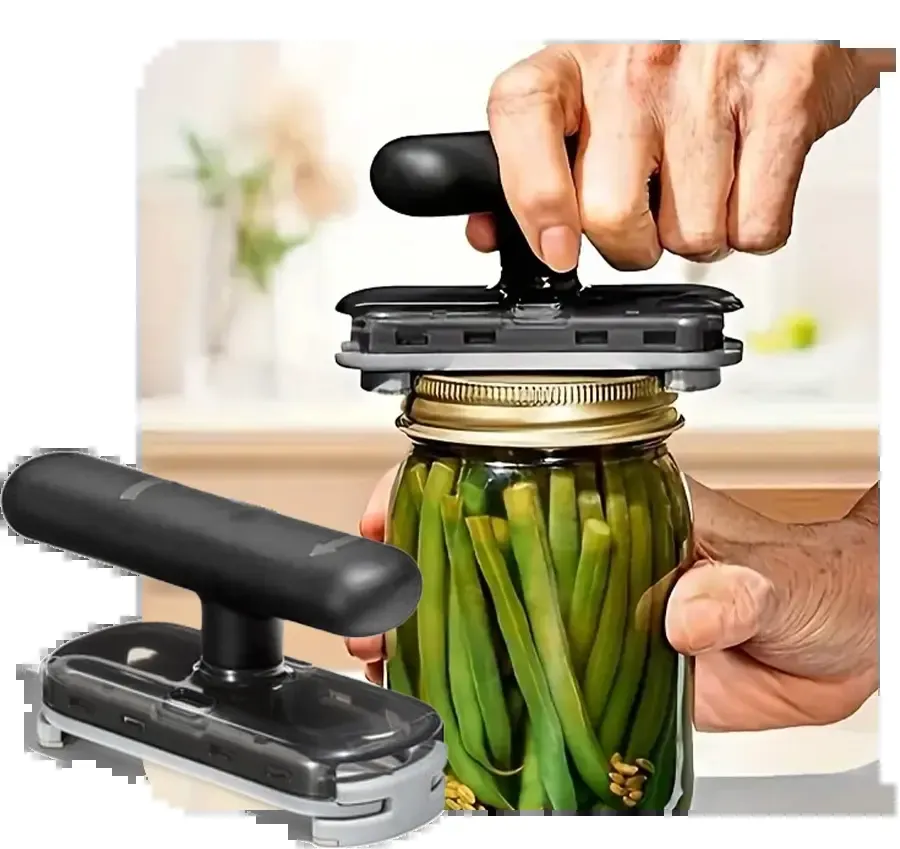
Start with the aid used most every day
Cap Crack fits jars and bottles of many sizes and does the gripping for you. From $19.99 each in multi-packs, with a 90-day guarantee.
Check today's price →$29.99, or from $19.99 each in bundles
What aids make dressing easier?
- Sock aid: a flexible sleeve that helps pull on socks without bending.
- Long-handled shoehorn for shoes without bending.
- Elastic or coiled shoelaces turn lace-ups into slip-ons.
- Button hook and zipper pull for stiff fingers.
- Dressing stick to push and pull clothing on and off.
- Reacher-grabber to pick up clothes from the floor or closet.
Choosing clothes with front openings, Velcro closures, elastic waistbands and slip-on shoes with good soles also reduces the struggle. Sitting down to dress is safer than standing on one leg.
What aids make the bathroom safer?
- Grab bars by the toilet and in the shower, anchored into studs.
- Raised toilet seat or toilet safety frame.
- Shower chair or tub transfer bench.
- Handheld shower head.
- Long-handled sponge and a toe washer.
- Non-slip mats inside and outside the tub.
- Lever-style faucet handles.
- Electric toothbrush with a thick handle.
See our complete bathroom safety checklist.
What mobility aids help around the home?
- A properly sized cane or walker, depending on how much support is needed. See walker vs cane.
- Furniture risers to raise low chairs and beds.
- Lift-assist cushions or a lift chair for getting up.
- Bed rails or bed assist handles for getting in and out of bed.
- Swivel seat cushions for getting in and out of the car.
- Motion-sensor night lights for safer nighttime trips.
A cane with a second, lower handle, like the Ready Walker, also helps with standing up from chairs and beds. See our guide to the best cane for seniors.
What aids help in the bedroom?
The bedroom is where the day starts and ends, often with the riskiest moments: getting out of bed half-awake and walking to the bathroom in the dark.
- Bed assist handle: a sturdy handle that slides under the mattress and gives something solid to push against.
- Right bed height: when your parent sits on the edge, feet should be flat on the floor with knees at about a right angle. Risers or a thinner mattress can adjust this.
- Lamp or touch light within reach before getting up, plus motion-sensor night lights on the way to the bathroom.
- A chair with arms for sitting to dress.
- A walking aid that stands on its own beside the bed, so it's there the moment your parent stands.
- A phone or alarm on the nightstand.
What aids help with hearing and vision changes?
Hearing and vision loss make daily life harder and can raise fall risk. Helpful aids include magnifiers and good task lighting for reading labels and recipes, large-print calendars and clocks, contrasting tape on step edges, amplified phones with loud ringers, TV listening devices and doorbells or smoke alarms that flash a light. Regular eye and hearing checks matter too, since updated glasses or hearing aids can make every other aid more useful.
What helps with reaching and picking things up?
A reacher-grabber is one of the most useful aids for older adults. It picks up dropped items, reaches high shelves and pulls things out of the dryer without bending or climbing. Choose a lightweight model with a comfortable trigger and a rotating, non-slip jaw. Keep one in the bedroom, kitchen and living room, so there's always one within arm's reach.
Also rearrange storage so everyday items sit between waist and shoulder height. That alone removes a lot of bending and stretching.
Which aids should you start with?
| Task that's hard | Aid to try first | Rough cost |
|---|---|---|
| Opening jars and bottles | Adjustable opener (Cap Crack) | $20–$30 |
| Picking things up | Reacher-grabber | $10–$25 |
| Putting on socks and shoes | Sock aid, long shoehorn, elastic laces | $10–$25 |
| Getting off the toilet | Raised seat or safety frame | $25–$80 |
| Showering | Shower chair and handheld shower | $40–$120 |
| Walking and standing up | Self-standing cane with second handle | About $60 |
| Eating | Built-up utensils, non-slip mat | $10–$30 |
What helps with medications?
- A large weekly pill organizer with easy-open lids.
- Easy-open (non-child-resistant) caps, available on request from the pharmacy.
- Automatic pill dispensers with alarms for complicated routines.
- Large-print labels from the pharmacy.
See how to open a pill bottle with weak hands.
What aids help with safety and communication?
- A cell phone with large buttons and emergency contacts as favorites.
- A medical alert system with fall detection for higher-risk parents.
- A personal safety alarm with a loud siren to attract attention nearby. See our personal safety alarm guide.
- Amplified phones and doorbell lights for hearing loss.
- Large-button TV remotes and big-number clocks.
- A video doorbell so your parent can see who's there without rushing to the door.
How do you choose the right aids for your parent?
- Observe a typical day. Note the tasks your parent avoids, struggles with or does unsafely.
- Ask, gently. "What's the most annoying thing to do these days?" often gets an honest answer.
- Prioritize daily and safety-critical tasks: toileting, bathing, walking and eating come first.
- Keep it simple. One versatile tool beats several single-use gadgets.
- Try before committing where possible, and check return policies.
- Get an occupational therapy evaluation if needs are complex. Ask the doctor for a referral.
Does insurance pay for daily living aids?
Original Medicare covers some durable medical equipment, such as canes, walkers and some commode chairs, when a doctor says it's medically necessary. Most small aids like reachers, sock aids and jar openers aren't covered. Some Medicare Advantage plans offer allowances for over-the-counter health items, and local Area Agencies on Aging sometimes run equipment loan closets. The Eldercare Locator can point you to local programs.
How do you introduce aids without hurting your parent's pride?
Many older adults resist anything that looks like "disability equipment." Present aids as smart tools, not signs of decline: "I found this gadget that makes jars so easy." Give them as gifts, choose attractive designs and let your parent decide where they go. Start with one or two aids that solve an obvious daily annoyance. Success with those makes the next ones easier to accept. Over time, many parents become the ones recommending their favorite gadgets to friends.
Do daily living aids make good gifts?
Very good ones. Practical aids get used every day and quietly restore independence. A jar opener, a reacher and a pair of non-slip slippers make a thoughtful, useful set. See our guides to gifts for elderly parents and stocking stuffers for the elderly.
The bottom line
Daily living aids make everyday tasks easier and safer: openers and adapted utensils in the kitchen, sock aids and reachers for dressing, grab bars, raised seats and shower chairs in the bathroom, and the right walking aid for getting around. Start with the task your parent struggles with most often, keep it simple and add more as needed.
For a first step that helps every single day, our pick is Cap Crack. Check today's Cap Crack price.
Sources
- National Institute on Aging. Aging in Place: Growing Older at Home.
- U.S. Administration for Community Living. Eldercare Locator.
- Official Cap Crack product page, checked October 2026.
Frequently asked questions
What are daily living aids for the elderly?
Tools that make everyday tasks easier and safer, such as jar openers, reachers, sock aids, built-up utensils, shower chairs, raised toilet seats, grab bars and walking aids.
What is the most useful aid for elderly people?
It depends on the person, but jar and bottle openers, reacher-grabbers, grab bars and a properly fitted cane or walker are among the most widely useful.
Does Medicare pay for daily living aids?
Original Medicare covers some durable medical equipment like canes and walkers when medically necessary, but most small aids aren't covered. Some Medicare Advantage plans offer allowances.
Who can recommend assistive devices for my parent?
An occupational therapist can assess daily tasks and recommend the right aids. Ask your parent's doctor for a referral.
How do I get my parent to use assistive devices?
Present them as smart tools rather than disability equipment, start with one or two that solve obvious annoyances, choose attractive designs and let your parent decide.
What is Cap Crack?
Cap Crack is an adjustable jar and bottle opener with an ergonomic handle that uses leverage instead of grip strength. It costs from $19.99 each in multi-packs with a 90-day guarantee.

Laura Bennett
Laura Bennett is the pen name of the Aging Parents at Home editorial team at Iqueda Media LLC. We write for adult children who want to help their aging parents stay safe and independent at home. The team researches daily-living and safety products, reads the official guidance from public health and safety organizations, and checks prices, policies and buyer feedback. We are not doctors, nurses or physical therapists. Her guides are built on official public health and safety guidance, manufacturer information, checkout and return policies, and buyer feedback, and are updated when offers change. More about Laura.