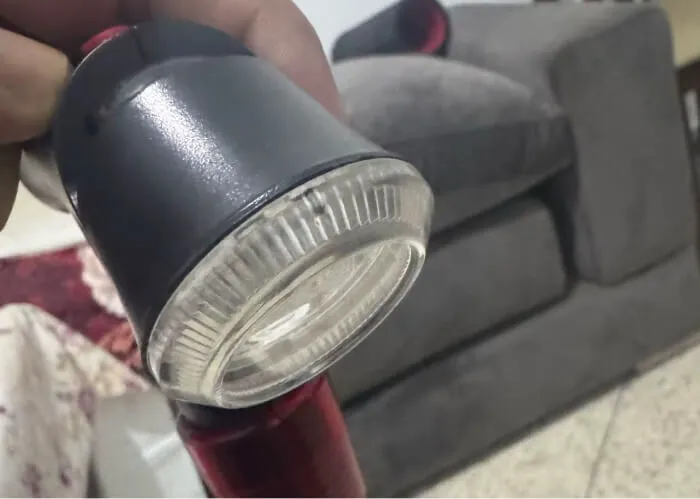
A pivoting multi-point cane like the Ready Walker sits in between. It stands on its own like a quad cane but adapts to uneven ground, and it adds a second handle for standing up plus a light and alarm.
General information, not medical advice. A physical therapist can watch your parent walk and recommend the safest cane type and size.
If your parent has been told they need "more support than a regular cane," the next stop is usually the quad cane aisle. But quad canes come in different sizes, they feel very different to use, and they aren't the right answer for everyone. Meanwhile, single-point canes look simpler but can be exactly right for many people.
This guide compares single-point and quad canes side by side: stability, weight, ease of walking, stairs, outdoor use, and who each one suits. We also look at newer pivoting-base canes that combine some advantages of both.
What is a single-point cane?
A single-point cane is the classic cane: a straight shaft, a handle and one rubber tip. Modern versions are usually aluminum, height adjustable and sometimes folding. Handles come in crook, T-handle, offset and ergonomic shapes.
Strengths: light, inexpensive, easy to carry and quick to move with a natural walking rhythm. Limitations: the small tip gives the least stability of any cane, it falls over when you let go, and it can slip on wet or icy surfaces if the tip is worn.
What is a quad cane?
A quad cane has a rectangular base with four short legs, each with a rubber tip. It comes in two main sizes:
- Small-base quad cane: a compact base, more stable than a single tip but still fairly maneuverable.
- Large-base quad cane: a wider base for maximum cane stability, often used after a stroke or for significant one-sided weakness.
Strengths: more stable, stands upright on its own, and can take more weight than a single-point cane. Limitations: heavier, the base must be placed flat on the ground for full stability, it can catch on furniture and stairs, and it changes the walking rhythm.
How do quad canes and single-point canes compare?
| Single-point cane | Quad cane | Pivoting multi-point (Ready Walker) | |
|---|---|---|---|
| Stability | Lowest | Highest of the canes | More than a single tip |
| Stands on its own | No | Yes | Yes |
| Weight | Lightest | Heavier | Light aluminum frame |
| Uneven ground | Okay with a good tip | Base can rock if not flat | Base pivots to stay in contact |
| Stairs | Easy | Base may not fit on narrow steps | Usable with handrail |
| Walking rhythm | Natural, quicker | Slower, deliberate | Natural |
| Help standing up | No | No | Second, lower handle |
| Night use | No light | No light | Built-in LED light |
| Folds | Some models | Rarely | Yes |
Who is a single-point cane best for?
- People who need light support for mild balance problems or confidence.
- People with mild pain or weakness in one hip, knee or ankle.
- Active walkers who want something light and quick.
- Travelers who need a folding cane for occasional use.
Who is a quad cane best for?
- People who need more support than a single-point cane but not a walker.
- People recovering from a stroke with weakness on one side, when a therapist recommends it.
- People who lean significantly on their cane.
- People who mostly walk indoors on flat floors.
- People who drop their cane often and struggle to pick it up.
If your parent needs to lean heavily with both hands or has weakness in both legs, a walker is usually safer than any cane. See our walker vs cane guide.
What problems do people have with quad canes?
Quad canes are very helpful for the right person, but some common frustrations are worth knowing:
- The base must sit flat. On a slope, a curb edge or grass, one leg can lift and the cane can rock.
- Stairs are tricky. The base may not fit fully on narrow steps; some people turn it sideways, which a therapist should teach.
- It can be a trip hazard when left standing in a walkway.
- Weight: carrying a heavier cane all day tires the arm.
- Slower walking: placing all four feet each step changes rhythm, which some people find awkward.
What is a pivoting multi-point cane?
Newer self-standing canes use a base with several contact points that pivots as you walk. Instead of a rigid rectangle that must sit flat, the base tilts with the cane and adapts to the surface. This keeps more contact with uneven ground while allowing a more natural walking motion.
The Ready Walker is one of these. According to the brand, it has:
- A pivoting four-point base that lets it stand on its own.
- A second, lower handle for pushing up from a chair, bed or toilet.
- A built-in LED light and alarm.
- Tool-free height adjustment, a folding frame and support for up to 300 lbs.
For many aging parents who need "a bit more than a regular cane" and want to keep walking naturally, including outdoors, it's an appealing middle ground. Read our full Ready Walker review.
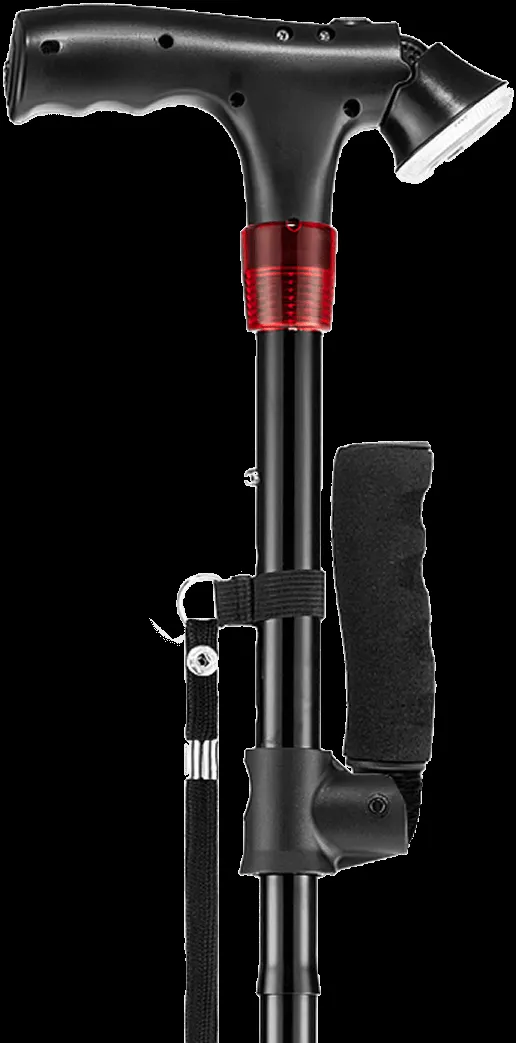
The stability of a wider base, with a natural stride
Ready Walker: pivoting four-point base that stands on its own, a second handle for standing up, LED light and alarm. $59.99 with a 30-day money-back guarantee.
Check today's price →$59.99 · ships from Ohio · 30-day guarantee
How do you use a quad cane correctly?
- Hold the cane in the hand opposite the weaker leg.
- Turn the base so the flat side faces you and the longer legs point away from your body, so you don't trip on it.
- Place the cane about one small step ahead, with all four feet on the ground.
- Step forward with the weaker leg, then the stronger leg.
- On stairs, always use the handrail; ask a therapist how to place the base on your parent's stairs.
Sizing is the same as for any cane: the handle at wrist-crease height with the elbow slightly bent. AAOS OrthoInfo has clear diagrams. See also our guide on how to use a cane correctly.
Which cane is better outdoors?
Outdoors, ground is rarely flat: grass, gravel, cracked sidewalks, curbs and slopes. A rigid quad base can rock or catch on these surfaces, while a single tip handles them but offers less stability. A pivoting base is designed for exactly this situation. Many families use a quad cane indoors and choose a lighter or pivoting cane for walks. See our tips on walking safety for seniors.
Which cane is better on stairs?
A single-point cane is easiest on stairs because the tip fits on any step. Quad canes can be used on stairs with training, but the base must fit on the step. Whatever the cane, the handrail is the main support on stairs. Going up, step with the stronger leg first; going down, lead with the cane and the weaker leg. If stairs are a big part of your parent's day, read our stair safety guide.
Which cane works best around the house?
Inside the home, the moments that matter most are often not long walks but short, awkward movements: getting up from the sofa, turning around in the kitchen, stepping into the bathroom, reaching for a light switch at night. A few things to think about:
- Tight spaces: a large-base quad cane can be clumsy in small bathrooms and narrow hallways. A smaller base or a single tip moves more easily.
- Letting go: people let go of their cane dozens of times a day to open doors, cook or carry things. A cane that stands on its own stays within reach.
- Getting up: a second, lower handle gives a push-off point from low chairs and the toilet.
- Night: a built-in light shows the floor on the way to the bathroom.
- Thresholds and rugs: remove loose rugs and mark raised thresholds, since cane tips and bases can catch on them.
Some families keep one cane by the bed and another by the favorite chair, so support is always where it's needed. Our fall prevention guide covers the rest of the home.
How much do they cost?
Single-point canes typically cost $15 to $40, and quad canes about $25 to $60, depending on base size and materials. Feature-rich self-standing canes like the Ready Walker cost about $60. Medicare Part B may cover a cane or quad cane when a doctor says it's medically necessary.
How do you choose between them?
- Ask how much your parent leans on the cane. A little → single-point; more → quad or self-standing.
- Think about where they walk: mostly flat indoor floors vs. outdoors and stairs.
- Notice dropped canes. If the cane often ends up on the floor, choose one that stands on its own.
- Consider the hard moments: standing up and nighttime trips call for a second handle and a light.
- Get a therapist's opinion, especially after a stroke, fall or surgery.
What mistakes should you avoid?
- Buying a large-base quad cane "to be safe" when a lighter cane would do. Extra bulk can cause trips.
- Using a quad cane with the legs pointing toward the body.
- Leaving a quad cane standing in a doorway or walkway.
- Skipping height adjustment.
- Using any cane when a walker is really needed.
The bottom line
Choose a single-point cane for light support and natural walking, and a quad cane for more stability, especially indoors on flat floors. If your parent wants the "stands on its own" benefit of a quad cane but walks on varied ground and struggles with standing up or nighttime trips, a pivoting multi-point cane offers the best of both.
Our pick in that category is the Ready Walker. Check today's Ready Walker price, or see our guide to the best cane for seniors.
Sources
- American Academy of Orthopaedic Surgeons (OrthoInfo). How to Use Crutches, Canes, and Walkers.
- Centers for Disease Control and Prevention. Older Adult Falls: Facts and Stats.
- Official Ready Walker product page, checked October 2026.
Frequently asked questions
Is a quad cane better than a regular cane?
A quad cane is more stable and stands on its own, so it suits people who need more support. A regular single-point cane is lighter and easier to walk with for people who need only light support.
Who should use a quad cane?
People who need more support than a single-point cane but not a walker, such as some people after a stroke or with moderate one-sided weakness, ideally on a therapist's advice.
Can you use a quad cane on stairs?
Yes, with training and a handrail, but the base must fit on the step. Single-point canes are easier on stairs.
Which way should a quad cane face?
The flat side of the base should face your body, with the longer legs pointing away, so you don't trip over it.
Are quad canes good outdoors?
They work best on flat surfaces; on grass, gravel or slopes the rigid base can rock. Pivoting multi-point bases are designed to adapt to uneven ground.
What is a pivoting cane base?
A multi-point base that tilts with the cane as you walk, keeping contact with uneven ground while allowing a natural stride. The Ready Walker uses this design and stands on its own.

Laura Bennett
Laura Bennett is the pen name of the Aging Parents at Home editorial team at Iqueda Media LLC. We write for adult children who want to help their aging parents stay safe and independent at home. The team researches daily-living and safety products, reads the official guidance from public health and safety organizations, and checks prices, policies and buyer feedback. We are not doctors, nurses or physical therapists. Her guides are built on official public health and safety guidance, manufacturer information, checkout and return policies, and buyer feedback, and are updated when offers change. More about Laura.