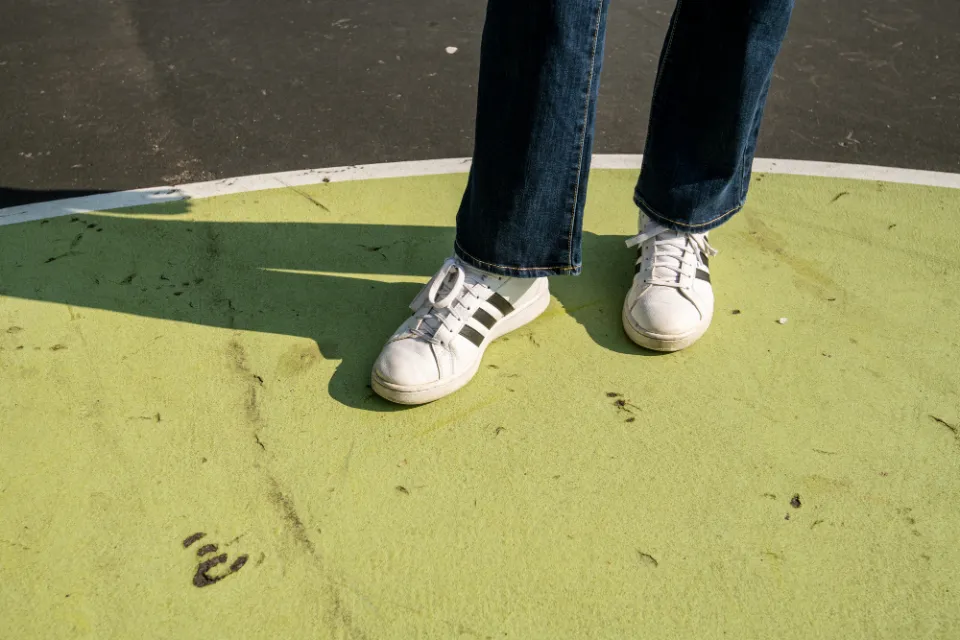
- Non-slip, textured rubber soles that grip wet and smooth floors.
- Low, wide heels (about an inch or less) for stability.
- Thin, firm soles so the feet can feel the ground, rather than thick, squishy cushioning.
- A secure fit with Velcro, laces or straps, and a closed back.
- Enough room for the toes, and easy on and off.
General information, not medical advice. If your parent has foot pain, numbness, swelling, diabetes or foot deformities, ask their doctor or a podiatrist about the right footwear.
When we think about falls, we think about rugs, stairs and dark hallways. But one of the biggest factors is right on your parent's feet. Loose slippers that slide off, socks on a wood floor, worn soles with no grip, or shoes with thick heels that wobble: all of these can turn an ordinary step into a fall.
The good news is that footwear is one of the easiest risks to fix. This guide explains what makes a shoe safe for older adults, what to avoid, how to choose slippers for indoors, how to check the fit, and how footwear fits into a broader fall-prevention plan.
Why do shoes matter so much for fall prevention?
Falls are common and serious in later life. The CDC reports that more than one in four adults aged 65 and older falls each year. The National Institute on Aging lists wearing safe, well-fitting shoes among the practical steps to help prevent falls. Shoes affect safety in several ways:
- Grip: a slippery sole on a smooth or wet floor is a common cause of slips.
- Stability: high or narrow heels make it harder to keep balance.
- Feedback: very thick, soft soles can make it harder to feel the ground and react.
- Fit: loose shoes and backless slippers can slip off or catch on steps.
- Comfort: painful feet change the way people walk, which affects balance.
What features make a shoe safe for seniors?
| Feature | What to look for | Why it helps |
|---|---|---|
| Sole | Non-slip rubber with a textured tread | Grips tile, wood, wet surfaces |
| Heel | Low (about 1 inch or less) and wide | Keeps the foot stable |
| Sole thickness | Thin to moderate and firm | Better sense of the ground |
| Back | Closed, firm heel counter | Holds the foot in place |
| Fastening | Velcro, laces or adjustable straps | Secure fit; Velcro is easier for arthritic hands |
| Toe box | Roomy, rounded | Comfort, room for swelling or bunions |
| Weight | Light | Less effort to lift the feet, fewer trips |
Which shoes and slippers should seniors avoid?
- Backless slippers and slides, which slip off and catch on edges.
- Socks or stockings alone on hard floors.
- Worn-out shoes with smooth soles or broken-down backs.
- High or narrow heels.
- Very thick, squishy soles that feel unstable, especially on uneven ground.
- Flip-flops, which require gripping with the toes.
- Shoes that are too big, often after weight loss or from buying a "comfortable" larger size.
- Grippy soles that are too sticky on carpet, which can catch and cause trips for people who shuffle.
What are the safest slippers for indoors?
Many falls happen at home, and many older adults spend most of the day in slippers. Look for slippers that act like a shoe: a closed back, a non-slip rubber sole (not fabric or suede), a secure strap or Velcro closure, and a snug fit. House shoes with an adjustable strap are a good option for swollen feet. Replace slippers when the sole becomes smooth or the back collapses. If your parent prefers socks, choose non-slip socks with rubber grips on the bottom, but a supportive slipper is usually safer.
How do you check that a shoe fits well?
- Shop later in the day, when feet are slightly larger.
- Measure both feet; sizes change with age, and one foot is often bigger.
- Leave about a thumb's width between the longest toe and the end of the shoe.
- Check the heel: it shouldn't slip up and down when walking.
- Walk around on a hard surface and on carpet before deciding.
- Wear the usual socks when trying them on.
What if your parent has diabetes or foot problems?
People with diabetes, neuropathy (numb feet), circulation problems or foot deformities need extra care, because they may not feel a blister or a poor fit. A doctor or podiatrist can recommend therapeutic shoes or inserts, and Medicare may cover therapeutic shoes for some people with diabetes. Check your parent's feet regularly for redness, blisters or sores, and make sure new shoes are broken in gradually.
What about shoes for winter and wet weather?
Ice, snow and wet leaves are major slip hazards. For outdoor winter walks, choose insulated boots with deep, non-slip treads and a low heel, and consider ice cleats or slip-on traction devices for icy days, removing them before walking indoors on smooth floors. Keep a mat and a chair by the door so your parent can sit to change shoes. Our guide to winter safety for seniors covers ice, cold and snow.
How do shoes and walking aids work together?
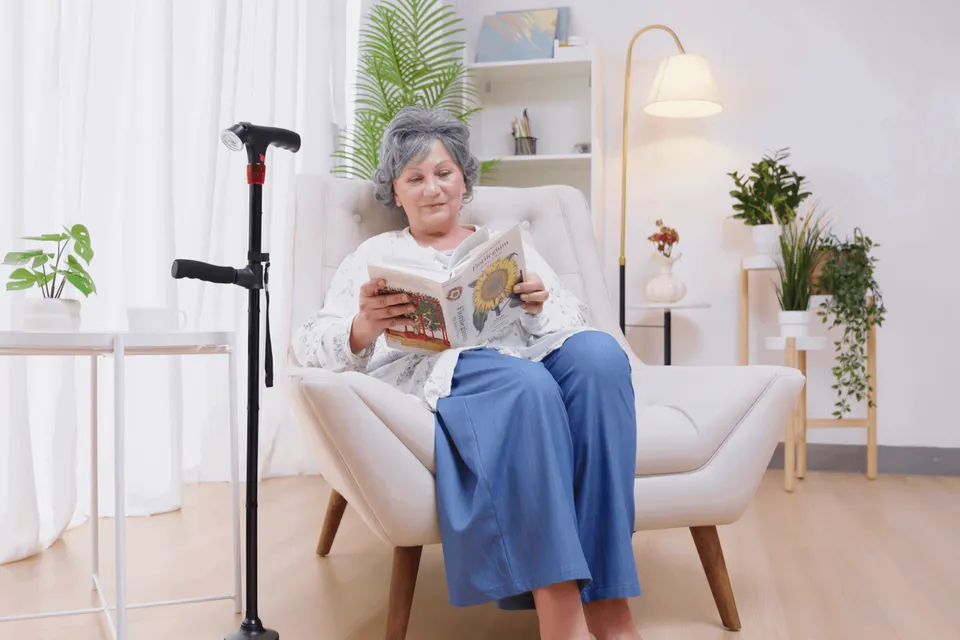
Good shoes help with grip and stability; a walking aid helps with support and balance. For older adults who feel a little unsteady, the two together make a real difference. A cane works best when it's the right height, measured in the shoes your parent actually wears. See how to measure cane height.
The Ready Walker is a folding cane designed for people who need light walking support. It has a pivoting four-point base that lets it stand on its own, a second lower handle to help push up from a chair or bed, quick height adjustment, a built-in LED light for nighttime trips and an alarm. It supports up to 300 lb. It doesn't replace a walker for someone who needs more support, and no cane eliminates the risk of falling, but it covers several everyday risk moments in one tool. It costs $59.99, ships from Ohio and has a 30-day guarantee. Read our Ready Walker review, where we rate it 4.5/5.
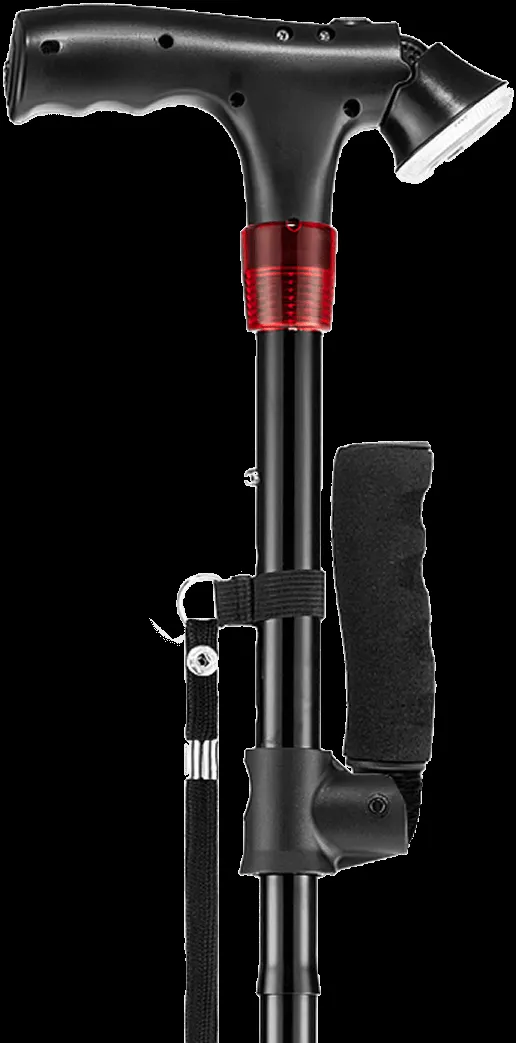
A cane that stands on its own and lights the way
Ready Walker: four-point self-standing base, second handle for standing up, LED light, alarm and quick height adjustment. Supports up to 300 lb. $59.99, ships from Ohio, 30-day guarantee.
Check today's price →$59.99 · ships from Ohio · 30-day guarantee
What shoes work for swollen feet?
Many older adults have feet that swell during the day, from heart or circulation conditions, medications, long periods of sitting or simply heat. Shoes that fit in the morning can feel tight by evening, and people often switch to loose slippers, which raises fall risk. Look for shoes with adjustable Velcro straps across the top, a deep and wide toe box, and stretch materials that give a little without becoming sloppy. Some brands offer extra-wide or "extra depth" sizes. Mention the swelling to the doctor too, since sudden or one-sided swelling can be a sign of a problem that needs attention.
What if your parent shuffles when walking?
Shuffling, sliding the feet instead of lifting them, is common with weakness, Parkinson's disease or fear of falling. It makes tripping on rug edges and thresholds more likely. For people who shuffle, very grippy rubber soles can actually catch on carpet, so a sole with moderate grip and a slightly rounded toe may be safer. Light shoes also make lifting the feet easier. A physical therapist can work on gait and recommend footwear, and removing loose rugs and raised thresholds helps a lot. Our guide on fear of falling in the elderly explains how worry about falling can change the way people walk.
Which shoes are best at night?
The trip to the bathroom at night is one of the riskiest walks of the day. Keep a pair of secure, non-slip slippers right beside the bed, positioned so your parent can slide their feet in while sitting. Avoid leaving shoes in the walking path, where they become a tripping hazard. Slippers with a firm heel and a strap are much safer than slip-on mules for a half-asleep walk in the dark.
When should shoes be replaced?
Look at the soles every few months. Replace shoes and slippers when the tread is smooth, the sole is worn unevenly, the heel counter has collapsed, the Velcro no longer holds, or your parent's feet have changed size or shape. A pair that's comfortable but has a slick sole is a fall risk, no matter how much your parent loves it.
Which habits go with safer footwear?
- Wear shoes or proper slippers at all times, including at night. Keep slippers right by the bed.
- Sit down to put on shoes and socks.
- Use a long-handled shoehorn if bending is hard.
- Dry wet soles on a mat when coming in from rain or snow.
- Keep a chair by the door for changing shoes.
For the nighttime bathroom trip, see night-time fall prevention.
How do you convince a parent to change shoes?
Many older adults are attached to their favorite slippers, and asking them to change can feel like criticism. Focus on comfort as well as safety, take them shopping or offer to buy a pair as a gift, let them choose the style and color, and suggest trying the new pair for a week. If they've had a near fall, connect the change to that moment. A physical therapist or doctor recommending safer footwear often carries more weight than family. See when an aging parent refuses help.
Where do shoes fit in a full fall-prevention plan?
Footwear is one piece. The others: regular exercise for strength and balance, a medication review, an eye exam, home changes like grab bars and better lighting, and the right walking aid. Our pillar guide on fall prevention for seniors brings them all together, and balance exercises for seniors covers simple moves to do at home.
The bottom line
Safe shoes for older adults have non-slip textured soles, low wide heels, firm thin soles, a closed back and a secure closure. Avoid backless slippers, socks on smooth floors and worn-out soles, check the fit regularly and replace shoes when the tread wears down. Combine good footwear with exercise, a safe home and the right walking aid.
For a cane that adds support and light at the riskiest moments, our pick is the Ready Walker. Check today's Ready Walker price.
Sources
- Centers for Disease Control and Prevention. Older Adult Falls: Facts and Stats.
- National Institute on Aging. Falls and Fractures in Older Adults: Causes and Prevention.
- Official Ready Walker product page, checked October 2026.
Frequently asked questions
What kind of shoes help prevent falls in the elderly?
Shoes with non-slip textured rubber soles, low wide heels, thin firm soles, a closed back and a secure Velcro, lace or strap closure.
Are slippers safe for older adults?
Only slippers that act like shoes: closed back, non-slip rubber sole and a secure strap. Backless, loose or fabric-soled slippers raise fall risk.
Are thick cushioned shoes good for seniors?
Very thick, soft soles can feel unstable and make it harder to sense the ground. Thin to moderate, firm soles are usually safer.
Is walking in socks dangerous for seniors?
Socks on smooth floors are slippery. Supportive non-slip slippers or shoes are safer, including at night.
How often should seniors replace their shoes?
When the tread is smooth, the sole wears unevenly, the back collapses, closures stop holding or the feet change size.
What else helps prevent falls besides shoes?
Exercise for strength and balance, a medication review, an eye exam, home changes like grab bars and lighting, and a well-fitted walking aid like the Ready Walker.

Laura Bennett
Laura Bennett is the pen name of the Aging Parents at Home editorial team at Iqueda Media LLC. We write for adult children who want to help their aging parents stay safe and independent at home. The team researches daily-living and safety products, reads the official guidance from public health and safety organizations, and checks prices, policies and buyer feedback. We are not doctors, nurses or physical therapists. Her guides are built on official public health and safety guidance, manufacturer information, checkout and return policies, and buyer feedback, and are updated when offers change. More about Laura.