
- Plan around their energy: shorter trips, daytime travel, off-peak days and plenty of rest stops.
- Request help early: wheelchair or mobility assistance at airports, pre-boarding and accessible rooms.
- Pack medications in a carry-on, with extra days' supply and a written list.
- Prepare for an unfamiliar place: night lights, a clear path to the bathroom and a walking aid.
- Carry a way to get attention: a charged phone and, for crowded places, a personal alarm.
General information, not medical advice. Ask your parent's doctor whether travel is safe, especially after a recent illness, surgery or hospital stay, and about blood clot prevention on long trips. In an emergency, call 911.
The holidays often mean travel: driving to a sibling's house, flying across the country to see grandchildren, or bringing a parent to stay with you. For older adults, travel can be tiring and stressful, with crowds, long lines, unfamiliar beds, disrupted routines and the risk of falls in places they don't know.
With planning, though, holiday travel can be safe and enjoyable. This guide covers how to plan, what to request from airlines and hotels, how to manage medications, what to pack, how to stay safe in airports and unfamiliar homes, and when it might be better to change plans.
How do you plan a holiday trip with an older parent?
- Talk with them first: how far are they comfortable traveling? What worries them?
- Check with the doctor about any health concerns, especially for long flights or drives.
- Travel on off-peak days: the days right before Thanksgiving and Christmas are the busiest.
- Choose daytime travel and avoid tight connections.
- Build in rest: a day to recover after arriving and before leaving.
- Keep the trip shorter than you might for younger travelers.
- Decide who travels with them so they're never navigating alone if that's hard for them.
How do you make flying easier?
When booking, request wheelchair assistance even if your parent walks well over short distances: airports involve very long walks, lines and gate changes. Airlines provide this free of charge. Other tips:
- Ask about pre-boarding so your parent can settle in without rushing.
- Choose an aisle seat near the front and near a restroom.
- Book nonstop flights when possible.
- Contact TSA Cares before the trip. The TSA offers assistance for travelers with disabilities and medical conditions through security screening.
- Walk the aisle or flex the ankles during long flights, and drink water.
- Allow extra time at every step.
Canes and walkers are allowed through security and on board; the TSA explains how mobility aids are screened.
How do you make a road trip easier?
- Stop every 1 to 2 hours to stretch, use the restroom and walk around.
- Bring a cushion, a blanket and water.
- Plan restroom stops at clean, accessible locations.
- Avoid driving at night or in bad weather.
- Share driving if your parent usually drives, so they don't get overtired.
- Keep medications, snacks and a phone charger within reach in the car, not in the trunk.
How do you manage medications while traveling?
- Pack medicines in a carry-on, never in checked luggage.
- Bring a few extra days' supply in case of delays.
- Keep them in original labeled containers or bring a printed list with names, doses and prescribing doctors.
- Use a weekly pill organizer to keep doses on track.
- Set phone reminders, and adjust for time zones with the doctor's or pharmacist's advice.
- Bring copies of prescriptions and the pharmacy's number.
The National Institute on Aging recommends keeping an up-to-date medication list, which is especially useful if your parent needs care away from home.
What should you pack for an older parent?
| Item | Why |
|---|---|
| Medications + list | Safety and continuity |
| Walking aid | Long distances and unfamiliar floors |
| Non-slip shoes and slippers | Unfamiliar bathrooms and floors |
| Plug-in night lights | Safe nighttime bathroom trips |
| Charged phone + charger | Stay in touch and call for help |
| Personal alarm | Get attention fast in crowds or if separated |
| Hearing aids, glasses, spare batteries | Communication and safety |
| Snacks and a water bottle | Delays and blood sugar |
| Copy of ID, insurance cards, contacts | Emergencies |
| Warm layers | Cold planes and drafty houses |
How do you stay safe in airports, stations and crowds?
Busy holiday crowds are disorienting for many older adults, and it's easy to get separated. Agree on a meeting point, make sure your parent has your number written down and saved in their phone, and keep their phone charged. Walk at their pace, use elevators instead of escalators, and take breaks to sit down.
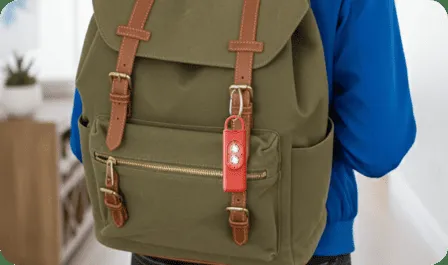
A personal alarm can add peace of mind in crowded or unfamiliar places. HaloSiren is a small keychain alarm: pull the pin and it sounds a 130 dB siren with a flashing LED light, so people nearby notice right away, for example if your parent feels unwell, feels unsafe or gets separated in a parking garage. It's rechargeable, needs no app and has no monthly fee, and it clips to a bag or keys. Keep in mind that HaloSiren is a local alarm: it does not call 911, does not notify family and does not detect falls, so your parent should still carry a phone. Check the airline's rules before packing it in a carry-on. It costs $29.99, or 5 for $89.97 (about $17.99 each), with a 90-day guarantee. Read our HaloSiren review (4.4/5).

A loud, simple way to get attention on the go
HaloSiren keychain alarm: 130 dB siren and flashing light, rechargeable, no app and no monthly fee. A local alarm that works alongside a phone. $29.99, or 5 for $89.97, 90-day guarantee.
Check today's price →$29.99, or 5 for $89.97 · 90-day guarantee
How do you make an unfamiliar home or hotel safer?
Falls in unfamiliar places are common, especially at night when your parent doesn't know the layout. The CDC reports that more than one in four older adults falls each year. When you arrive:
- Walk the path from the bed to the bathroom together in daylight.
- Plug in night lights along that path.
- Move rugs, cords and luggage out of the way.
- Put a non-slip mat in the shower or tub.
- Keep the walking aid, glasses and phone next to the bed.
- Request an accessible hotel room with grab bars and a walk-in shower, on a low floor near the elevator.
See night-time fall prevention and bathroom safety for seniors.
How do you protect your parent's routine?
Travel disrupts sleep, meals and medications, which can lead to fatigue, confusion and dizziness. Try to keep mealtimes and bedtime close to normal, plan quiet time each day, avoid packing the schedule, and limit alcohol. For parents with memory problems, routine is especially important; bring familiar items like a pillow, photos or a favorite blanket.
What health issues should you watch for while traveling?
- Dehydration, especially on planes; offer water regularly.
- Swollen legs on long trips; walk around and ask the doctor about blood clot prevention.
- Dizziness when standing up after sitting a long time. See dizziness when standing up.
- Confusion in an unfamiliar place, which can be worse in the evening.
- Colds and flu, which spread in holiday crowds; ask about recommended vaccines before travel.
What if your parent is coming to stay with you?
Prepare a guest room on the ground floor if possible, near a bathroom. Add night lights, clear walkways and a firm chair with armrests. If your home has stairs, make sure there are handrails and good lighting. Tell your parent about any pets, and keep pets out of their path at night. Our guide on Thanksgiving with elderly parents has more hosting tips.
What if your parent has dementia?
Travel can be especially hard for people with memory loss. Keep trips short and simple, travel during their best time of day, have one person stay with them at all times, carry a recent photo and an ID card with your contact information, and consider an ID bracelet. Let airline staff know so they can help. Sometimes a video call or a visit from family is a kinder choice than a long trip.
When should you rethink the trip?
It may be better to change plans if your parent has recently been in the hospital, is recovering from a fall or surgery, has a health condition that isn't stable, or is very anxious about traveling. Alternatives include visiting them instead, a smaller gathering closer to home, or a video call with the whole family. See signs an elderly parent needs help if travel has become much harder than before.
Should you think about travel insurance?
For longer trips or flights, check what your parent's health coverage includes when they're away from home. Original Medicare usually doesn't cover care outside the United States, and some plans have limited networks. Travel insurance with medical coverage and trip cancellation can be worth considering, especially if a health issue could force a last-minute change. Read the fine print about pre-existing conditions.
The bottom line
Holiday travel with elderly parents goes best with simple, slower plans: off-peak days, daytime travel, wheelchair assistance, medications in a carry-on and plenty of rest. Make unfamiliar places safer with night lights and clear paths, protect their routine, and give them easy ways to get attention and help.
For a simple alarm your parent can carry in crowds and unfamiliar places, our pick is HaloSiren. Check today's HaloSiren price.
Sources
- Transportation Security Administration. TSA Cares Passenger Support.
- Transportation Security Administration. Disabilities and Medical Conditions.
- National Institute on Aging. Taking Medicines Safely as You Age.
- Official HaloSiren product page, checked October 2026.
Frequently asked questions
How do you travel with an elderly parent during the holidays?
Travel on off-peak days and in daylight, request wheelchair assistance and pre-boarding, pack medications in a carry-on, build in rest days and keep the trip short.
Can elderly people get wheelchair assistance at the airport?
Yes. Airlines provide wheelchair assistance free of charge. Request it when booking, even if your parent walks well over short distances.
What should elderly travelers pack?
Medications and a written list, a walking aid, non-slip shoes and slippers, night lights, a charged phone, hearing aids and glasses, snacks, water and copies of ID and insurance.
How do you keep an elderly parent safe in an unfamiliar house?
Walk the path from bed to bathroom together, plug in night lights, clear rugs and luggage, add a non-slip mat in the shower and keep the walking aid and phone by the bed.
Can you bring a personal alarm on a plane?
Small keychain alarms are generally fine, but check the airline's rules before packing. HaloSiren is a local alarm; it doesn't call 911 or family.
When should an elderly parent not travel?
After a recent hospital stay, fall or surgery, with an unstable health condition or if they're very anxious. A visit or video call may be better.

Laura Bennett
Laura Bennett is the pen name of the Aging Parents at Home editorial team at Iqueda Media LLC. We write for adult children who want to help their aging parents stay safe and independent at home. The team researches daily-living and safety products, reads the official guidance from public health and safety organizations, and checks prices, policies and buyer feedback. We are not doctors, nurses or physical therapists. Her guides are built on official public health and safety guidance, manufacturer information, checkout and return policies, and buyer feedback, and are updated when offers change. More about Laura.