
- Tech support scams: a pop-up or call claiming the computer has a virus.
- Grandparent and family emergency scams: "I'm in trouble, send money, don't tell Mom."
- Government impersonation: fake Social Security, Medicare or IRS calls.
- Romance, lottery and investment scams.
- Door-to-door scams: fake contractors or utility workers.
If your parent is in immediate danger, call 911. If money was sent, contact the bank or payment company right away, then report the scam. The FBI's Elder Fraud Hotline is (833) 372-8311.
Scammers target older adults for a reason: many have savings, a home and good credit, many are polite and trusting, and some live alone or are lonely. Scams have also become more convincing, with real-sounding phone numbers, official-looking emails and even AI-generated voices that sound like a grandchild.
The FBI reports that older Americans lose billions of dollars to fraud every year, and many cases go unreported because victims feel embarrassed. The good news is that a few simple rules stop most scams. This guide explains the most common scams, the warning signs, how to protect your parent without taking away their independence, and what to do if they've been targeted.
Why are older adults targeted by scammers?
- Savings and home equity make them attractive targets.
- Politeness: many were raised not to hang up on people.
- Loneliness, which romance and friendship scams exploit.
- Less familiarity with technology, which tech support scams exploit.
- Memory changes that make it harder to spot inconsistencies.
- Embarrassment that keeps victims from reporting.
What are the most common scams?
| Scam | How it works | Red flag |
|---|---|---|
| Tech support | Pop-up or call says the computer is infected; asks for remote access and payment | Unsolicited contact; request for remote access |
| Grandparent / family emergency | "Grandma, it's me, I'm in jail/hospital, send money" | Urgency, secrecy, unusual payment |
| Government impersonation | Fake Social Security, Medicare or IRS agent threatens arrest or benefit loss | Threats; agencies don't call demanding payment |
| Romance | Online "partner" builds trust, then needs money | Never meets in person; asks for money |
| Lottery / prize | "You've won! Pay fees to collect" | Paying to receive a prize |
| Investment | Guaranteed high returns, often crypto | Pressure, guarantees, secrecy |
| Door-to-door / contractor | "Your roof needs urgent repair," demands cash upfront | Unsolicited, high pressure, cash only |
| Medicare / health | Free equipment or tests in exchange for your Medicare number | Requests for Medicare or Social Security numbers |
What are the warning signs of a scam?
- Urgency: "You must act now."
- Secrecy: "Don't tell anyone, not even your family."
- Unusual payment: gift cards, wire transfers, cryptocurrency, cash by courier, or a payment app to a stranger.
- Threats: arrest, lawsuits, loss of benefits.
- Too good to be true: prizes, guaranteed returns.
- Requests for personal information: Social Security, Medicare, bank or card numbers.
- Caller ID that looks official; it can be faked.
Which simple rules stop most scams?
- Hang up on any unexpected call asking for money or information, and call back using a number you look up yourself (on a statement, card or official website).
- Never pay with gift cards, wire transfers or cryptocurrency to someone you haven't met. Legitimate businesses and agencies don't ask for this.
- Never give remote access to a computer to someone who contacted you.
- Check with family first before sending money to anyone, for any reason.
- Use a family code word for real emergencies, so a "grandchild in trouble" can be verified.
- Don't click links in unexpected emails or texts.
- Don't open the door to unexpected visitors or sign anything on the spot.
How do you protect your parent's phone?
- Turn on call-blocking or spam filtering from the phone carrier.
- Set the phone to send unknown numbers to voicemail.
- Register the number on the National Do Not Call Registry (it won't stop scammers, but reduces legitimate sales calls, making scams easier to spot).
- Save family and doctors' numbers with names and photos.
How do you protect their money?
- Set up account alerts for large withdrawals or transfers, sent to your parent and, with permission, to a trusted family member.
- Add a trusted contact with the bank or investment accounts.
- Consider a credit freeze, which is free, to stop new accounts being opened.
- Review statements together each month, if your parent agrees.
- Plan ahead with a financial power of attorney.
The National Institute on Aging includes financial exploitation among the forms of elder abuse and explains where to get help.
How do you stay safe from door-to-door scams?
Many scams start at the front door: fake utility workers, "storm damage" roofers, or people asking to come in to use the phone. Encourage your parent to talk through the door or a video doorbell, ask for ID and verify it by calling the company with a number they look up, and never pay cash upfront for work. Real utility companies don't demand immediate payment at the door. See home security for seniors.
What if your parent feels unsafe or pressured in person?
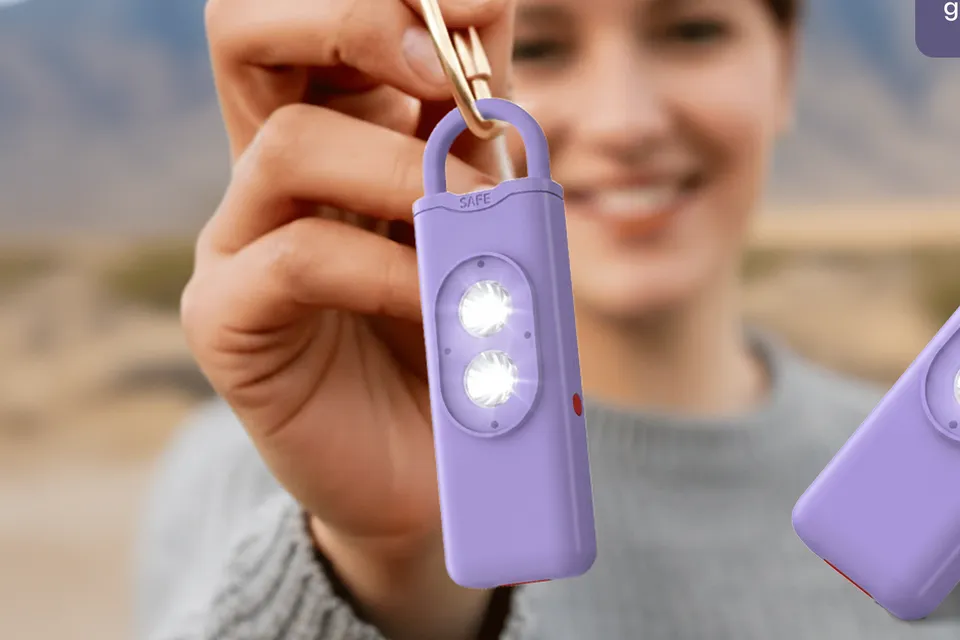
Some scammers become aggressive when refused, at the door or in a parking lot. A personal alarm gives your parent a quick way to draw attention and end the situation. HaloSiren is a small keychain alarm: pull the pin and it sounds a 130 dB siren with a flashing LED light, which can startle someone and alert neighbors and passersby. It's rechargeable, needs no app and has no monthly fee. To be clear, HaloSiren doesn't call 911, doesn't contact family and isn't a medical alert; it's a local alarm that works alongside a phone. It costs $29.99, or 5 for $89.97 (about $17.99 each), with a 90-day guarantee. Read our HaloSiren review (4.4/5) and our guide to personal safety alarms for seniors.

A quick way to draw attention if your parent feels unsafe
HaloSiren keychain alarm: 130 dB siren and flashing light, rechargeable, no app and no monthly fee. A local alarm that works alongside a phone. $29.99, or 5 for $89.97, 90-day guarantee.
Check today's price →$29.99, or 5 for $89.97 · 90-day guarantee
How do you talk to your parent about scams?
Older adults often feel defensive about scams, worried that family will think they can't handle their own affairs. Make it a shared topic: "I read about a new scam that fooled lots of people, even young ones." Share real examples, agree on simple rules together, and set up a family code word. Make it clear they can always call you before acting, with no judgment. Most importantly, if they've been scammed, respond with support, not blame; shame keeps victims from reporting and makes them more likely to be targeted again.
What should you do if your parent has been scammed?
- Stop contact with the scammer and don't send more money.
- Call the bank, card company or payment service immediately to try to stop or reverse payments.
- Change passwords and remove any remote-access software from the computer.
- Report it to the FBI at ic3.gov or the Elder Fraud Hotline at (833) 372-8311, and to local police.
- Place a fraud alert or credit freeze with the credit bureaus.
- Watch for follow-up scams: "recovery" services promising to get money back are often scams too.
Why does loneliness make scams more likely?
Scammers often succeed by being friendly. A caller who chats for an hour, a "romantic" online contact or a "helpful" stranger can fill a gap for a lonely person. Staying connected with family and friends, regular calls and visits, and community activities make your parent less vulnerable. See elderly parent living alone and how to check on an elderly parent remotely.
What if your parent has memory problems?
Memory loss increases the risk of falling for scams and of repeated scams. Consider simplifying finances, limiting access to large sums, setting up bank alerts to a family member, and arranging legal authority like a power of attorney while your parent can still take part in the decision. See signs an elderly parent needs help.
How are scammers using AI voices?
A newer twist on the grandparent scam uses artificial intelligence to copy a real person's voice from a few seconds of video posted online. The call sounds exactly like a grandchild or adult child, crying and asking for help. This is why a family code word matters so much: no matter how real the voice sounds, if the caller can't give the code word, your parent should hang up and call the family member directly on their known number. It also helps to limit how much family video and voice content is public on social media.
How do you spot email and text scams?
- Look at the sender's address, not just the name; scammers use look-alike addresses.
- Be suspicious of urgent warnings: "Your account will be closed," "Your package can't be delivered."
- Don't click links; type the company's website yourself or use its official app.
- Never share codes sent by text; a real company won't ask you to read a code back to them.
- Watch for poor grammar and generic greetings, though many scams now look polished.
Set up spam filters on your parent's email and phone, and show them how to delete or block messages without opening them.
The bottom line
Scams targeting older adults rely on urgency, secrecy and unusual payment methods. Teach a few firm rules, like hanging up and calling back, never paying with gift cards or wire transfers and always checking with family first, protect phones and accounts, and respond with support if something goes wrong. Report scams quickly.
For a simple alarm your parent can use if they feel unsafe, our pick is HaloSiren. Check today's HaloSiren price.
Sources
- Federal Bureau of Investigation. Elder Fraud in Focus.
- FBI Internet Crime Complaint Center. IC3.
- National Institute on Aging. Elder Abuse.
- Official HaloSiren product page, checked October 2026.
Frequently asked questions
What are the most common scams targeting seniors?
Tech support scams, grandparent and family emergency scams, government impersonation, romance, lottery and investment scams, door-to-door contractor scams and Medicare scams.
How can I protect my elderly parent from scams?
Teach them to hang up and call back on a number they look up, never pay with gift cards, wire transfers or crypto, never give remote computer access and check with family before sending money.
What is a family code word?
A secret word agreed in advance, so a caller claiming to be a grandchild in trouble can be verified before any money is sent.
Where do you report elder fraud?
To the FBI at ic3.gov or the Elder Fraud Hotline at (833) 372-8311, to local police, and to the bank or payment company right away.
Do government agencies call demanding payment?
No. Social Security, Medicare and the IRS don't call threatening arrest or demanding payment by gift card, wire or crypto.
Can a personal alarm help with door-to-door scammers?
It can help your parent draw attention if they feel unsafe. HaloSiren is a local 130 dB siren; it doesn't call 911 or family.

Laura Bennett
Laura Bennett is the pen name of the Aging Parents at Home editorial team at Iqueda Media LLC. We write for adult children who want to help their aging parents stay safe and independent at home. The team researches daily-living and safety products, reads the official guidance from public health and safety organizations, and checks prices, policies and buyer feedback. We are not doctors, nurses or physical therapists. Her guides are built on official public health and safety guidance, manufacturer information, checkout and return policies, and buyer feedback, and are updated when offers change. More about Laura.