
- A personal alarm (like HaloSiren) makes a loud 130 dB siren and flashing light to get the attention of people nearby. No monthly fee, no app. It doesn't call 911 or family and doesn't detect falls.
- A medical alert system connects your parent to a call center or family with the press of a button, and some models offer fall detection. It usually has a monthly fee.
- Choose a medical alert if your parent lives alone and is at high risk of falls or health emergencies; choose a personal alarm for walks, errands, the yard and calling people in the home. Many families use both.
General information, not medical advice. In an emergency, call 911. Ask your parent's doctor which type of help system fits their health needs.
Families shopping for safety devices often use "personal alarm" and "medical alert" interchangeably, but they're not the same. One is a loud siren in your parent's pocket; the other is a service that connects them to help. Mixing them up can leave a parent with the wrong protection, or paying a monthly fee for features they don't need.
This guide explains how each works, compares features and costs side by side, helps you decide which one your parent needs, explains how to combine them and gives tips for getting your parent to actually use the device.
How does a personal alarm work?
A personal alarm is a small device, often on a keychain, that makes a very loud siren and sometimes flashes a light when you pull a pin or press a button. Its job is to grab the attention of anyone nearby: a neighbor, a passerby, family in another room. It works without cell service or subscriptions. Read more in personal safety alarms for seniors.
How does a medical alert system work?
A medical alert system includes a button worn as a pendant or wristband, and often a base unit or cellular connection. When your parent presses the button, it connects to a monitoring center or calls family contacts. The operator can talk to your parent and send help. Some systems include automatic fall detection, GPS for use outside the home and medication reminders. Most require a monthly subscription.
How do they compare side by side?
| Personal alarm (HaloSiren) | Medical alert system | |
|---|---|---|
| What it does | 130 dB siren and flashing light | Connects to call center or family |
| Calls 911 or family | No | Yes, via operator or contacts |
| Fall detection | No | Some models |
| Monthly fee | None | Usually yes |
| Setup | None; pull the pin | Activation and testing |
| Works without signal | Yes | Needs landline, cellular or Wi-Fi |
| Price | $29.99, or 5 for $89.97 | Equipment plus subscription |
Who should get a medical alert?
- Parents who live alone and have fallen before.
- Those with conditions that can cause sudden problems, like heart disease or seizures.
- Parents who might not be able to call for help after a fall.
- Families who live far away.
The CDC reports that more than one in four older adults falls each year; for those living alone, being able to call for help matters. See how to get up after a fall.
Who should get a personal alarm?
- Active parents who walk outside, garden or run errands.
- Parents who live with a spouse or family, so someone nearby can respond.
- Those worried about safety in parking lots or on walks.
- Families who want an affordable, no-subscription safety tool.
- Anyone who wants a backup to a phone.
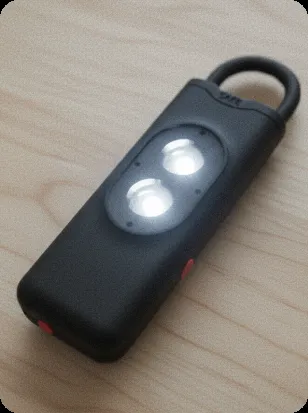
A loud alarm with no monthly fee
HaloSiren keychain alarm: 130 dB siren and flashing light with one pull. Rechargeable, no app, no monthly fee. $29.99, or 5 for $89.97, with a 90-day guarantee.
Check today's price →$29.99, or 5 for $89.97 · 90-day guarantee
Why do many families use both?
A medical alert connects your parent to help, but an operator may be minutes away. A siren alarm brings immediate attention from anyone close by, like a neighbor over the fence or a spouse asleep in the next room. Because siren alarms are inexpensive, families often keep one on the nightstand, one in the bathroom and one on the keychain, alongside a monitored alert or a phone. See best personal alarm for the elderly.
How do costs compare over a year?
A personal alarm is a one-time purchase. HaloSiren costs $29.99 for one, $59.99 for three or $89.97 for five. A medical alert typically includes equipment plus a monthly subscription, so yearly costs add up. Some systems advertise "no monthly fee" but work differently; see medical alerts without a monthly fee.
Does either prevent falls?
No. Both help after something happens. To lower fall risk, the National Institute on Aging recommends exercise for strength and balance, home safety changes, vision checks and medication reviews. See fall prevention for seniors and balance exercises.
How do you get your parent to use it?
- Involve them in choosing the device.
- Present it as independence, not frailty.
- Practice using it together.
- Put it where it's easy to grab or wear.
- Remind them gently, especially in the first weeks.
What should you ask a medical alert company?
- What's the total monthly cost and any contract length?
- Does it work outside the home?
- Is fall detection included, and how accurate is it?
- Is the button waterproof for the shower?
- How long does the battery last?
- What's the cancellation policy?
What if your parent has memory problems?
People with memory loss may forget to press a button. Fall detection and caregiver check-ins become more important. Simple devices work best, and family or professional support at home may be needed. Talk to your parent's doctor about the right level of support.
Why do we recommend HaloSiren as a personal alarm?
HaloSiren is a keychain alarm with a 130 dB siren and flashing LED light. Pull the pin and people nearby hear it. It's rechargeable, has no app and no monthly fee, and comes with a 90-day guarantee. It's a simple, affordable layer of protection for outings and around the house. Read our HaloSiren review.
What are common myths?
- "A personal alarm calls 911." Siren alarms only alert people nearby.
- "Medical alerts prevent falls." They help after a fall.
- "Fall detection is perfect." It can miss some falls.
- "You only need one device." Combining often gives the best coverage.
How do they work in real-life scenarios?
| Scenario | Personal alarm | Medical alert |
|---|---|---|
| Falls in the garden, neighbor next door | Neighbor hears the siren and comes over | Operator answers and sends help |
| Feels threatened in a parking lot | Loud siren draws attention | Depends on GPS and coverage |
| Falls at night, spouse asleep in another room | Siren wakes the spouse | Operator calls contacts |
| Falls alone at home, no one nearby | Limited help; nobody to hear | Best option |
This is why the right choice depends on whether people are usually nearby.
Where do smartwatches fit in?
Some smartwatches offer emergency calling and fall detection, and they can be a good option for tech-comfortable parents who wear a watch every day. They need to be charged often and may require a cellular plan to work away from the phone. For parents who don't like technology, a simple button or siren is usually easier.
What about caregivers who live with a parent?
If you live with your parent, a siren alarm on the nightstand or a simple wireless pager lets them get your attention instantly from another room. That can be enough for many households, with a medical alert added when you're away for long periods.
Can you try before committing?
Many medical alert companies offer trial periods, and HaloSiren comes with a 90-day guarantee. Starting with a simple siren alarm is a low-cost way to see whether your parent will actually carry a device before signing up for a monthly plan.
How do you decide in three questions?
- Is someone usually nearby? If yes, a personal alarm may be enough most of the time.
- Has your parent fallen before or do they have conditions that can cause sudden problems? If yes, a medical alert adds important protection.
- Will your parent wear or carry it? The best device is the one they'll actually use every day.
Your answers usually point clearly to one option or a combination of both.
How do you bring up the topic with your parent?
Many parents resist wearing a medical alert because it feels like a sign of aging. A small keychain siren can be an easier first step: it looks like an everyday accessory and is useful for anyone, at any age, on walks and in parking lots. Once they're used to carrying a safety device, a medical alert may feel like less of a leap. See when an aging parent refuses help.
What if both parents live together?
Couples can share a base unit with separate buttons in many medical alert systems, and each can carry their own siren alarm. Bundles make it affordable to equip both parents and keep spares in key rooms.
The bottom line
A personal alarm like HaloSiren is a loud, simple and affordable way to get attention from people nearby, with no monthly fee. A medical alert system connects your parent to a call center or family and may offer fall detection, usually with a subscription. Parents who live alone and are at high risk benefit from a medical alert; many families add a siren alarm for outings and around the house.
Our personal alarm pick is HaloSiren. Check today's HaloSiren price.
Sources
- Centers for Disease Control and Prevention. Older Adult Falls Data.
- National Institute on Aging. Falls and Fractures in Older Adults.
- Official HaloSiren product page and FAQ, checked October 2026.
Frequently asked questions
What's the difference between a personal alarm and a medical alert?
A personal alarm makes a loud siren for people nearby; a medical alert connects to a call center or family.
Does a personal alarm call 911?
No, siren alarms like HaloSiren only alert people nearby.
Who needs a medical alert system?
Parents who live alone with high fall risk or conditions that can cause sudden problems.
Do medical alerts have monthly fees?
Most do; siren alarms don't.
Can my parent use both?
Yes, many families combine them for full coverage.
Do either prevent falls?
No, both help after something happens; prevention needs exercise and home safety.

Laura Bennett
Laura Bennett is the pen name of the Aging Parents at Home editorial team at Iqueda Media LLC. We write for adult children who want to help their aging parents stay safe and independent at home. The team researches daily-living and safety products, reads the official guidance from public health and safety organizations, and checks prices, policies and buyer feedback. We are not doctors, nurses or physical therapists. Her guides are built on official public health and safety guidance, manufacturer information, checkout and return policies, and buyer feedback, and are updated when offers change. More about Laura.