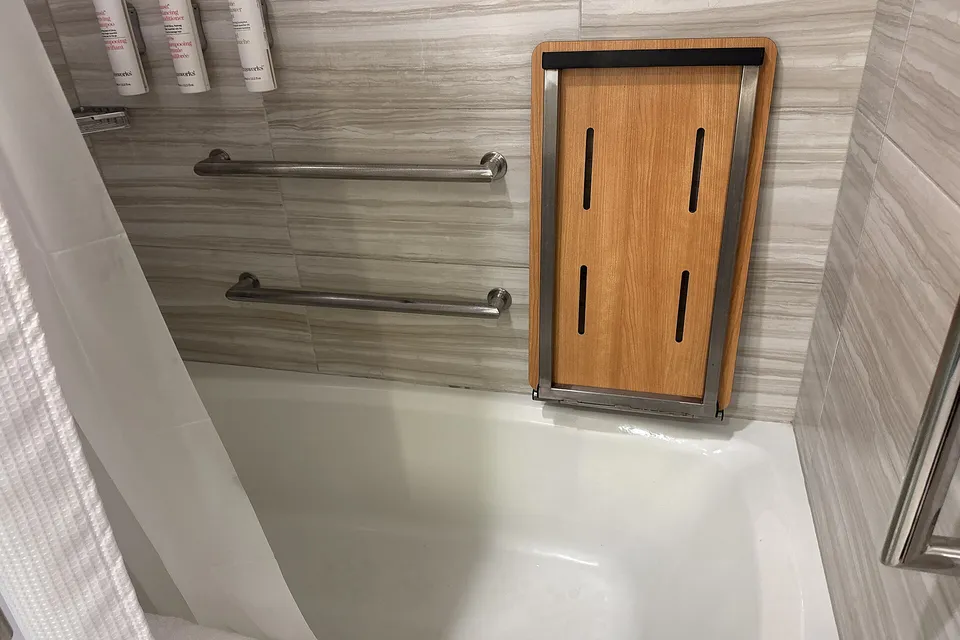
- Bathroom: grab bars by the toilet and in the shower, a non-slip mat, a shower chair and a raised toilet seat.
- Lighting: brighter bulbs, night lights and switches at both ends of halls and stairs.
- Stairs: sturdy handrails on both sides and non-slip treads.
- Floors: remove loose rugs and clutter, and fix uneven thresholds.
- Everyday use: lever handles, easy-reach storage and a chair with armrests.
General information, not medical advice. An occupational therapist can do a home safety assessment and recommend changes tailored to your parent's needs. In an emergency, call 911.
Most older adults want to keep living in their own homes. The trouble is that homes are usually designed for young, strong bodies: steps at the entrance, tubs with high sides, low toilets, dim hallways, round doorknobs and cabinets you need a step stool to reach. As your parent's balance, strength or vision changes, the house that once felt comfortable can become a place full of fall risks.
The good news is that many of the most helpful modifications are simple and affordable, and some cost nothing at all. This guide walks you through the most important changes, room by room, explains where to start, what professionals can help with and how to pay for bigger projects.
Why are home modifications so important?
The National Institute on Aging explains that making changes to the home is a key part of aging in place safely. Falls are the main concern: the CDC reports that more than one in four adults aged 65 and older falls each year, and many falls happen at home. Good modifications help by:
- Removing tripping hazards like rugs, cords and uneven floors.
- Adding support where people stand up, sit down or step over things.
- Improving visibility with better lighting.
- Making daily tasks easier, so your parent doesn't take risks like climbing on chairs.
Where should you start?
If you can only do a few things, focus on the places where falls happen most and the movements that are most risky:
- The bathroom: wet floors, getting in and out of the tub, sitting down and standing up from the toilet.
- The path from the bedroom to the bathroom, especially at night.
- Stairs and entrances.
- The kitchen, where people reach, bend and carry.
Walk through the house with your parent and ask: Where do you hold on? What's hard to reach? Where do you feel unsteady? Their answers tell you where to begin.
What changes make a bathroom safer?
| Change | Why it helps | Cost |
|---|---|---|
| Grab bars by the toilet and in the shower | Stable support when standing, sitting and stepping | Low to moderate (professional installation recommended) |
| Non-slip mats or strips | Prevent slips in the tub and on wet floors | Low |
| Shower chair or tub transfer bench | Sit while bathing; reduces balance demands | Low |
| Handheld shower head | Easier to wash while seated | Low |
| Raised toilet seat or toilet frame | Less effort to stand up | Low |
| Walk-in shower replacing a tub | No high edge to step over | High |
| Night light | Safe nighttime trips | Very low |
Never use towel bars or soap dishes as grab bars; they aren't built to hold body weight. Our full bathroom safety checklist covers more.
How do you improve lighting?
- Brighter bulbs in every room, especially hallways, stairs and the kitchen.
- Motion-sensor night lights from the bedroom to the bathroom.
- Light switches at both ends of stairs and hallways, or smart bulbs and remote switches.
- Lamps within reach of the bed and favorite chair.
- Outdoor lights at entrances and walkways, on motion sensors.
- Reduce glare with shades and matte finishes; aging eyes are more sensitive to it.
See night-time fall prevention for the path to the bathroom, and vision and falls for why lighting matters so much.
What changes make stairs safer?
- Handrails on both sides, running the full length of the stairs, firmly attached.
- Non-slip treads or a firmly attached stair runner.
- Contrasting tape on the edge of each step so it's easier to see.
- Good lighting with switches at the top and bottom.
- No clutter on the stairs, ever.
- A stair lift if stairs have become unsafe but your parent wants to stay in a multi-story home.
See stair safety for seniors and how to use a cane on stairs.
How do you make floors safer?
- Remove loose throw rugs, or secure them with non-slip backing or double-sided tape.
- Clear clutter: shoes, piles of paper, pet toys.
- Route cords along walls, away from walkways.
- Fix loose floorboards and torn carpet.
- Lower or bevel raised thresholds between rooms.
- Rearrange furniture to create clear, wide walking paths.
What about the kitchen?
Move everyday items to shelves between waist and shoulder height so your parent doesn't need a step stool. Use a sturdy step stool with a handrail only if absolutely necessary. Lever-style faucet handles, a lightweight kettle, easy-grip utensils and a good jar opener help with weak or arthritic hands. Wipe up spills right away. See kitchen safety for seniors and kitchen gadgets for arthritis.
How do you set up the bedroom?
- Bed at the right height: feet flat on the floor with knees at about hip level when sitting on the edge.
- A bed rail or bed handle to help get in and out.
- Lamp, phone, glasses and water within reach on the nightstand.
- A clear path from bed to door and bathroom.
- A chair with armrests for dressing.
- The walking aid within reach of the bed.
How does a walking aid fit in with home modifications?
Home modifications make the environment safer; a walking aid makes each step steadier. They work best together. A common problem with regular canes is that they fall over when leaned against a bed or chair, and picking them up from the floor is itself a fall risk.
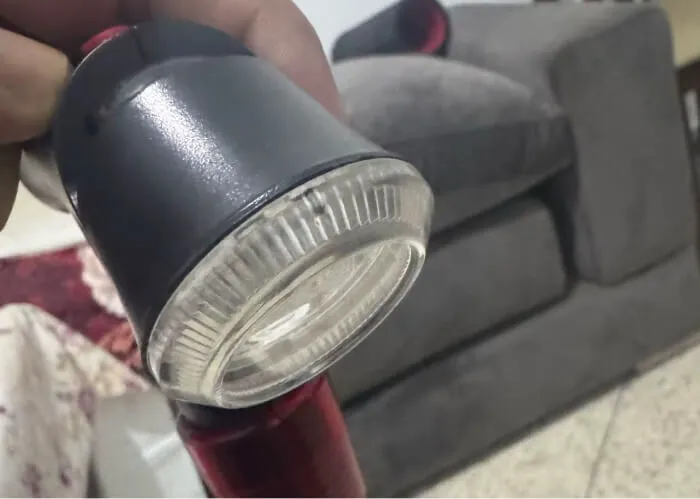
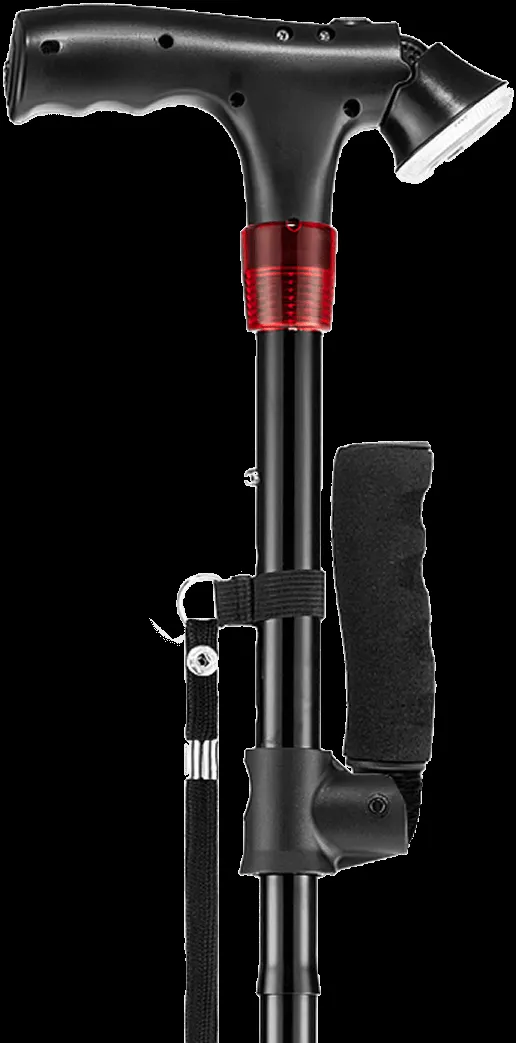
The Ready Walker is a folding cane with a pivoting four-point base that lets it stand on its own, a second lower handle to help push up from a chair, bed or toilet, a built-in LED light for nighttime trips, quick height adjustment and an alarm. It supports up to 300 lb. It's for people who need light walking support and doesn't replace a walker for those who need more support, and no cane eliminates fall risk. It costs $59.99, ships from Ohio and has a 30-day guarantee. Read our Ready Walker review (4.5/5).
A cane that stays upright where your parent needs it
Ready Walker: self-standing four-point base, second handle for standing up, LED light, alarm and height adjustment. Supports up to 300 lb. $59.99, ships from Ohio, 30-day guarantee.
Check today's price →$59.99 · ships from Ohio · 30-day guarantee
What about entrances and outdoor areas?
- Handrails on outdoor steps, on both sides if possible.
- A ramp if steps are becoming difficult.
- A bench or shelf by the door to set down bags.
- Lever door handles and an easy-to-use lock.
- Motion-sensor lights.
- Repair cracked or uneven walkways.
Who can help assess the home?
An occupational therapist can do a home safety evaluation, watching how your parent moves and recommending changes and equipment that fit their specific needs. Ask the doctor for a referral; it may be covered by Medicare or insurance in some situations. A Certified Aging-in-Place Specialist (CAPS) contractor can handle installations like grab bars and walk-in showers. See occupational therapy for seniors.
How do you pay for home modifications?
Many changes cost little: removing rugs, adding night lights and moving items within reach. For bigger projects, look into local programs through your Area Agency on Aging, which you can find through the Eldercare Locator. Some areas offer grants or low-cost repair programs for older homeowners. Veterans may qualify for home modification benefits through the VA. Some Medicare Advantage plans cover certain safety items; check your parent's plan.
How do you get your parent on board?
Many older adults resist changes that feel like admitting they're getting frail. Present modifications as making the home more comfortable and convenient, not as "safety equipment." Involve them in choosing styles and placement; grab bars now come in finishes that look like regular bathroom hardware. Start with one or two changes and let them experience the benefit. See when an aging parent refuses help.
What does a quick home modification checklist look like?
- Grab bars by the toilet and in the shower; non-slip mats.
- Night lights on the path from bed to bathroom.
- Handrails on both sides of stairs; good stair lighting.
- No loose rugs, cords or clutter in walkways.
- Everyday items within easy reach.
- Bed and chairs at a height that's easy to rise from.
- Walking aid within reach.
- Phone or alarm in key rooms.
For a whole-home review, see our aging-in-place checklist and pillar guide on fall prevention for seniors.
The bottom line
The most effective home modifications for older adults are often simple: grab bars, non-slip surfaces, better lighting, handrails, clear floors and easy-to-reach storage. Start with the bathroom and the nighttime path, get an occupational therapist's advice for bigger changes, and pair a safer home with a stable walking aid.
For a cane that stands on its own and helps your parent get up, our pick is the Ready Walker. Check today's Ready Walker price.
Sources
- National Institute on Aging. Aging in Place: Growing Older at Home.
- Centers for Disease Control and Prevention. Older Adult Falls: Facts and Stats.
- Eldercare Locator, U.S. Administration for Community Living. Eldercare Locator.
- Official Ready Walker product page, checked October 2026.
Frequently asked questions
What home modifications help elderly people the most?
Grab bars by the toilet and shower, non-slip mats, brighter lighting and night lights, handrails on both sides of stairs, removing loose rugs and clutter, and easy-reach storage.
Where should I start making my parent's home safer?
With the bathroom and the path from the bedroom to the bathroom, then stairs, entrances and the kitchen.
Can towel bars be used as grab bars?
No. Towel bars and soap dishes aren't built to hold body weight. Install real grab bars anchored properly, ideally by a professional.
Who can do a home safety assessment for seniors?
An occupational therapist can assess the home and recommend changes; ask the doctor for a referral. CAPS contractors can handle installations.
How can I pay for home modifications for an elderly parent?
Many changes are low-cost. For bigger projects, ask your Area Agency on Aging about local programs, check VA benefits for veterans and review Medicare Advantage plan benefits.
Does a walking aid help along with home changes?
Yes. A stable walking aid adds support at each step. The Ready Walker stands on its own and has a second handle for standing up.

Laura Bennett
Laura Bennett is the pen name of the Aging Parents at Home editorial team at Iqueda Media LLC. We write for adult children who want to help their aging parents stay safe and independent at home. The team researches daily-living and safety products, reads the official guidance from public health and safety organizations, and checks prices, policies and buyer feedback. We are not doctors, nurses or physical therapists. Her guides are built on official public health and safety guidance, manufacturer information, checkout and return policies, and buyer feedback, and are updated when offers change. More about Laura.