
- Going up: hold the handrail, step up with the stronger leg first, then bring the cane and the weaker leg up to the same step.
- Going down: hold the handrail, put the cane and the weaker leg down first, then step down with the stronger leg.
- Take one step at a time, both feet on each step before moving on.
- If there's a railing, use it every time; the cane goes in the other hand.
General information, not medical advice. Ask a physical therapist to teach and watch your parent practice using a cane on stairs before doing it alone. If stairs feel unsafe, talk to the doctor about other options. In an emergency, call 911.
Stairs are one of the riskiest places in any home for an older adult who uses a cane. Each step requires lifting the body, balancing on one leg for a moment and placing the cane in the right spot, all at once. Many people get the order wrong, rush, or skip the railing, and a misstep on stairs can lead to a serious fall.
Using a cane on stairs is easy once you know the simple rule and practice it. This guide covers the correct technique for going up and down, what to do when there's a railing or not, how to make stairs safer, and when stairs may no longer be the right choice.
Why are stairs so risky with a cane?
Falls are the leading cause of injury in older adults, and the CDC reports that more than one in four people aged 65 and older falls each year. Stairs add extra challenges:
- Each step means a moment of standing on one leg.
- The weaker leg may not be strong enough to lift or lower the body alone.
- A cane placed too close to the edge can slip off the step.
- Poor lighting or worn treads make edges hard to see.
- Carrying things means fewer hands for the railing and cane.
What does "up with the good, down with the bad" mean?
It's the simplest way to remember the order. When going up, the stronger ("good") leg does the work of lifting the body. When going down, the weaker ("bad") leg goes first, supported by the cane, so the stronger leg can lower the body in a controlled way. The American Academy of Orthopaedic Surgeons (OrthoInfo) teaches the same sequence for canes and crutches on stairs.
How do you go up stairs with a cane?
- Stand close to the first step, facing the stairs, with the cane in the hand opposite the weaker leg.
- Hold the handrail with the other hand. If the railing is on the "wrong" side, see below.
- Step up with the stronger leg.
- Push down on the railing and cane to straighten the stronger leg and lift the body.
- Bring the cane and the weaker leg up to the same step.
- Pause with both feet on the step, check balance, then repeat.
How do you go down stairs with a cane?
- Stand at the edge of the top step, holding the handrail.
- Place the cane down on the step below, in the middle of the tread, not at the edge.
- Step down with the weaker leg, keeping weight on the cane and railing.
- Bring the stronger leg down to the same step.
- Pause, check balance, then repeat.
Going down is usually harder and scarier than going up. Take it slowly, and never let someone rush your parent.
| Direction | First | Then |
|---|---|---|
| Up | Stronger leg | Cane + weaker leg |
| Down | Cane + weaker leg | Stronger leg |
What if the railing is on the same side as the cane?
Holding the railing is more important than holding the cane on stairs. If the only railing is on the side where your parent normally holds the cane, they can:
- Hold the railing with that hand and carry the cane in the other hand, using it on the steps if helpful.
- Fold the cane (if it's foldable) and carry it, relying on the railing and a helper.
- Hold the railing with both hands, going up or down sideways, if a therapist has taught this method.
A physical therapist can show which approach is safest for your parent.
What if there's no railing?
Stairs without a railing are much riskier with a cane. If possible, install sturdy handrails on both sides. Until then, have someone help: they stand one step below your parent, on the weaker side, going up, and one step below in front of them going down. Don't attempt long flights without a railing alone. See how to help an elderly parent walk for safe assisting techniques.
Which cane works best for stairs?
For stairs, the cane must be the right height (handle at the wrist crease) and have a good rubber tip. Some quad or four-point canes have bases that are too wide for narrow steps, so check that the base fits on the tread with room to spare. See how to measure cane height and quad cane vs single-point cane.
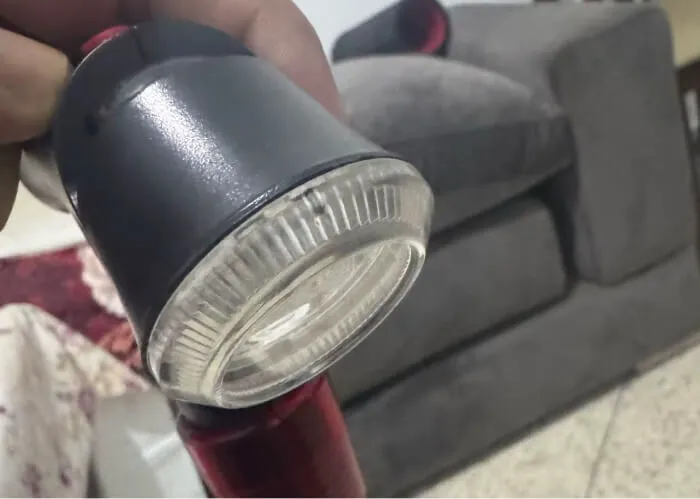
The Ready Walker is an adjustable, folding cane with a pivoting four-point base that lets it stand on its own, a second lower handle to help push up from a chair or bed, a built-in LED light, an alarm and quick height adjustment. It supports up to 300 lb. Because it folds, your parent can carry it when they need both hands on the railing. As with any cane, practice on stairs with a therapist first, check that the base sits fully on the step, and remember that no cane eliminates fall risk. It costs $59.99, ships from Ohio and has a 30-day guarantee. Read our Ready Walker review (4.5/5).
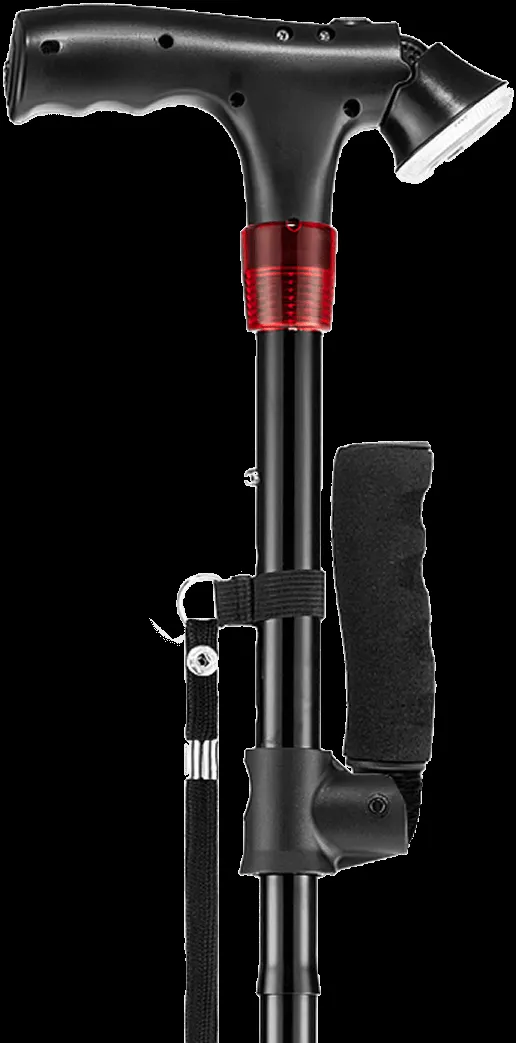
An adjustable cane for steadier steps
Ready Walker: quick height adjustment, four-point self-standing base, folding frame, second handle for standing up, LED light and alarm. Supports up to 300 lb. $59.99, ships from Ohio, 30-day guarantee.
Check today's price →$59.99 · ships from Ohio · 30-day guarantee
How do you make the stairs themselves safer?
- Handrails on both sides, full length, firmly attached.
- Bright lighting with switches at the top and bottom.
- Contrasting tape on step edges.
- Non-slip treads or a secure carpet runner.
- Nothing on the stairs: no shoes, bags or laundry piles.
- Fix loose or broken steps right away.
See stair safety for seniors and our home modifications guide.
How do you carry things on stairs?
Ideally, don't. Carrying a laundry basket or a bag means no hand for the railing. Use a small backpack or a cross-body bag, a bag hung on the cane only if the therapist approves, or keep a basket at the top and bottom of the stairs so items can wait until someone else can carry them. Avoid carrying anything that blocks the view of the steps.
Does the same technique work for curbs and single steps?
Yes. For a curb or a single step into the house, use the same rule: step up with the stronger leg, then bring up the cane and weaker leg; step down with the cane and weaker leg first. Approach curbs straight on, not at an angle, and look for curb cuts or ramps when possible.
How should your parent practice?
- Learn the technique with a physical therapist.
- Practice on a single step with a railing, with someone standing by.
- Repeat until the sequence feels automatic.
- Move on to a short flight of stairs, still with help nearby.
- Use the stairs alone only when the therapist says it's safe.
Strength and balance exercises make stairs easier over time. See balance exercises for seniors.
When are stairs no longer a good idea?
If your parent feels very unsteady on stairs even with a railing, has fallen on stairs, needs to stop often to rest, or is recovering from surgery, it may be time to limit stair use. Options include moving the bedroom to the ground floor, adding a half bath downstairs, installing a stair lift, or using a walker on one floor. A physical or occupational therapist can help decide. See walker vs cane and fall prevention for seniors.
What about stairs at night?
Nighttime stair trips are especially risky: your parent may be drowsy, dizzy from standing up quickly, or without their glasses. Avoid stairs at night when possible by keeping a bathroom on the same floor as the bedroom. If stairs can't be avoided, light them well with motion-sensor lights, and keep the cane and glasses by the bed. See night-time fall prevention.
What are the most common mistakes?
- Leading with the weaker leg going up, or the stronger leg going down.
- Placing the cane at the edge of the step.
- Skipping the railing.
- Rushing or taking stairs two at a time.
- Using a cane that's the wrong height or has a worn tip.
- Carrying things with both hands.
The bottom line
To use a cane on stairs, remember "up with the good, down with the bad": the stronger leg leads going up, the cane and weaker leg lead going down. Always use the railing, take one step at a time, keep the cane in the middle of the tread and practice with a physical therapist first. Make the stairs safer with railings, lighting and clear steps.
For an adjustable, folding cane that adds stability, our pick is the Ready Walker. Check today's Ready Walker price.
Sources
- American Academy of Orthopaedic Surgeons, OrthoInfo. How to Use Crutches, Canes and Walkers.
- Centers for Disease Control and Prevention. Older Adult Falls: Facts and Stats.
- Official Ready Walker product page, checked October 2026.
Frequently asked questions
How do you go up stairs with a cane?
Hold the handrail, step up with the stronger leg first, then bring the cane and the weaker leg up to the same step. Take one step at a time.
How do you go down stairs with a cane?
Hold the handrail, place the cane on the step below, step down with the weaker leg, then bring the stronger leg down to the same step.
What does up with the good, down with the bad mean?
Going up, the stronger leg leads. Going down, the cane and the weaker leg lead. It's the order taught for canes and crutches on stairs.
Which hand holds the cane on stairs?
Usually the hand opposite the weaker leg, with the other hand on the railing. If the railing is on the cane side, hold the railing and carry the cane in the other hand.
Is it safe to use a quad cane on stairs?
Only if the base fits fully on the step. Some quad bases are too wide for narrow treads. Ask a physical therapist.
When should seniors stop using stairs?
If they feel very unsteady even with a railing, have fallen on stairs or need to stop often. Options include moving the bedroom downstairs or a stair lift.

Laura Bennett
Laura Bennett is the pen name of the Aging Parents at Home editorial team at Iqueda Media LLC. We write for adult children who want to help their aging parents stay safe and independent at home. The team researches daily-living and safety products, reads the official guidance from public health and safety organizations, and checks prices, policies and buyer feedback. We are not doctors, nurses or physical therapists. Her guides are built on official public health and safety guidance, manufacturer information, checkout and return policies, and buyer feedback, and are updated when offers change. More about Laura.