
- Stand slightly behind and to the side of their weaker side, close enough to steady them.
- Offer your forearm for them to hold, or hold them lightly at the elbow or a gait belt; don't pull their hand or arm.
- Walk at their pace, with short steps, and look ahead for hazards.
- Use the right walking aid, at the right height, and let them lead.
- Plan rest stops and know what to do if they start to fall.
General information, not medical advice. A physical therapist can teach you and your parent safe walking and assisting techniques in person, which is the best way to learn. If your parent falls and is hurt, call 911.
Walking beside a parent who has become unsteady can be nerve-racking. You want to help, but you're not sure where to hold, how close to stand, or what to do if they lose their balance. Many adult children instinctively grab their parent's hand or arm and pull, which can actually throw off their balance. Others hover so closely that their parent feels smothered.
There's a right way to help, and it's simple to learn. This guide covers how to position yourself, how to give support without taking over, how to handle stairs, curbs and doorways, what to do if your parent starts to fall, and how to encourage independence.
Why does the way you help matter?
Falls are common and serious in later life. The CDC reports that more than one in four adults aged 65 and older falls each year, and falls are the leading cause of injury in older adults. Helping the right way:
- Keeps your parent balanced instead of being pulled off center.
- Protects you from strain and from falling together.
- Preserves their confidence and independence.
- Lets them build strength by doing as much as they safely can.
Where should you stand when helping someone walk?
- Stand slightly behind and to the side of your parent, usually on their weaker side.
- Stay close, within arm's reach, so you can steady them quickly.
- Match their pace and step with them.
- If they use a cane, stand on the side opposite the cane (the weaker side), since the cane is held in the hand opposite the weaker leg.
- Keep your own feet apart and knees slightly bent for a stable base.
How should you hold your parent?
| Method | When it works | Avoid |
|---|---|---|
| Your forearm under their hand | They hold onto you; they control the support | Pulling them along |
| Light hold at the elbow | Guiding and steadying | Squeezing or lifting the arm |
| Hand on the lower back or a gait belt | More unsteady walkers; recommended by therapists | Holding clothing, which can tear or slip |
| Side-by-side, arms linked | Steady walkers who want a little reassurance | Uneven terrain |
Never pull your parent by the hand or arm or lift them under the armpits, which can injure shoulders and makes balance worse. A gait belt, a sturdy belt worn around the waist with handholds, gives you a secure grip close to their center of gravity. Ask a physical therapist to show you how to use one.
How do you choose the right walking aid?
A walking aid lets your parent support themselves, so they depend less on you. The right choice depends on how much support they need. A cane helps with mild balance problems or a weaker leg; a walker gives more support for people who are more unsteady. See walker vs cane and how to choose a cane. Any aid must be the right height: see how to measure cane height. A physical therapist can recommend the right device.
Which cane helps most with independence?
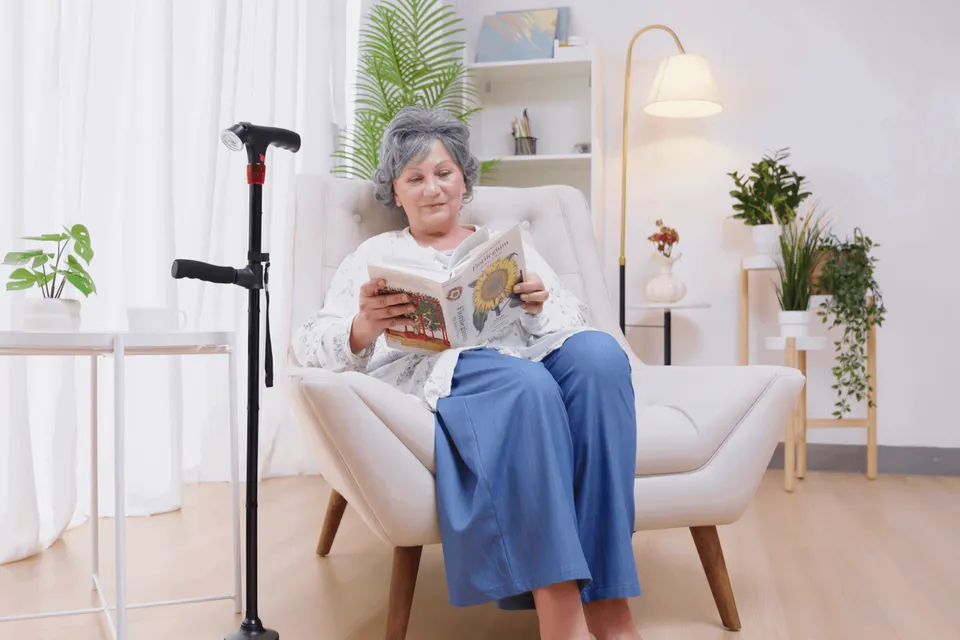
Many falls happen in the moments around walking: getting up from a chair, reaching for a cane that's fallen over, or moving through a dark house at night. A cane designed for those moments helps your parent manage on their own.
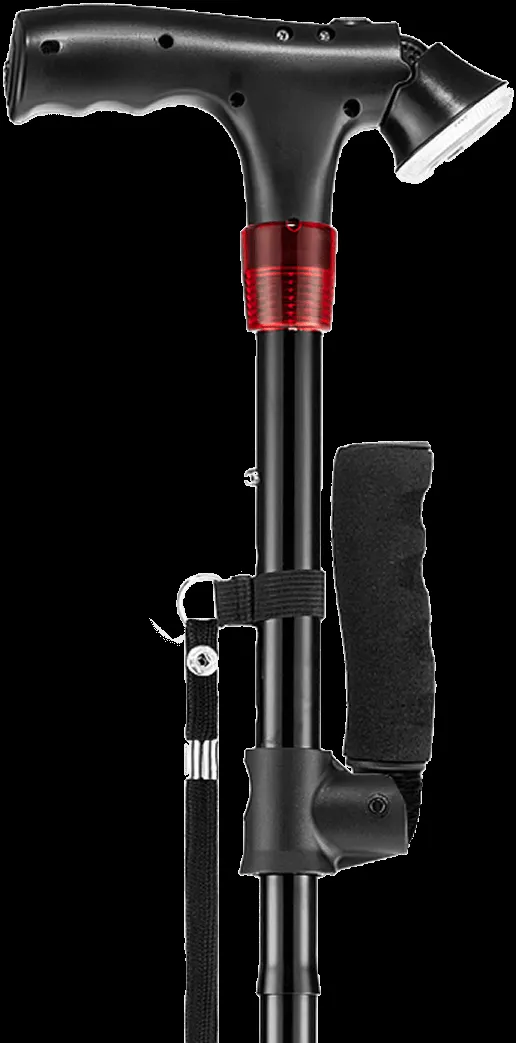
The Ready Walker is a folding cane with a pivoting four-point base that lets it stand on its own, so your parent doesn't have to bend to pick it up. It has a second lower handle to help push up from a chair or bed, a built-in LED light for nighttime trips, quick height adjustment and an alarm, and it supports up to 300 lb. It's designed for light walking support; it doesn't replace a walker for those who need more support, and no cane eliminates fall risk. It costs $59.99, ships from Ohio and has a 30-day guarantee. Read our Ready Walker review (4.5/5) and how to use a cane.
More independence between your visits
Ready Walker: self-standing four-point base, second handle for standing up, LED light, alarm and height adjustment. Supports up to 300 lb. $59.99, ships from Ohio, 30-day guarantee.
Check today's price →$59.99 · ships from Ohio · 30-day guarantee
How do you help your parent stand up to start walking?
- Have them scoot to the front edge of the chair, feet flat and slightly apart.
- Ask them to lean forward ("nose over toes").
- They push up with their hands on the armrests, not by pulling on you or the walker.
- Stand to the side and steady them at the hip or gait belt.
- Pause once standing, to let any dizziness pass, before walking.
See dizziness when standing up for why that pause matters.
How do you handle curbs, doorways and uneven ground?
- Curbs: approach straight on, stop, then step up with the stronger leg first (cane and weaker leg follow). Step down with the cane and weaker leg first.
- Doorways: open the door fully and let your parent go through first while you hold it, or go through together slowly.
- Uneven ground, grass and gravel: slow down, shorten steps and look a few feet ahead.
- Ramps: take them slowly and use the handrail.
- Wet or icy surfaces: avoid them when possible. See winter safety for seniors.
How do you help on stairs?
On stairs, your parent should hold the handrail. Going up, stand one step below and slightly behind them. Going down, stand one step below them, in front, facing them or to the side. "Up with the good, down with the bad": the stronger leg leads going up, the weaker leg and cane lead going down. See how to use a cane on stairs and stair safety for seniors.
What should you do if your parent starts to fall?
It's natural to try to stop a fall completely, but trying to hold up a falling adult often leads to both of you getting hurt. Instead, guide the fall:
- Keep your back straight and widen your stance.
- Pull your parent close to your body, holding the gait belt or their waist.
- Bend your knees and let them slide down your leg to the floor gently.
- Protect their head.
- Stay with them, check for injuries, and don't rush to get them up.
If they're hurt, can't move, hit their head or seem confused, call 911. If they're unhurt, see how to get up after a fall.
How do you encourage independence without risking safety?
It's tempting to do everything for an unsteady parent, but less activity leads to weaker muscles and more falls. Let them walk as much as they safely can, offer support only when needed, and encourage strength and balance exercises. The National Institute on Aging notes that exercise to improve balance and strength is one of the most effective ways to reduce fall risk. See balance exercises for seniors.
How can you make walking at home safer?
- Clear walkways of rugs, cords and clutter.
- Light hallways and the path to the bathroom.
- Add grab bars and handrails where your parent holds on.
- Arrange furniture to create wide paths and resting spots.
- Keep the walking aid within reach of the bed and chair.
See our home modifications guide.
How do you talk about needing help?
Many parents feel embarrassed about needing support. Offer help casually ("Want to take my arm here? This sidewalk is bumpy"), let them decide, and don't comment on every step. Praise what they do well. If they refuse to use a walking aid they clearly need, ask the doctor or physical therapist to recommend it. See when an aging parent refuses help.
When should you ask for a physical therapist?
A physical therapist can evaluate your parent's walking, recommend the right aid, teach exercises and show you how to assist safely. Ask the doctor for a referral if your parent has fallen, is more unsteady than before, is recovering from a hospital stay, or you feel unsure how to help them.
The bottom line
To help an elderly parent walk, stand slightly behind and to the side of their weaker side, let them hold your forearm or use a gait belt, walk at their pace and never pull. Choose the right walking aid at the right height, learn how to guide a fall safely and encourage as much independence as they can safely manage.
For a cane that stands on its own and helps your parent stand up, our pick is the Ready Walker. Check today's Ready Walker price.
Sources
- Centers for Disease Control and Prevention. Older Adult Falls: Facts and Stats.
- National Institute on Aging. Falls and Fractures in Older Adults: Causes and Prevention.
- Official Ready Walker product page, checked October 2026.
Frequently asked questions
How do you help an elderly person walk?
Stand slightly behind and to the side of their weaker side, let them hold your forearm or use a gait belt, walk at their pace and never pull them by the hand or arm.
Which side should you stand on when helping someone walk?
Usually the weaker side. If they use a cane, stand on the side opposite the cane, since the cane is held opposite the weaker leg.
What is a gait belt?
A sturdy belt worn around the waist with handholds, giving the helper a secure grip near the person's center of gravity. Ask a physical therapist how to use one.
What should you do if an elderly person starts to fall while walking?
Don't try to hold them up. Widen your stance, pull them close, bend your knees and guide them gently to the floor, protecting their head. Call 911 if they're hurt.
How do you help an elderly parent with stairs?
They hold the handrail. Stand one step below them going up and in front of them going down. The stronger leg leads going up, the weaker leg and cane lead going down.
What cane gives seniors more independence?
A stable cane at the right height. The Ready Walker stands on its own, has a second handle for standing up and a built-in light. $59.99 with a 30-day guarantee.

Laura Bennett
Laura Bennett is the pen name of the Aging Parents at Home editorial team at Iqueda Media LLC. We write for adult children who want to help their aging parents stay safe and independent at home. The team researches daily-living and safety products, reads the official guidance from public health and safety organizations, and checks prices, policies and buyer feedback. We are not doctors, nurses or physical therapists. Her guides are built on official public health and safety guidance, manufacturer information, checkout and return policies, and buyer feedback, and are updated when offers change. More about Laura.