
- Get a yearly eye exam and keep glasses up to date.
- Treat eye conditions like cataracts, glaucoma and macular degeneration.
- Be careful with bifocals and progressives on stairs and curbs; single-vision glasses for walking can help.
- Light the home brightly and evenly, with night lights on the path to the bathroom.
- Add contrast: tape on step edges, contrasting grab bars and toilet seats.
General information, not medical advice. Sudden changes in vision, such as loss of vision, flashes of light, new floaters or a curtain over part of your sight, need urgent medical care. Call the eye doctor right away or go to the emergency room.
When we think about falls, we think about legs and balance. But eyes matter just as much. To walk safely, we need to see the edge of a step, a rug corner, a pet on the floor or a change from carpet to tile. As eyes age, all of that becomes harder, especially in dim light, on stairs and at night.
Many vision problems that raise fall risk can be improved with an eye exam, new glasses, treatment or simple changes at home. This guide explains how vision affects falls, the common eye conditions to watch for, the glasses issue many people don't know about, and practical ways to make the home easier to see.
How does vision affect fall risk?
The CDC reports that more than one in four adults aged 65 and older falls each year, and vision problems are one of the recognized risk factors. Fall prevention groups like the National Council on Aging note that older adults with low vision are more likely to fall. Vision affects falls in several ways:
- Depth perception: judging the height of steps and curbs.
- Contrast sensitivity: seeing the edge of a step that's the same color as the next one.
- Glare: bright sunlight or shiny floors that hide hazards.
- Adjusting to darkness: older eyes take longer to adapt when lights go off.
- Peripheral vision: noticing obstacles to the side.
Which eye conditions raise fall risk?
| Condition | How it affects vision |
|---|---|
| Cataracts | Cloudy, blurry vision, glare, faded colors; very common and treatable with surgery |
| Glaucoma | Gradual loss of side vision, often unnoticed until advanced |
| Macular degeneration | Loss of central vision; trouble seeing details and faces |
| Diabetic eye disease | Blurry or patchy vision |
| Presbyopia and outdated glasses | Blurry vision at certain distances |
The National Eye Institute explains that low vision, vision loss that can't be fully corrected with glasses, contacts or surgery, is more common in older adults and can make daily activities harder, but vision rehabilitation can help people make the most of the sight they have.
How often should your parent have an eye exam?
Many eye specialists recommend a comprehensive dilated eye exam every one to two years for adults 65 and older, or more often with diabetes or existing eye disease. Ask your parent's eye doctor what's right for them. The exam checks not just for new glasses but for cataracts, glaucoma and macular degeneration, which may have no early symptoms. Medicare Part B covers some eye exams for people with diabetes or at high risk for glaucoma, and many Medicare Advantage plans include vision benefits.
Can bifocals and progressive lenses cause falls?
They can, on stairs and curbs. Bifocals and progressive lenses use the lower part of the lens for reading. When your parent looks down at a step or curb while walking, they may be looking through the reading section, which makes the ground blurry and distances hard to judge. Some tips:
- Tilt the head down rather than lowering the eyes when going down stairs.
- Ask the eye doctor about single-vision distance glasses for walking outdoors and in unfamiliar places.
- Take extra time on stairs and curbs.
- Allow time to adjust to new glasses before tackling stairs alone.
Does cataract surgery reduce falls?
Cataract surgery is one of the most common and effective surgeries for older adults, and clearer vision makes daily life and walking easier. Research has linked timely cataract surgery with fewer falls in some groups. If your parent has cataracts that are affecting daily activities, it's worth talking with the eye doctor about whether surgery makes sense. In the weeks after surgery, be extra careful while vision settles and glasses are updated.
How do you light the home for aging eyes?
Older eyes need much more light than younger eyes to see the same detail. Good lighting is one of the cheapest and most effective fall-prevention steps:
- Brighter bulbs in every room, especially halls, stairs, kitchen and bathroom.
- Even lighting without dark patches; add lamps where needed.
- Night lights from the bedroom to the bathroom, ideally motion-activated.
- Switches at both ends of hallways and stairs, or smart bulbs.
- Reduce glare with sheer curtains, matte floor finishes and lampshades.
- Light inside closets and cabinets.
See night-time fall prevention.
How does contrast help?
Contrast makes edges and objects easier to see when vision is blurry. Simple ideas:
- Contrasting tape on the edge of each step, and on the top and bottom steps especially.
- Grab bars and toilet seats in a color that stands out from the wall and bowl.
- A dark mat in a light bathtub, or the reverse.
- Colored dishes that contrast with food and the table.
- Light switches and outlets that stand out from the wall.
See stair safety for seniors and bathroom safety for seniors.
What helps most at night?
Night is when vision problems and falls overlap most: eyes adjust slowly to darkness, your parent may not put on glasses, and the trip to the bathroom is often rushed. Keep glasses on the nightstand, light the path, and consider a walking aid that adds light.
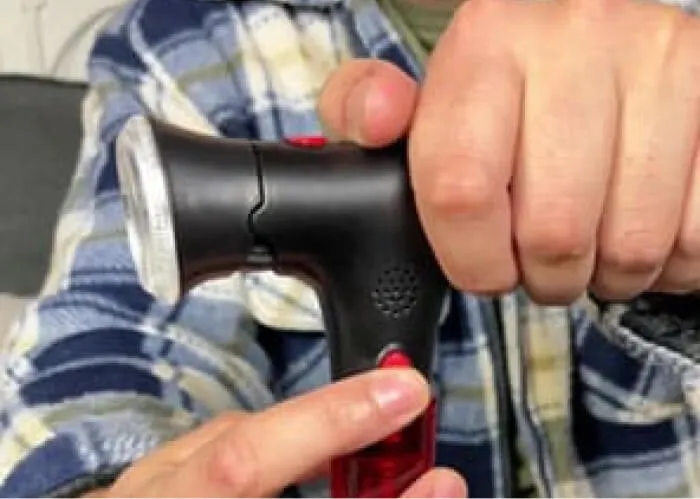
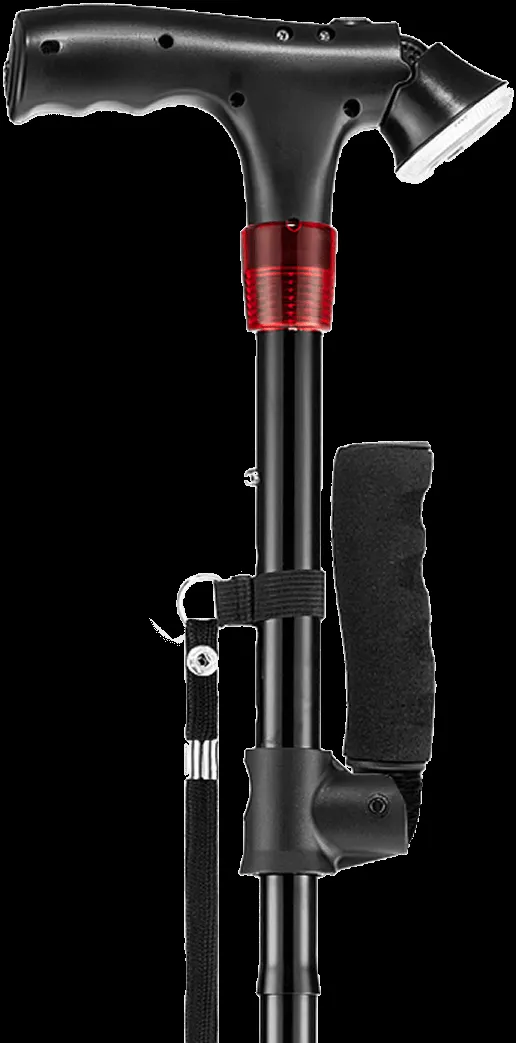
The Ready Walker is a folding cane with a built-in LED light that shines on the floor ahead, a pivoting four-point base that lets it stand on its own next to the bed, a second lower handle to help push up when standing, quick height adjustment and an alarm. It supports up to 300 lb. It's for light walking support, doesn't replace good home lighting or a walker for those who need more support, and doesn't eliminate fall risk. It costs $59.99, ships from Ohio and has a 30-day guarantee. Read our Ready Walker review (4.5/5).
Light on the floor where your parent steps
Ready Walker: built-in LED light, self-standing four-point base, second handle for standing up, alarm and height adjustment. Supports up to 300 lb. $59.99, ships from Ohio, 30-day guarantee.
Check today's price →$59.99 · ships from Ohio · 30-day guarantee
Why does clutter matter more with poor vision?
With blurry or patchy vision, an object on the floor may simply not be seen. Keep walkways completely clear, put things back in the same place every time, remove loose rugs, and keep furniture arrangements consistent. Tell your parent before moving furniture, and avoid leaving items like bags, shoes or pet toys on the floor during visits.
How do you stay safe outdoors?
- Wear sunglasses and a hat with a brim to reduce glare.
- Allow time for eyes to adjust when going from bright sun into a dim building.
- Watch for curbs and uneven sidewalks; use curb cuts when possible.
- Walk in familiar, well-lit areas, especially in the evening.
See walking safety for seniors.
What is vision rehabilitation?
For people with low vision that can't be fully corrected, vision rehabilitation services teach new ways to do daily tasks and stay safe. Specialists can recommend magnifiers, special lighting, high-contrast items and training to move around the home and community safely. Ask the eye doctor for a referral to a low vision specialist. An occupational therapist can also help adapt the home; see occupational therapy for seniors.
Which glasses habits help prevent falls?
- Keep glasses clean; smudges blur vision more than people realize.
- Keep a spare pair in a known spot, so your parent never walks around without them.
- Put glasses on before getting out of bed at night.
- Check the fit: glasses that slide down the nose mean looking through the wrong part of the lens.
- Don't wear reading glasses while walking.
- Update prescriptions as the eye doctor recommends.
Why are stairs and curbs the hardest to see?
Stairs and curbs require judging depth and edges, which are the first things to suffer when vision blurs or contrast sensitivity drops. A step that's the same color as the one below it can look like a flat surface. Patterned carpet on stairs makes it worse. That's why contrasting edge strips, bright even lighting and handrails on both sides make such a big difference, and why it's worth using the railing every single time, even on familiar stairs. See how to use a cane on stairs.
How do you encourage your parent to get their eyes checked?
Many older adults put off eye exams, assuming blurry vision is just part of aging, or worry about costs or surgery. Offer to make the appointment and drive them, since they may not be able to drive after dilation. Frame it around something they care about: reading, driving, seeing grandchildren's faces, staying independent. If they've had a near-fall, connect it gently to vision.
The bottom line
Vision changes are a big, fixable part of fall risk. Make sure your parent has regular eye exams and up-to-date glasses, treat eye conditions, be careful with bifocals on stairs, brighten and even out the lighting, add contrast to edges and keep floors clear. At night, light the path and keep glasses and a walking aid within reach.
For a cane that lights the floor where your parent walks, our pick is the Ready Walker. Check today's Ready Walker price.
Sources
- National Eye Institute. Low Vision.
- National Council on Aging. Including Adults With Low Vision in Falls Prevention.
- Centers for Disease Control and Prevention. Older Adult Falls: Facts and Stats.
- Official Ready Walker product page, checked October 2026.
Frequently asked questions
How does poor vision cause falls in the elderly?
It makes it harder to judge depth, see step edges and obstacles, cope with glare and adjust to darkness, all of which raise the risk of tripping and missteps.
Which eye conditions increase fall risk?
Cataracts, glaucoma, macular degeneration, diabetic eye disease and outdated glasses can all affect the vision needed to walk safely.
Can bifocals cause falls?
They can on stairs and curbs, because looking down through the reading part makes the ground blurry. Ask about single-vision glasses for walking.
How often should seniors get eye exams?
Many eye specialists recommend a comprehensive exam every one to two years after 65, or more often with diabetes or eye disease.
What lighting is best for older eyes?
Bright, even lighting without glare, night lights on the path to the bathroom and switches at both ends of halls and stairs.
Does a cane with a light help at night?
It can light the floor where your parent steps. The Ready Walker has a built-in LED light, stands on its own and has a second handle for standing up.

Laura Bennett
Laura Bennett is the pen name of the Aging Parents at Home editorial team at Iqueda Media LLC. We write for adult children who want to help their aging parents stay safe and independent at home. The team researches daily-living and safety products, reads the official guidance from public health and safety organizations, and checks prices, policies and buyer feedback. We are not doctors, nurses or physical therapists. Her guides are built on official public health and safety guidance, manufacturer information, checkout and return policies, and buyer feedback, and are updated when offers change. More about Laura.