- Stronger bones: a bone density test, treatment if recommended, calcium, vitamin D and weight-bearing exercise.
- Fewer falls: balance and strength exercise, a medication review, an eye exam, home safety changes and the right walking aid.
General information, not medical advice. Talk to your parent's doctor about bone density testing, treatment options, calcium and vitamin D, and safe exercises. If your parent falls and may have a fracture (pain, can't put weight on a leg, deformity), call 911.
Many families only learn that a parent has osteoporosis after a broken hip or wrist. Osteoporosis is often called a "silent" disease because bone loss causes no symptoms until a bone breaks. And when bones are fragile, the biggest danger isn't the osteoporosis itself; it's falling.
The good news is that there's a lot you can do on both sides of the problem: keeping bones as strong as possible and preventing the falls that break them. This guide explains how osteoporosis and falls are connected, how to find out if your parent is at risk, what helps bones, what helps prevent falls, and how to make the home safer.
What is osteoporosis?
Osteoporosis is a condition in which bones lose density and become weak and porous, making them more likely to break. The National Institute on Aging explains that it's especially common in older women after menopause, but men get it too. Fractures related to osteoporosis most often happen in the hip, wrist and spine.
Risk factors include older age, being female, a family history of osteoporosis or hip fracture, a small or thin body frame, low calcium and vitamin D, inactivity, smoking, heavy alcohol use and certain medications, such as long-term steroids.
How are osteoporosis and falls connected?
Most broken bones in older adults happen because of a fall. The CDC reports that more than one in four adults aged 65 and older falls each year, and that falls are the most common cause of hip fractures. When bones are thin, even a simple fall from standing can cause a fracture. That's why doctors treat osteoporosis and fall risk together.
| Fracture | Typical cause | Why it matters |
|---|---|---|
| Hip | Falling sideways | Often needs surgery; can affect independence long-term |
| Wrist | Putting a hand out to break a fall | Often an early warning sign of osteoporosis |
| Spine (compression) | Can happen with minor strain or a fall | Back pain, height loss, stooped posture |
How do you find out if your parent has osteoporosis?
A bone density test (usually a DXA scan) measures bone strength. It's quick and painless. Guidelines generally recommend screening for women 65 and older and for younger women and men with risk factors; ask the doctor what's right for your parent. If your parent has already broken a bone from a minor fall, ask specifically whether osteoporosis testing and treatment are needed, since a first fracture raises the risk of another.
What helps keep bones stronger?
- Medication, if the doctor recommends it, to slow bone loss or build bone.
- Calcium from food (dairy, fortified foods, leafy greens) or supplements if advised.
- Vitamin D, which helps the body absorb calcium; ask about testing.
- Weight-bearing and strength exercise, like walking and light resistance training, as approved by the doctor.
- Not smoking and limiting alcohol.
- Enough protein and overall good nutrition.
Treatment decisions depend on your parent's bone density, fracture history and other health conditions, so this is a conversation for their doctor.
What helps prevent falls?
Fall prevention is where families can make the biggest everyday difference:
- Balance and strength exercise, such as tai chi or a program from a physical therapist. See balance exercises for seniors.
- Medication review for drugs that cause dizziness or drowsiness. See medications that can cause falls.
- Eye exams and updated glasses. See vision and falls.
- Safe footwear. See non-slip shoes for seniors.
- Home safety changes: grab bars, lighting, no loose rugs.
- The right walking aid, at the right height.
Which exercises are safe with osteoporosis?
Exercise is important, but some movements put fragile bones at risk. Generally:
- Good choices (with the doctor's OK): walking, light strength training, balance exercises, tai chi, posture exercises.
- Movements to be careful with: deep forward bending and twisting of the spine (like toe touches, sit-ups or some yoga poses), and high-impact activities, especially with spine fractures.
A physical therapist can design a safe program that builds strength and balance without stressing the spine.
How can a walking aid help?
For a parent with fragile bones who also feels a little unsteady, a walking aid adds support at the riskiest moments: standing up, walking on uneven ground and moving around at night.
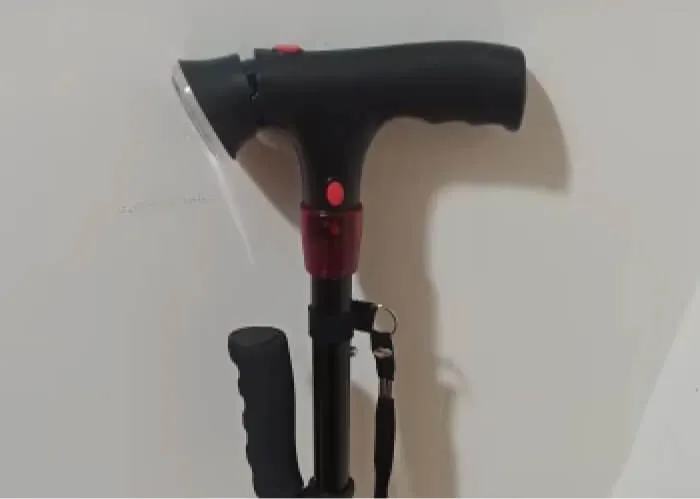
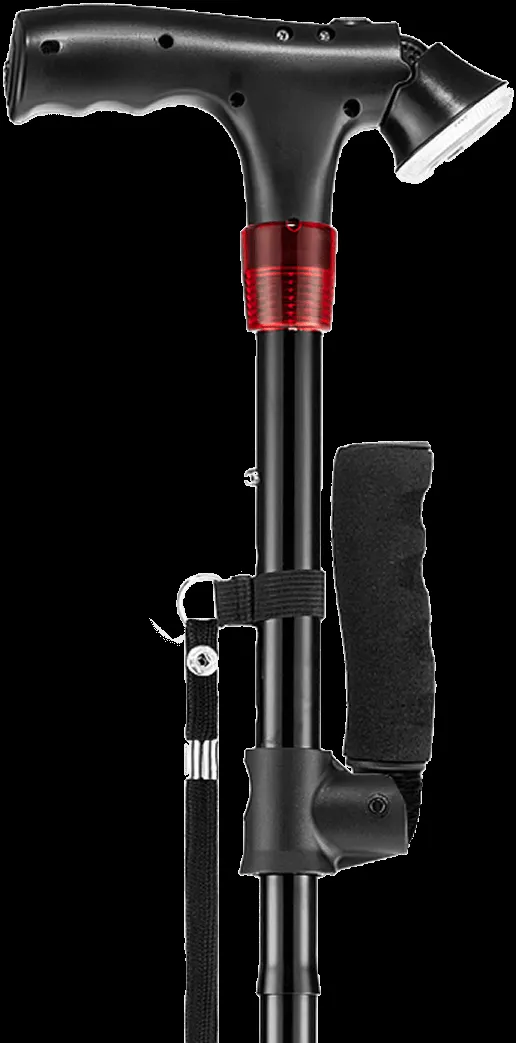
The Ready Walker is a folding cane with a pivoting four-point base that lets it stand on its own, so your parent doesn't have to bend down to pick it up, a second lower handle to help push up from a chair or bed, a built-in LED light for nighttime trips, quick height adjustment and an alarm. It supports up to 300 lb. It's designed for light walking support and doesn't replace a walker for those who need more support; no cane eliminates fall risk. It costs $59.99, ships from Ohio and has a 30-day guarantee. Read our Ready Walker review (4.5/5).
Support at the moments falls happen most
Ready Walker: self-standing four-point base, second handle for standing up, LED light for nighttime, alarm and height adjustment. Supports up to 300 lb. $59.99, ships from Ohio, 30-day guarantee.
Check today's price →$59.99 · ships from Ohio · 30-day guarantee
How do you make the home safer for fragile bones?
- Grab bars by the toilet and in the shower, plus a non-slip mat and shower chair.
- Night lights from the bedroom to the bathroom.
- Handrails on both sides of stairs.
- No loose rugs, cords or clutter on the floor.
- Everyday items stored between waist and shoulder height, to avoid bending and reaching.
- A bed and chairs at a height that's easy to rise from.
See our home modifications guide and bathroom safety checklist.
How can your parent protect their spine in daily life?
- Bend at the knees and hips, not the waist, when picking things up.
- Carry loads close to the body, and keep them light.
- Avoid twisting while lifting.
- Use a reacher for items on the floor or high shelves.
- Sit to put on shoes and socks.
An occupational therapist can teach safe ways to do daily tasks. See occupational therapy for seniors.
What should you do after a fracture?
A broken bone, especially a hip fracture, is a turning point. Recovery often involves surgery, rehabilitation and changes at home. Ask the doctor about osteoporosis treatment to prevent a second fracture, plan for physical therapy, and prepare the home before your parent returns. Our hospital discharge checklist covers what to set up, and fear of falling explains how to help with the anxiety that often follows a fracture.
Do men get osteoporosis too?
Yes. Osteoporosis is often thought of as a women's condition, but many older men have low bone density and break bones from falls. Men are less likely to be tested and treated. If your father has risk factors, such as long-term steroid use, low testosterone, heavy drinking or a previous fracture from a minor fall, ask his doctor about bone health.
How do you start the conversation?
Many older adults don't know their bone density or think fractures are just "part of getting older." If your parent has had a fall, a fracture, lost height or developed a stooped posture, it's a natural moment to suggest asking the doctor about bone health. Offer to go along to the appointment and bring a list of questions: Should I have a bone density test? Do I need treatment? How much calcium and vitamin D should I get? What exercises are safe for me?
Do hip protectors help?
Hip protectors are padded garments worn over the hips to absorb some of the force of a sideways fall. Research on them has been mixed, largely because they only help when they're actually worn, and many people find them uncomfortable. They may be worth discussing with the doctor for people at very high risk of hip fracture, such as those who fall often. If your parent tries them, comfort and correct fit are what make them practical day to day.
What should a bone-friendly diet include?
A diet that supports bones isn't complicated. It includes good sources of calcium, like milk, yogurt, cheese, calcium-fortified plant milks and juices, canned salmon or sardines with bones, tofu made with calcium, and leafy greens; foods with vitamin D, like fatty fish and fortified milk; enough protein at each meal; and plenty of fruits and vegetables. Many older adults don't get enough calcium or vitamin D from food alone, so the doctor may suggest supplements. Ask before starting them, since too much calcium from supplements isn't helpful, and some supplements interact with medications.
The bottom line
Osteoporosis makes bones fragile, and falls are what usually break them. Protect your parent on both fronts: ask the doctor about bone density testing and treatment, support calcium, vitamin D and safe exercise, and reduce falls with balance training, a medication review, eye care, a safer home and the right walking aid.
For a cane that adds support when standing and walking, our pick is the Ready Walker. Check today's Ready Walker price.
Sources
- National Institute on Aging. Osteoporosis.
- Centers for Disease Control and Prevention. Older Adult Falls: Facts and Stats.
- Official Ready Walker product page, checked October 2026.
Frequently asked questions
How are osteoporosis and falls related?
Osteoporosis makes bones fragile, and falls cause most fractures in older adults. A simple fall from standing can break a hip, wrist or spine.
Who should get a bone density test?
Guidelines generally recommend screening for women 65 and older and for younger women and men with risk factors. Ask the doctor, especially after a fracture from a minor fall.
What exercises are safe with osteoporosis?
With the doctor's OK, walking, light strength training, balance exercise, tai chi and posture work. Be careful with deep forward bending, twisting and high impact.
How can seniors with osteoporosis prevent falls?
Balance and strength exercise, a medication review, eye exams, safe shoes, home changes like grab bars and lighting, and the right walking aid.
Do men get osteoporosis?
Yes. Many older men have low bone density and break bones in falls, but they're less often tested. Ask the doctor if there are risk factors.
What cane helps a parent with osteoporosis?
A stable cane at the right height. The Ready Walker stands on its own, so there's no bending to pick it up, and has a second handle for standing up.

Laura Bennett
Laura Bennett is the pen name of the Aging Parents at Home editorial team at Iqueda Media LLC. We write for adult children who want to help their aging parents stay safe and independent at home. The team researches daily-living and safety products, reads the official guidance from public health and safety organizations, and checks prices, policies and buyer feedback. We are not doctors, nurses or physical therapists. Her guides are built on official public health and safety guidance, manufacturer information, checkout and return policies, and buyer feedback, and are updated when offers change. More about Laura.