- Timing: your therapist decides when to switch, based on strength, balance and pain.
- Side: hold the cane in the hand opposite the new knee.
- Technique: move the cane and the operated leg together.
- Stairs: up with the good leg, down with the cane and operated leg.
- Fit: top of the cane at the wrist crease.
General information, not medical advice. Always follow your surgeon's and physical therapist's instructions after knee replacement. In an emergency, call 911.
Knee replacement is one of the most common surgeries for older adults with severe arthritis. Recovery usually involves several stages: a walker at first, then a cane, then walking independently. The cane stage is an important bridge, giving support while the new knee gets stronger and balance returns. Using it correctly helps recovery go smoothly and reduces fall risk. This guide explains when people usually switch to a cane, how to use it, how to handle stairs and chairs and how to set up the home for recovery.
What are the typical stages of walking after knee replacement?
| Stage | Typical aid | Goal |
|---|---|---|
| Early days after surgery | Walker | Safe walking with support |
| As strength improves | Cane | More natural walking, less support |
| Later recovery | No aid (or cane for longer outings) | Independent walking |
Timing varies widely. Your care team decides when to move between stages.
When can you switch to a cane?
Therapists usually look for good balance, the ability to put enough weight on the new knee, controlled pain and a steady walking pattern with the walker. Switching too early can increase fall risk; switching too late can slow progress. Follow your therapist's guidance.
Which hand should hold the cane?
The hand opposite the operated knee. If the right knee was replaced, hold the cane in the left hand. This supports the new knee as you step. The AAOS OrthoInfo explains this technique.
How do you walk with a cane after surgery?
- Stand tall with the cane in the opposite hand.
- Move the cane forward with the operated leg.
- Press down on the cane as weight goes onto the new knee.
- Step through with the other leg.
- Take even, comfortable steps.
See how to use a cane and cane for knee pain.
How do you use stairs?
Use a handrail. Going up, step with the non-operated leg first, then bring the cane and operated leg. Going down, lead with the cane and operated leg, then the non-operated leg. "Up with the good, down with the bad." See how to use a cane on stairs.
How do you sit and stand safely?
Use chairs with armrests and firm seats at a good height. Scoot forward, keep the operated leg slightly forward if instructed, push up with your arms and stand slowly. See how to stand up from a chair.
Support for the road back to full strength
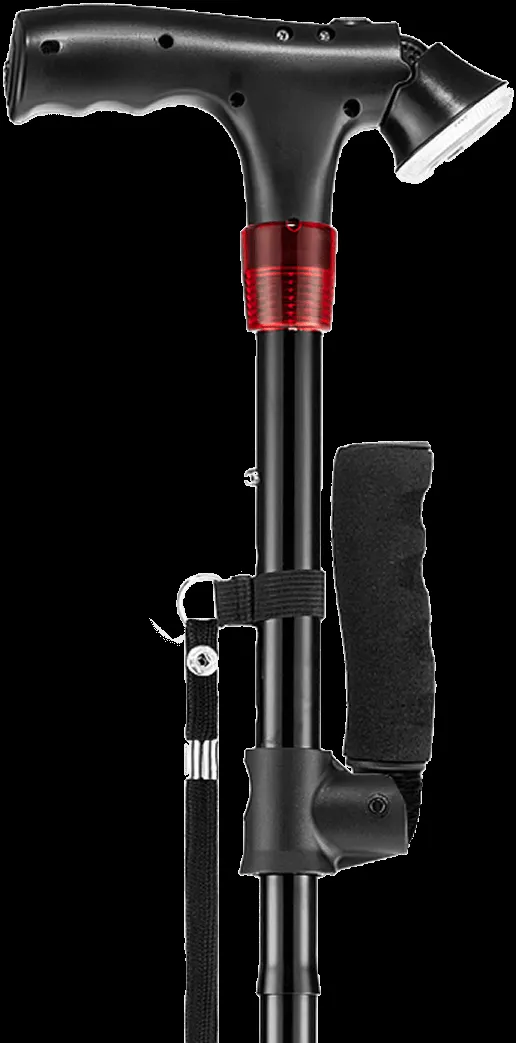
Ready Walker: stands on its own, second handle for getting up from bed and chairs, LED light for nighttime and a built-in alarm. $59.99 with a 30-day money-back guarantee.
Check today's price →$59.99 · ships from Ohio · 30-day guarantee
Can the Ready Walker help during recovery?
If your care team recommends a cane, the Ready Walker offers a pivoting four-point base that stands on its own, a second handle to help push up from chairs and bed, a built-in LED light for nighttime bathroom trips and an alarm. Its wider base may give more stability than a single-point cane during the transition. Ask your therapist whether it suits your stage of recovery. Read our Ready Walker review.
How should the home be set up?
- Clear paths of rugs and cords.
- Arrange a bedroom on the main floor if stairs are difficult.
- Install grab bars and a raised toilet seat.
- Use a shower chair.
- Add night lights from bed to bathroom.
- Keep frequently used items at waist height.
See hospital discharge checklist and home modifications.
Why do exercises matter?
Doing the prescribed exercises at home builds strength and range of motion, which is the key to walking without an aid. The National Institute on Aging explains the value of strength and balance exercise for older adults.
How do you avoid falls during recovery?
- Use the aid every time, even for short trips.
- Wear supportive, non-slip shoes.
- Don't rush; take your time getting up.
- Avoid wet floors and ice.
- Ask for help with carrying things.
See fall prevention.
When should you call the doctor?
- Increasing pain, swelling, redness or warmth around the knee.
- Fever or drainage from the incision.
- Calf pain or swelling (possible blood clot).
- Chest pain or shortness of breath: call 911.
How much does the Ready Walker cost?
The Ready Walker is $59.99, with a 30-day money-back guarantee and shipping from Ohio.
How long will you need a cane?
It varies. Some people use a cane for a few weeks, others longer, depending on age, strength, the other knee and overall health. Many keep a cane for longer walks or uneven ground even after they walk independently at home. Your therapist will guide you.
How do you get in and out of the car?
Push the seat all the way back, back up to the seat, sit first, then swing your legs in together, keeping the operated leg straighter if instructed. See getting in and out of a car.
How do you handle nighttime bathroom trips?
Keep the cane or walker within reach of the bed, use night lights and get up slowly. A cane with a built-in light helps. See night-time fall prevention.
What about winter recovery?
Avoid icy paths during recovery. If you must go out, use an ice tip on the cane and have someone walk with you. See cane ice tips.
How can family help?
- Prepare the home before surgery.
- Drive to physical therapy.
- Encourage home exercises.
- Help with groceries, laundry and cleaning.
- Watch for warning signs and help call the doctor.
See caregiving plan.
What if the other knee is also painful?
Tell your therapist. They may adjust the aid or technique. Some people need a walker longer or use two canes.
Does walking cause swelling?
Some swelling after activity is common during recovery. Elevate the leg and use ice as your care team recommends. If swelling increases sharply or comes with calf pain, call the doctor.
How does pain affect walking?
Well-managed pain makes exercise and walking easier. Follow the prescribed pain plan, and talk to the doctor if pain limits therapy. Some medications can cause dizziness, so take extra care with walking.
How do you know you're ready to stop using the cane?
Your therapist will check that you walk steadily without limping, can handle stairs and curbs and have good balance. Some people then use the cane only outdoors or on long walks for a while.
Which shoes are best?
Supportive, closed-back shoes with non-slip soles. Avoid loose slippers. See non-slip shoes for seniors.
Which type of cane is best after surgery?
Many therapists start with a single-point cane once balance is good, or a quad cane if more stability is needed. A self-standing cane with a wide base and a second handle can be helpful during the transition. Ask your therapist which fits your stage. See quad cane vs single-point cane.
Should the cane height change during recovery?
It shouldn't need to change much, but check it with the shoes you wear most. Your therapist can confirm the fit.
What mistakes should you avoid?
- Holding the cane on the same side as the new knee.
- Switching from walker to cane too early.
- Skipping home exercises.
- Rushing on stairs.
- Walking on ice or wet floors.
When can you walk outdoors?
When your therapist says it's safe, start with short walks on flat, dry surfaces, then gradually increase distance. Avoid crowds and uneven ground early on.
What's the takeaway?
Follow your care team, use the cane correctly every time and keep doing your exercises.
Can you kneel after knee replacement?
Many people find kneeling uncomfortable for a while. Ask your surgeon when it's safe, and use a cushion and a sturdy support to get up and down. Never use a cane alone to push up from kneeling; use a stable chair or counter.
When can you return to normal activities?
Driving, shopping and light chores return gradually. Your surgeon will advise when it's safe to drive, usually based on pain, strength and medications. Plan help with errands in the early weeks.
How do you stay motivated?
Track small wins, like walking farther or climbing stairs with less pain, and celebrate them.
Can you travel during recovery?
Ask your surgeon about timing. Long trips may raise clot risk; plan breaks to walk and stretch.
Is rest important too?
Yes. Balance activity with rest and elevation, as your care team advises.
The bottom line
After knee replacement, the cane stage bridges walker and independent walking. Switch when your therapist says, hold the cane opposite the new knee, move it with the operated leg, use "up with the good, down with the bad" on stairs and keep doing your exercises.
For a stable cane during recovery, our pick is the Ready Walker. Check today's Ready Walker price.
Sources
- AAOS OrthoInfo. How to Use Crutches, Canes and Walkers.
- National Institute on Aging. Exercise for Older Adults.
- Official Ready Walker product page, checked October 2026.
Frequently asked questions
When can I use a cane after knee replacement?
When your surgeon or therapist says your balance and strength are ready.
Which hand do I hold the cane in after knee replacement?
The hand opposite the new knee.
How do I use stairs after knee replacement?
Up with the non-operated leg, down with the cane and operated leg, using a handrail.
How long will I need a cane?
It varies from weeks to longer; your therapist will guide you.
What warning signs should I watch for?
Increasing pain, swelling, redness, fever, calf pain or shortness of breath.
Can a self-standing cane help in recovery?
It can add stability; ask your therapist if it suits your stage.

Laura Bennett
Laura Bennett is the pen name of the Aging Parents at Home editorial team at Iqueda Media LLC. We write for adult children who want to help their aging parents stay safe and independent at home. The team researches daily-living and safety products, reads the official guidance from public health and safety organizations, and checks prices, policies and buyer feedback. We are not doctors, nurses or physical therapists. Her guides are built on official public health and safety guidance, manufacturer information, checkout and return policies, and buyer feedback, and are updated when offers change. More about Laura.