- Choose one that fits your cane's tip size and flips up when you go indoors.
- Flip it down outdoors on ice and packed snow; flip it up indoors so it doesn't scratch floors or slip on tile.
- Pair it with shoe ice grips and boots with good tread.
- Still avoid ice when you can: clear and salt paths, walk slowly and use handrails.
General information, not medical advice. Ask a doctor or physical therapist which mobility aid and winter accessories are right for your parent. In an emergency, call 911.
Winter is the most dangerous season for older adults who use a cane. A regular rubber cane tip grips well on dry pavement, but on ice it can slide out as easily as a shoe. Falls are a leading cause of injury for older adults, and icy walkways, parking lots and steps make them more likely. A cane ice tip is a small, inexpensive accessory that can make winter walking safer. This guide explains how ice tips work, how to choose and use one, and what else to do to stay steady on snow and ice.
Why are falls on ice so risky for seniors?
More than one in four adults aged 65 and older falls each year, according to the CDC, and falls can cause fractures and head injuries. On ice, even a careful walker can slip. Slower reflexes, weaker muscles, balance changes and conditions like osteoporosis make the consequences more serious. See winter safety for seniors and osteoporosis and falls.
What is a cane ice tip?
An ice tip is an attachment with small metal spikes or a toothed plate that fits over or near the bottom of a cane. Most designs flip up when not needed, so you can walk indoors without the spikes touching the floor. Some replace the cane's rubber tip entirely; others clip on above it.
What types are available?
| Type | How it works | Notes |
|---|---|---|
| Flip-down ice grip | Clamps to the cane; spikes flip down | Most convenient for going indoors and out |
| Replacement ice tip | Replaces the rubber tip | Must be removed indoors |
| Multi-prong ice base | Several spiked points | More grip; heavier |
How do you choose the right ice tip?
- Match the diameter of your cane's shaft or tip.
- Choose one that flips up easily with one hand.
- Check that it locks securely in both positions.
- Look for rust-resistant metal.
- Make sure it doesn't change the cane's height noticeably; recheck height after installing. See how to measure cane height.
How do you use an ice tip safely?
- Before going out, flip the ice tip down and check that it's locked.
- Take short, flat-footed steps, like a penguin, with your weight over your front foot.
- Place the cane firmly before each step.
- Use handrails on steps.
- Flip the tip up as soon as you're indoors, especially on tile, wood or store floors, where metal can slip.
See how to walk on ice and how to use a cane.
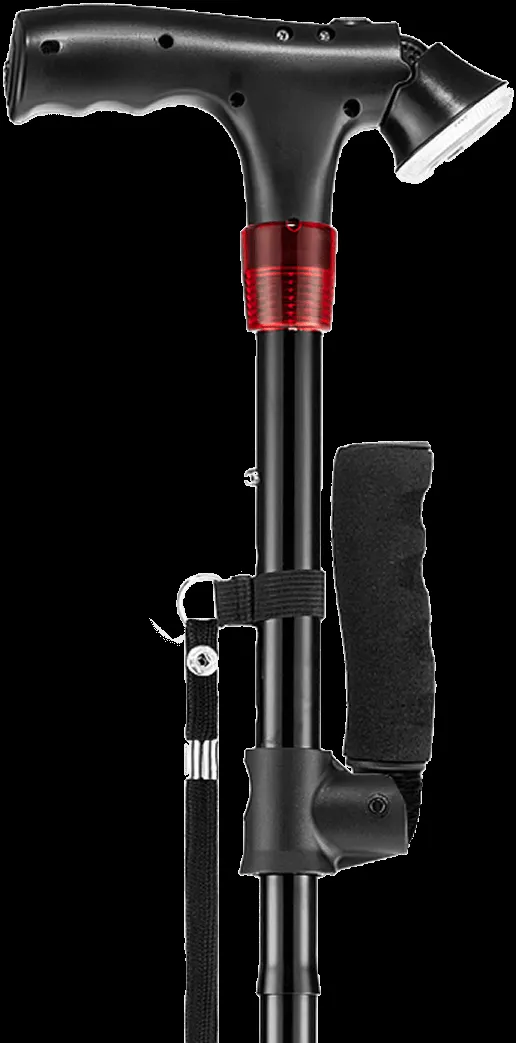
Steady support with a light for dark winter days
Ready Walker: stands on its own, second handle for getting up from bed and chairs, LED light for nighttime and a built-in alarm. $59.99 with a 30-day money-back guarantee.
Check today's price →$59.99 · ships from Ohio · 30-day guarantee
Why does a stable cane help in winter?
A cane with a wider base gives more support than a single-point tip. The Ready Walker has a pivoting four-point base that stands on its own, a second handle for help getting up from chairs and bed, a built-in LED light for dark mornings and evenings, and an alarm to get attention. It costs $59.99 and ships with a 30-day money-back guarantee. Check whether an ice attachment fits your parent's cane model, and ask a physical therapist about winter use. Read our Ready Walker review and quad cane vs single-point cane.
What about shoes and boots?
An ice tip helps the cane; your parent's feet need grip too. Choose boots with deep, soft rubber treads, and consider slip-on ice cleats for icy days (removed indoors). See non-slip shoes for seniors.
How do you make paths safer?
- Clear snow early and spread sand or de-icer.
- Keep entryways well lit.
- Install sturdy handrails on outdoor steps.
- Put a mat inside the door to dry shoes and cane tips.
- Arrange help with snow removal.
The National Institute on Aging recommends keeping outdoor walkways clear and well lit to prevent falls.
When should your parent stay in?
On days with freezing rain or black ice, the safest choice is often to stay home. Ask family, neighbors or delivery services to help with errands. Keep a stocked pantry and medications ready before storms.
What if your parent falls on ice?
If they're hurt, call 911. If not, rest, check for injuries and get up slowly using a stable object. A personal alarm can help them get attention from people nearby. See how to get up after a fall and what to do after an elderly fall.
How much does the Ready Walker cost?
The Ready Walker is $59.99, with a 30-day money-back guarantee and shipping from Ohio.
Why must the ice tip be flipped up indoors?
Metal spikes that grip ice can slide on smooth indoor surfaces like tile, polished wood and store floors, and they can scratch floors. Many falls happen at the transition from outdoors to indoors. Make flipping the tip up part of the routine as soon as your parent steps inside, and keep a mat at the entrance to dry the cane and boots.
How do you maintain an ice tip?
- Dry it after use to prevent rust.
- Check that the spikes aren't bent or worn down.
- Make sure the clamp stays tight.
- Replace the rubber tip of the cane when it's worn smooth.
What about walkers in winter?
Walkers with wheels can slide on ice, and tennis-ball glides don't grip well on snow. Ask a physical therapist about winter options, and avoid icy surfaces when using a walker. See walker vs cane.
Should your parent practice first?
Yes. Practice flipping the tip up and down at home and walking a few steps on a dry driveway before trying icy conditions. A physical therapist can watch and give tips. The AAOS OrthoInfo guide explains basic cane technique.
Why does visibility matter in winter?
Winter afternoons get dark early, and black ice is hard to see. A cane with a built-in light, a flashlight or a headlamp helps your parent spot icy patches and lets drivers see them in parking lots. Reflective clothing helps too.
What's a winter walking checklist?
- Ice tip flipped down and locked outdoors.
- Boots with good tread or ice cleats.
- Paths cleared and sanded.
- Handrails on steps.
- Light for dark hours.
- Phone or personal alarm in a pocket.
- Ice tip flipped up indoors.
Does an ice tip change cane height?
Some attachments add a little height or change how the tip meets the ground. After installing, check that your parent's elbow bends slightly (about 15 to 20 degrees) when holding the handle, and adjust the cane if needed.
How do you plan winter errands?
Go out during daylight, after paths have been cleared and salted. Choose stores with close parking and covered entrances, and use delivery services on icy days. Bring a phone and a personal alarm. See holiday shopping safety for seniors.
Can neighbors help?
Many communities have volunteers who shovel snow for older residents. Ask neighbors, faith groups or the local Area Agency on Aging. Clear paths make the biggest difference.
Should your parent carry a personal alarm in winter?
A loud personal alarm can help someone get attention from people nearby if they slip and can't get up easily. It's a local siren, not a monitored service, so it doesn't call 911; your parent should also carry a phone. See personal alarm vs medical alert.
Is an ice tip a good winter gift?
Yes, especially paired with good boots or ice cleats. It's a small, practical gift that shows you've thought about their safety. See Christmas gifts for an elderly dad and Christmas gifts for an elderly mom.
What's the takeaway?
Flip the ice tip down outdoors and up indoors, wear grippy boots, walk slowly and stay in on the iciest days.
How much do ice tips cost?
Ice tip attachments are generally inexpensive compared with the cost of a fall. Choose a sturdy, well-reviewed design that fits your parent's cane.
Which ice melt is safest?
Choose a pet-safe, concrete-friendly product for steps and walkways, and spread it before storms when possible. Sand adds grip immediately.
Should you keep a spare tip?
Yes, a spare rubber tip and ice attachment by the door means no excuses on icy mornings.
The bottom line
A cane ice tip adds grip on ice and packed snow; flip it down outside and up indoors. Combine it with good boots, cleared and salted paths, handrails and slow, flat-footed steps, and stay in on the worst ice days.
For steady support and a built-in light, our pick is the Ready Walker. Check today's Ready Walker price.
Sources
- Centers for Disease Control and Prevention. Older Adult Falls Data.
- National Institute on Aging. Falls and Fractures in Older Adults.
- Official Ready Walker product page, checked October 2026.
Frequently asked questions
What is a cane ice tip?
A metal-spiked attachment for a cane that grips ice and packed snow.
Should I use an ice tip indoors?
No, flip it up indoors; metal can slip on tile and wood.
Do ice tips prevent falls?
They add grip on ice, but slow steps, good boots and cleared paths matter too.
How do I choose a cane ice tip?
Match your cane's size, choose one that flips easily and locks securely.
What else helps seniors walk on ice?
Boots with good tread or cleats, handrails, sand on paths and short, flat steps.
When should seniors stay home in winter?
On days with freezing rain or black ice.

Laura Bennett
Laura Bennett is the pen name of the Aging Parents at Home editorial team at Iqueda Media LLC. We write for adult children who want to help their aging parents stay safe and independent at home. The team researches daily-living and safety products, reads the official guidance from public health and safety organizations, and checks prices, policies and buyer feedback. We are not doctors, nurses or physical therapists. Her guides are built on official public health and safety guidance, manufacturer information, checkout and return policies, and buyer feedback, and are updated when offers change. More about Laura.