- Most accidental alarms come from loose push buttons or slide switches.
- A pin needs a deliberate tug, which is easy on purpose but hard by accident.
- Push the pin back in and the alarm stops.
General information, not medical or security advice. A personal alarm is a local siren: it does not call 911 or notify family. In an emergency, call 911.
One of the most common worries families have about personal safety alarms is false alarms. Nobody wants a siren blasting from Mom's purse in the middle of church, at the pharmacy counter or in a quiet restaurant. And an older parent who has one embarrassing false alarm often stops carrying the alarm altogether, which defeats the purpose. The good news is that accidental alarms are mostly a design problem, and they're easy to avoid if you choose the right type. This guide explains why some alarms go off by accident, which designs don't, how to carry one so it stays ready but quiet, and what to do if one sounds when it shouldn't.
Why do some personal alarms go off by accident?
Personal alarms use different triggers, and some are much easier to set off than others:
- Push buttons. A single button on the face can be pressed by keys, a phone or simply sitting down with the alarm in a pocket.
- Slide switches. A switch can slip to "on" when it rubs against fabric or other objects in a bag.
- Squeeze triggers. Some alarms sound when squeezed, which happens easily in a tight pocket or a crowded purse.
- Motion or tilt sensors. Alarms designed to sound when dropped can trigger when a bag is tossed on a seat.
All of these are convenient in an emergency, but they're also convenient for accidents.
Why are pull-pin alarms the safest choice against false alarms?
A pull-pin alarm has a small pin attached to a loop or wrist strap. The siren sounds only when the pin is pulled out of the alarm body. That one design choice changes everything:
- Pressure, bumps and squeezing don't trigger it.
- It won't go off from being sat on, dropped or jostled in a bag.
- Pulling the pin is a deliberate, simple motion, even for hands with arthritis.
- Pushing the pin back in silences it right away.
That's why we recommend pull-pin alarms for older adults in our guide to the best personal safety alarm for seniors.
How does the HaloSiren avoid accidental alarms?
The HaloSiren is a keychain alarm built around a pull pin. When the pin comes out, it sounds a 130-decibel siren and flashes a bright LED so people nearby notice and can find the person who needs help. Put the pin back, and it stops. There's no app to set up, no subscription and no monthly fee, and it's rechargeable, so there are no coin batteries to replace.
It's important to be clear about what it is: a loud local alarm. It doesn't call 911, it doesn't text family, and it doesn't detect falls. For many parents, that simplicity is a strength. There's nothing to configure and nothing to go wrong in a pocket. Read the full HaloSiren review for details.
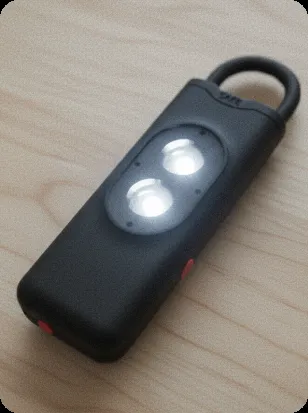
A pull-pin alarm that stays quiet until it's needed
HaloSiren: 130 dB siren and flashing LED, rechargeable, no app and no monthly fee. $29.99, or 5 for $89.97, with a 90-day guarantee.
Check today's price →$29.99, or 5 for $89.97 · 90-day guarantee
How do the trigger types compare?
| Trigger type | Risk of accidental alarm | Ease of use in an emergency |
|---|---|---|
| Pull pin (e.g. HaloSiren) | Low | Easy: one firm tug |
| Single push button | High | Easy |
| Slide switch | Medium | Moderate; small switches can be fiddly |
| Squeeze trigger | High in tight pockets | Easy |
| Drop/motion sensor | Medium to high | Automatic, but prone to false triggers |
How should your parent carry the alarm?
Even the best alarm only helps if it's within reach. These carrying habits keep it ready but quiet:
- On the key ring. Keys go everywhere, so the alarm does too.
- Clipped to a purse strap or belt loop, not buried at the bottom of a bag.
- On a walker or cane (see how to carry things while using a cane).
- By the bed at night, where it can be reached without getting up.
- Pin side facing out so it can be grabbed and pulled quickly.
How do you test it without startling the neighbors?
Test the alarm once a month so you know the battery is charged and the pin works. To keep it from being alarming:
- Warn anyone nearby that you're about to test it.
- Test it outdoors or in a closed room.
- Pull the pin for a second or two, then push it back in.
- Recharge it if the sound or light seems weaker than usual.
Practicing also helps your parent build the habit of pulling the pin quickly, which matters in a real emergency. Wondering whether the sound is strong enough? Read is a personal alarm loud enough?
What should you do if an alarm does go off by accident?
- Stay calm and find the alarm; the flashing light helps.
- Push the pin back in or turn it off according to the instructions.
- Say "sorry, false alarm" to people nearby. Most people are understanding.
- Check how it happened and change where it's carried if needed.
For a pull-pin alarm, accidental triggers are rare. When they happen, it's usually because the pin loop got caught on something, so attaching it to a key ring instead of a bag handle often solves it.
Should your parent have a medical alert system instead?
It depends on what you're worried about. A personal alarm is best for calling attention nearby: in a parking lot, on a walk, on the street or at home with neighbors close. A medical alert system with monitoring connects to a call center or family and may include fall detection, but it usually comes with a monthly fee. Some families use both. We compare them in personal alarm vs medical alert.
Why does a quiet, reliable alarm matter for independence?
Older adults who want to keep living independently often resist gadgets that feel complicated or embarrassing. An alarm that never goes off by accident, needs no app and fits on a key ring is easy to accept. It gives your parent the confidence to walk to the mailbox, go shopping or take an evening stroll, and it gives you peace of mind. The National Institute on Aging notes that planning for safety at home and in daily routines is a key part of aging in place. For more ideas, see safety devices for elderly parents living alone.
Where is a personal alarm most useful?
- Parking lots and garages (see parking lot safety for seniors).
- Walks in the neighborhood, especially at dusk.
- At home after a fall, to get the attention of neighbors or someone in another room.
- At night, next to the bed (see night safety for seniors living alone).
- Travel and unfamiliar places.
What should you look for when choosing an alarm?
- A pull-pin trigger to avoid pocket alarms.
- About 120 to 130 dB of sound.
- A flashing light to help people find the person.
- Rechargeable or long-life batteries.
- A key ring or clip that's easy to attach.
- No app or subscription if your parent prefers simple.
- A clear return policy or guarantee.
How do you talk to a parent about carrying one?
Frame it as independence, not fragility: "This lets you keep walking to the store on your own, and I won't worry as much." Show them how small and quiet it is, and that it won't go off in their pocket. Let them test it once so they know what to expect. Many parents agree more easily when the alarm is a gift for everyone in the family, which is one reason the multi-packs are popular. Our guide on talking to aging parents about the future has more tips for these conversations.
Who will hear the alarm, and what happens next?
A 130 dB siren is loud enough to get the attention of people nearby: neighbors, other shoppers, passersby or someone in another part of the house. That's its job. It's worth planning the "what next" with your parent: which neighbors are usually home, who has a spare key, and when to call 911 themselves if they're able. If your parent lives alone and you want someone to be notified automatically, a monitored medical alert service can be added alongside the alarm. Your local Area Agency on Aging, which you can find through the Eldercare Locator, can tell you about check-in programs and safety services in your parent's area.
A little planning turns a loud alarm into a real safety net.
The bottom line
If you're worried about a personal alarm going off in a pocket or purse, choose a pull-pin design. It only sounds when the pin is deliberately pulled, so squeezing, bumping and sitting on it won't set it off, and pushing the pin back in silences it instantly. The HaloSiren combines that pull-pin trigger with a 130 dB siren, a flashing light, a rechargeable battery and no monthly fee. Keep it on the key ring, test it monthly, and remember that it's a local alarm, not a 911 caller.
Our pick: the HaloSiren Personal Safety Alarm
Keychain alarm with a 130 dB siren and flashing LED light. Pull the pin and people nearby hear it. Rechargeable, no app, no monthly fee.
Check today's price →$29.99, or 5 for $89.97 · 90-day guarantee
Frequently asked questions
Which personal alarms won't go off in a pocket?
Pull-pin keychain alarms, because they only sound when the pin is deliberately pulled out.
Why do personal alarms go off by accident?
Push buttons, slide switches, squeeze triggers and motion sensors can be triggered by pressure or bumps in a pocket or bag.
How do you stop a pull-pin alarm?
Push the pin back into the alarm and the siren stops.
Does the HaloSiren call 911?
No. It's a 130 dB local siren with a flashing light. It doesn't call 911, notify family or detect falls.
How often should you test a personal alarm?
About once a month, briefly, and recharge it if the sound or light seems weaker.
Where should a senior carry a personal alarm?
On the key ring, clipped to a purse strap or belt loop, on a walker, and by the bed at night.

Laura Bennett
Laura Bennett is the pen name of the Aging Parents at Home editorial team at Iqueda Media LLC. We write for adult children who want to help their aging parents stay safe and independent at home. The team researches daily-living and safety products, reads the official guidance from public health and safety organizations, and checks prices, policies and buyer feedback. We are not doctors, nurses or physical therapists. Her guides are built on official public health and safety guidance, manufacturer information, checkout and return policies, and buyer feedback, and are updated when offers change. More about Laura.