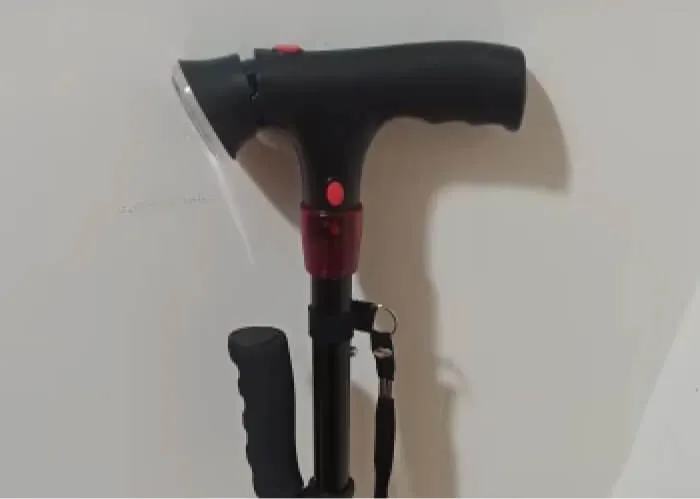
- No bending to pick it up, a common moment when people lose balance.
- Hands free to open doors, pay at a counter, eat or use a phone.
- Always within reach next to the bed, chair or toilet.
- Often more stable contact with the ground than a single rubber tip.
General information, not medical advice. A doctor or physical therapist can tell you whether a cane, quad cane or walker is right and help fit it. In an emergency, call 911.
Anyone who has used a standard cane knows the moment: you lean it against a counter to dig out your wallet, and it slides to the floor with a clatter. For a young person, picking it up is just annoying. For an older adult with balance problems, bending down to retrieve a cane can be one of the riskiest moments of the day. That simple problem is why self-standing canes have become so popular.
This guide explains how self-standing canes work, the everyday benefits, how they compare with standard and quad canes, who they suit, what features to look for, how to fit and use one safely and when a walker might be a better choice.
How does a self-standing cane work?
Instead of a single rubber tip, a self-standing cane has a small base with three or four feet, or a wide flexible tip, that lets it stand upright on a flat floor. Some bases pivot to keep more contact with the ground as you walk and on slight slopes. The shaft and handle work like a regular cane.
What are the everyday benefits?
| Situation | Standard cane | Self-standing cane |
|---|---|---|
| Paying at a store counter | Leans and may fall | Stands next to you |
| Opening a door | Juggling or dropping it | Let go, it stays up |
| Sitting down to eat | Hooked on the table or on the floor | Stands by your chair |
| Night trip to the bathroom | Fallen beside the bed | Upright and ready |
| Using the toilet | Hard to keep close | Stands within reach |
Why does not bending matter?
Bending and reaching are common moments when older adults lose balance. The National Institute on Aging recommends reducing risky movements and keeping things within easy reach as part of fall prevention. A cane that stays upright removes one frequent reason to bend down. Falls are common: the CDC reports that more than one in four older adults falls each year. See fall prevention.
How does it compare with other canes?
| Single-point cane | Self-standing cane | Quad cane | |
|---|---|---|---|
| Stands on its own | No | Yes | Yes |
| Weight | Lightest | Light to moderate | Heavier |
| Base size | Single tip | Small multi-foot base | Large rectangular base |
| Support level | Light | Light to moderate | More support |
| Portability | Good | Good; some fold | Bulkier |
See quad cane vs single-point cane.
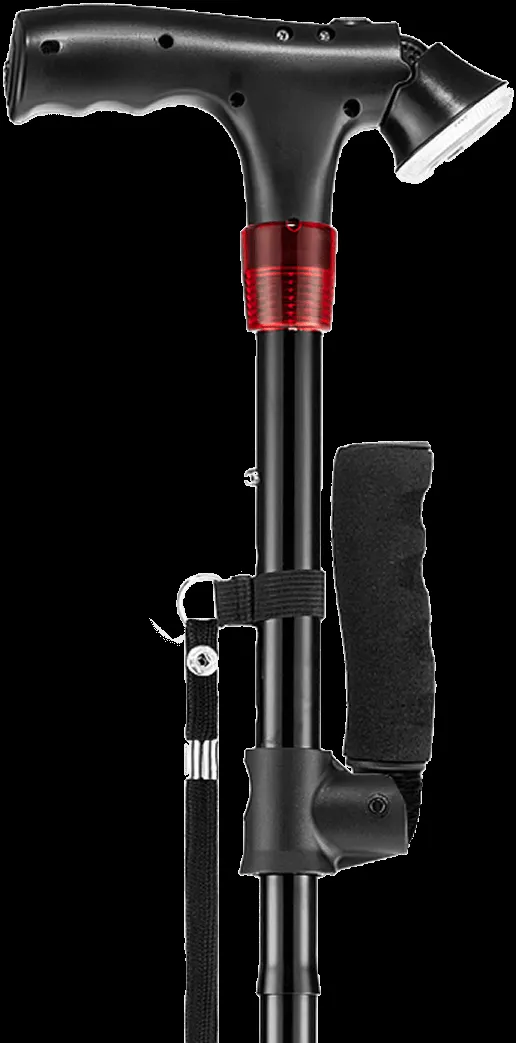
A cane that stands up by itself
Ready Walker: self-standing folding cane with a pivoting base, second handle for standing up, LED light and alarm. Supports up to 300 lb. $59.99, ships from Ohio, 30-day guarantee.
Check today's price →$59.99 · ships from Ohio · 30-day guarantee
Who benefits most?
- People who feel a bit unsteady but don't need a walker.
- Those who often drop their cane or struggle to pick it up.
- People with back, hip or knee pain that makes bending hard.
- Anyone who wants hands free for daily tasks.
- Parents who get up at night.
Which features should you look for?
- Stable base that stands firmly on flat floors.
- Pivoting base for better ground contact.
- Height adjustment to fit correctly.
- Comfortable handle, especially for arthritis.
- Folding design for travel.
- A second, lower handle to help push up from a chair.
- Built-in light for nighttime.
- Weight rating that fits your parent.
Why does a second handle help?
Getting up from a chair, couch or bed is hard when legs are weak. A second handle placed lower on the cane gives a closer, more natural place to push from, then you switch to the top handle once standing. It isn't a substitute for grab bars or a proper lift chair, but many people find it convenient. See how to help a parent walk.
How do you fit and use it safely?
- Adjust the height so the handle reaches the wrist crease with arms relaxed.
- Hold it in the hand opposite the weaker leg.
- Move the cane forward with the weaker leg, then step with the stronger leg.
- Check that the base sits flat before putting weight on it.
- Be careful on very uneven ground, where a wide base can catch.
The American Academy of Orthopaedic Surgeons provides cane-use guidance. See how to use a cane and how to measure cane height.
What are the limits?
A self-standing cane is still a cane. It's designed for light to moderate support, not for people who need to lean heavily or who have frequent falls; a walker may be safer for them. The base stands best on flat surfaces, and on thick carpet, grass or uneven ground it may not stand upright. Your parent should never use the cane alone to pull themselves up from the floor. See walker vs cane.
Why do we like the Ready Walker?
The Ready Walker is a self-standing folding cane with a four-point pivoting base, a second lower handle for standing up, a built-in LED light and a loud alarm. It folds for the car and supports up to 300 lbs. It costs $59.99, ships from Ohio and has a 30-day guarantee. Read our Ready Walker review and folding vs regular cane.
How do you set up the home around a self-standing cane?
Pick a "parking spot" for the cane in each room where your parent sits or sleeps: beside the bed, next to the favorite chair and near the toilet. Keep those spots clear of rugs and clutter so the base sits flat. Add a night light near the bed and bathroom so your parent can see the cane and the floor. If floors are carpeted, test whether the cane stands steadily on that carpet before relying on it.
How does it help on outings?
At restaurants, the cane can stand next to the table instead of being hooked on the chair or placed on the floor where someone might trip. In waiting rooms, at church or in a line, it stays upright while your parent uses their hands. Folding models fit in the car and can be tucked away when not needed. See walking safety for seniors.
Should your parent practice with it?
Yes. Even an easy-to-use cane takes a little getting used to. Practice walking on flat floors at home first, then on ramps, curbs and outdoor paths. Practice standing it up and walking away from it, and using the second handle to stand from a sturdy chair. A physical therapist can watch and give tips. Balance exercises also help; see balance exercises for seniors.
Is a self-standing cane a good gift?
For a parent who's started to feel unsteady, it can be a thoughtful and practical gift, especially when presented as a clever tool. See Christmas gifts for an elderly dad.
Why does a built-in light help?
Nighttime trips to the bathroom are a common time for falls, because people are sleepy, rooms are dark and blood pressure can drop when standing up quickly. A cane with a built-in LED light shines on the floor right where your parent is about to step, helping them spot slippers, pet toys or the edge of a rug. Combined with a self-standing base that keeps the cane upright by the bed, it makes the first steps of the night safer. Still add motion-sensor night lights along the path. See nighttime fall prevention and dizziness when standing up.
What's the benefit of a cane with an alarm?
Some canes, like the Ready Walker, include a loud alarm button. If your parent feels unsteady or needs attention, they can sound it so people nearby notice. It doesn't call 911 or family, so a phone or medical alert is still important for parents who live alone. See personal alarm vs medical alert.
How do you care for the base?
Check the feet of the base regularly for wear, keep them clean of grit and replace them if the manufacturer offers spares. Make sure the pivot moves freely and the shaft locks at the right height.
For many families, a cane that simply stays where you leave it turns into one of the most appreciated upgrades in a parent's daily routine.
Walk safely.
Stay steady.
The bottom line
A self-standing cane stays upright when your parent lets go, which means no risky bending to pick it up, hands free for daily tasks and a cane always within reach by the bed or chair. It suits people who need light to moderate support. Look for a stable, pivoting base, good height adjustment and useful extras like a second handle or light, and ask a physical therapist whether it's the right aid.
Our pick is the Ready Walker. Check today's Ready Walker price.
Sources
- National Institute on Aging. Falls and Fractures in Older Adults.
- Centers for Disease Control and Prevention. Older Adult Falls Data.
- American Academy of Orthopaedic Surgeons (OrthoInfo). How to Use Crutches, Canes and Walkers.
Frequently asked questions
What is a self-standing cane?
A cane with a multi-foot base that stays upright when you let go.
Why is a self-standing cane safer?
It avoids bending to pick it up, a common moment of imbalance.
Is a self-standing cane the same as a quad cane?
Quad canes have a larger base and give more support; self-standing canes are lighter.
Who should use a self-standing cane?
People needing light to moderate support who often drop or lean their cane.
Does it work on carpet and grass?
It stands best on flat floors; thick carpet or grass may not hold it upright.
What does the Ready Walker add?
A pivoting base, second handle for standing up, LED light and alarm.

Laura Bennett
Laura Bennett is the pen name of the Aging Parents at Home editorial team at Iqueda Media LLC. We write for adult children who want to help their aging parents stay safe and independent at home. The team researches daily-living and safety products, reads the official guidance from public health and safety organizations, and checks prices, policies and buyer feedback. We are not doctors, nurses or physical therapists. Her guides are built on official public health and safety guidance, manufacturer information, checkout and return policies, and buyer feedback, and are updated when offers change. More about Laura.