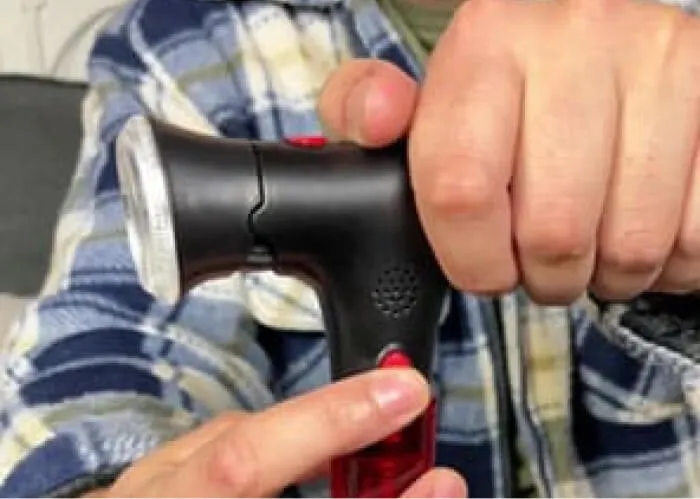
- A regular (fixed) cane is a single solid shaft. It's simple, very sturdy and great for everyday use at home.
- A folding cane collapses into sections, so it fits in a bag, car or under a seat. It's ideal for travel, appointments and people who only need a cane some of the time.
- Good folding canes are sturdy enough for daily use when the joints lock securely; check the weight rating and adjust the height correctly.
- Some folding canes add features like a self-standing base, a second handle for standing up and an LED light, like the Ready Walker.
General information, not medical advice. A doctor or physical therapist can recommend the right mobility aid and help fit it. In an emergency, call 911.
When it's time to choose a cane for an aging parent, one of the first decisions is whether to get a classic one-piece cane or one that folds. Both can provide good support, but they fit different lifestyles. A parent who uses a cane all day at home has different needs from one who only wants support on outings, in crowds or on uneven ground.
This guide compares folding and regular canes on stability, durability, convenience, adjustability and features, explains who each suits best, shows how to fit and use either type safely, and covers newer self-standing folding canes with extra features.
What is a regular cane?
A regular cane has a single shaft, usually aluminum or wood, with a handle and a rubber tip. Many aluminum models adjust in height with push buttons. Wooden canes are often cut to size. They're simple, light and very durable, and there are no joints to loosen over time.
What is a folding cane?
A folding cane is made of several sections connected by an internal elastic cord. You pull the sections apart to fold it into a compact bundle, and snap them together to use it. Most are adjustable in height. Quality folding canes lock firmly and feel solid in use.
How do they compare?
| Regular cane | Folding cane | |
|---|---|---|
| Stability | Very solid | Solid when joints lock properly |
| Portability | Long, awkward in cars and planes | Fits in a bag or under a seat |
| Durability | No joints to wear | Check joints and cord over time |
| Adjustability | Often adjustable | Usually adjustable |
| Weight | Light | Light |
| Extra features | Basic | Some offer self-standing bases, lights, second handles |
| Price | Often low | Low to moderate |
Who should choose a regular cane?
- People who use a cane all day, mostly at home.
- Those who prefer the simplest possible design.
- People who don't travel often.
Who should choose a folding cane?
- Parents who only need a cane sometimes, like on outings or bad days.
- Travelers, since folding canes fit in carry-ons, cars and restaurant booths.
- People who don't want a cane on display when they're sitting.
- Those who'd like extra features such as a light or a self-standing base.
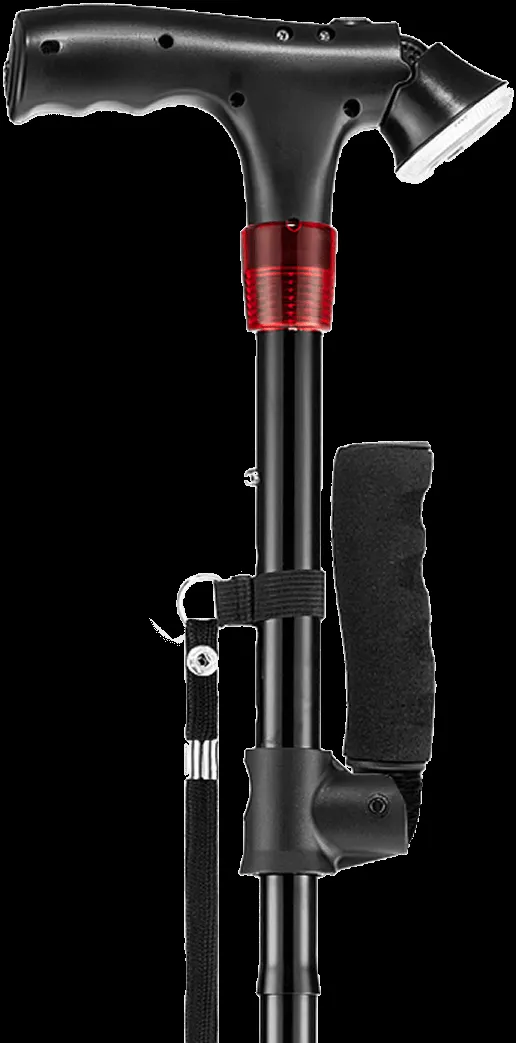
A folding cane that stands on its own
Ready Walker: self-standing folding cane with a pivoting base, second handle for standing up, LED light and alarm. Supports up to 300 lb. $59.99, ships from Ohio, 30-day guarantee.
Check today's price →$59.99 · ships from Ohio · 30-day guarantee
Are folding canes safe for daily use?
Good-quality folding canes are designed for regular use. Check that each joint clicks and locks securely, the height button is fully engaged, the tip is in good condition and the weight rating fits your parent. Inspect the cane every few weeks for wobbling or a loose cord. If it feels unstable, stop using it and replace it. Falls are common in older adults; the CDC reports that more than one in four falls each year, so a stable aid matters.
How do you fit either type?
The American Academy of Orthopaedic Surgeons advises that the top of the cane should reach the crease of the wrist when standing tall with arms relaxed, so the elbow bends slightly when holding it. Hold the cane in the hand opposite the weaker leg. See how to measure cane height and how to use a cane.
What is a self-standing folding cane?
Some folding canes have a wider base with several small feet that lets the cane stand upright on its own. That means it doesn't fall to the floor when your parent lets go to open a door, sit down or use their hands. Picking a cane up off the floor is a common moment of imbalance, so a self-standing base can be a practical benefit. See self-standing cane benefits.
What does the Ready Walker add?
The Ready Walker is a self-standing folding cane with a four-point pivoting base, a second lower handle to help push up from a chair or bed, a built-in LED light for nighttime and a loud alarm. It folds for storage and supports up to 300 lbs. It costs $59.99, ships from Ohio and comes with a 30-day guarantee. Read our Ready Walker review.
Where do quad canes fit in?
Quad canes have a larger rectangular base with four feet and offer more stability than single-point canes, but they're heavier and bulkier. They suit people who need more support than a single-point cane but don't need a walker. See quad cane vs single-point cane and walker vs cane.
How do folding canes help with travel?
- Fold it under the seat on planes, buses and trains.
- Keep it in a tote at restaurants or theaters.
- Store it in the car door pocket or glove box area.
- Ask about airport assistance if walking long distances is hard.
See holiday travel with elderly parents.
What maintenance does each need?
- Check the rubber tip for wear and replace it when it's smooth.
- Make sure height buttons lock fully.
- For folding canes, check joints and the internal cord.
- Wipe the handle and shaft clean.
- Store folded canes so sections aren't bent.
How do you choose?
Think about where your parent will use the cane most, how often they travel, how steady they are and whether they'd benefit from features like a light or a second handle. Involve them in the choice and ask their physical therapist for advice. See the best cane for seniors.
Which handle style is best?
Handles matter as much as the shaft. A curved "crook" handle is classic but concentrates pressure in the palm. An offset handle puts weight directly over the shaft and is often more comfortable. Ergonomic or palm-grip handles spread pressure across the hand and can help people with arthritis. Try a few if you can, and choose one your parent can grip comfortably for a whole walk. Foam grips can add cushioning.
What kind of tip should a cane have?
Standard rubber tips work for most indoor and outdoor surfaces. Larger, flexible tips give more contact with the ground, and some canes come with pivoting bases that keep more of the base in contact on slopes. In winter, ice tips or cane cleats can help on slippery surfaces, but they should be flipped up or removed indoors. Replace worn tips promptly, since a smooth tip can slip.
Does material matter?
Aluminum canes are light, adjustable and durable, which is why most folding canes use it. Wooden canes look classic and feel solid, but are usually a fixed height. Carbon fiber canes are very light but more expensive. For most older adults, adjustable aluminum is a practical, affordable choice.
What if your parent doesn't want to be seen with a cane?
A folding cane can help here, because it can be tucked away when not needed. Stylish colors and designs also help some people feel more comfortable. Emphasize that a cane helps them keep doing the things they love. See when a parent refuses help.
How do canes work on stairs?
On stairs, use the handrail whenever possible. The general rule is "up with the good, down with the bad": step up with the stronger leg first, then bring the cane and weaker leg; step down with the cane and weaker leg first. A folding cane can be folded and carried if both hands are needed for handrails, though it's best to follow a physical therapist's advice. See how to use a cane on stairs and stair safety.
Which cane is better at night?
Many falls happen during nighttime trips to the bathroom. A cane with a built-in light, kept by the bed, helps your parent see the floor. A self-standing cane stays upright by the bed instead of sliding to the floor, so it's easy to grab. Add motion-sensor night lights along the path too. See nighttime fall prevention.
When should you replace a cane?
Replace a cane if it wobbles, the height lock slips, joints don't lock firmly, the shaft is bent or cracked, or the handle is damaged. Tips should be replaced as soon as they look worn.
The bottom line
A regular cane is simple and very sturdy for everyday use at home. A folding cane is just as useful when it locks securely, and it's far easier to carry for travel, outings and part-time use. Self-standing folding canes like the Ready Walker add helpful features, such as standing on their own, a second handle for getting up and a light. Fit any cane correctly and ask a physical therapist which type is best.
Our folding cane pick is the Ready Walker. Check today's Ready Walker price.
Sources
- American Academy of Orthopaedic Surgeons (OrthoInfo). How to Use Crutches, Canes and Walkers.
- Centers for Disease Control and Prevention. Older Adult Falls Data.
- Official Ready Walker product page, checked October 2026.
Frequently asked questions
Is a folding cane as sturdy as a regular cane?
Good folding canes are sturdy when joints lock securely; check the weight rating.
Who should use a folding cane?
Travelers and people who need a cane only some of the time.
Who should use a regular cane?
People who use a cane all day at home and want the simplest design.
How tall should a cane be?
The top should reach the wrist crease with arms relaxed.
What is a self-standing folding cane?
A folding cane with a base that lets it stand upright on its own.
How much is the Ready Walker?
$59.99, shipped from Ohio with a 30-day guarantee.

Laura Bennett
Laura Bennett is the pen name of the Aging Parents at Home editorial team at Iqueda Media LLC. We write for adult children who want to help their aging parents stay safe and independent at home. The team researches daily-living and safety products, reads the official guidance from public health and safety organizations, and checks prices, policies and buyer feedback. We are not doctors, nurses or physical therapists. Her guides are built on official public health and safety guidance, manufacturer information, checkout and return policies, and buyer feedback, and are updated when offers change. More about Laura.