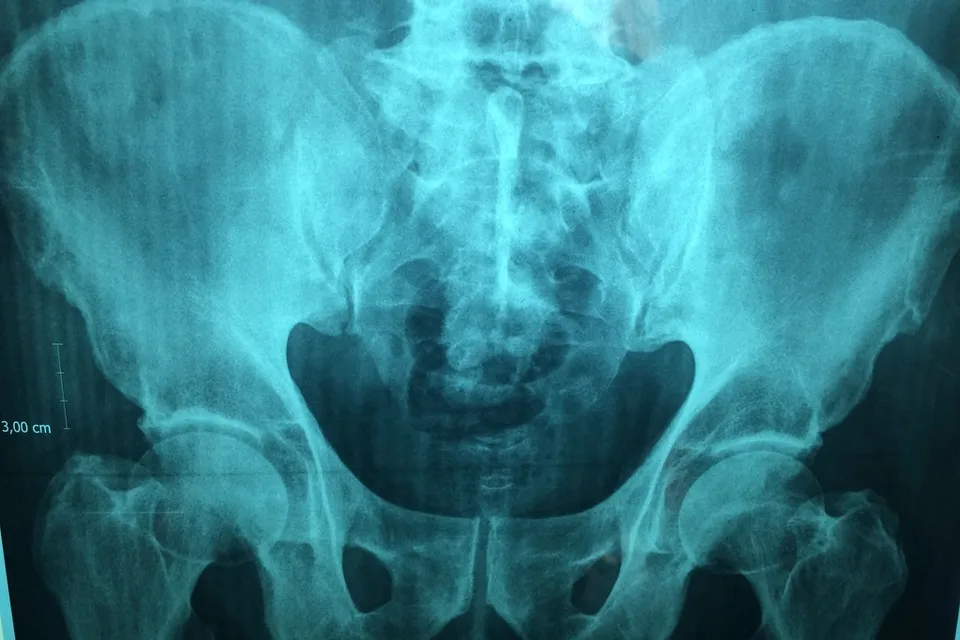
- Hold the cane in the hand opposite the painful hip. If the right hip hurts, the cane goes in the left hand.
- Move the cane and the painful leg together, then step through with the stronger leg.
- Set the right height: the handle at the wrist crease, with the elbow slightly bent.
- Choose a stable base if balance is also a concern. A four-point or self-standing base gives more support than a single tip.
General information, not medical advice. Hip pain can have many causes. Ask a doctor or physical therapist what's causing your parent's pain and whether a cane is right for them. Sudden, severe hip pain after a fall can mean a fracture: call 911.
Hip pain is one of the most common reasons older adults slow down, stop going out and start holding on to furniture. Arthritis, bursitis, a past fracture or recovery after a hip replacement can all make walking painful. A cane is one of the simplest tools that can help: used the right way, it takes weight off the sore hip, steadies balance and makes everyday walking more comfortable. Used the wrong way, in the wrong hand or at the wrong height, it can actually make things worse. This guide explains how a cane helps with hip pain, which hand to use, how to walk, which type of cane to choose, how to handle chairs and stairs, and other simple ways to protect a painful hip at home.
In this guide:
- how a cane helps a painful hip
- which hand to hold it in
- how to walk with it, step by step
- choosing the right type and height
- chairs, stairs and getting up
- other ways to ease hip pain at home
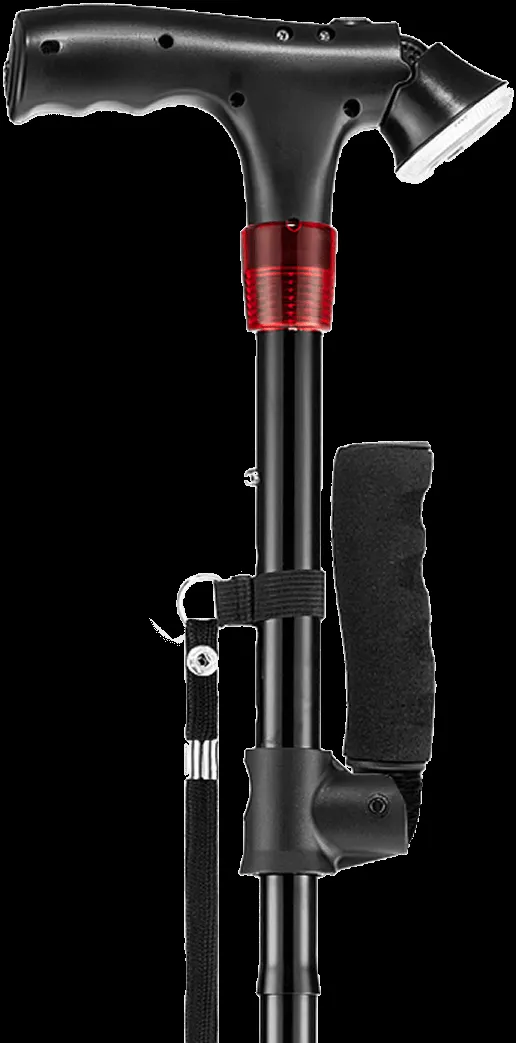
Our pick: the Ready Walker Cane
Self-standing folding cane with a 4-point pivoting base, a second handle for standing up, LED light and alarm. Supports up to 300 lb.
Check today's price →$59.99 · ships from Ohio · 30-day guarantee
How does a cane help hip pain?
When you walk, each hip carries your body weight for part of every step, and the muscles around the hip work hard to keep the pelvis level. If one hip is painful, the body often leans or limps to avoid it, which can strain the back, the knees and the other hip. A cane held in the opposite hand shares that load: as the sore leg takes a step, the cane takes some of the weight through the arm. Many people feel the difference straight away, with less pain, a more even step and better balance.
Hip pain is common in older adults. Arthritis is one of the main causes, and the CDC notes that arthritis affects millions of adults in the US, with rates rising sharply with age.
Which hand should hold the cane for hip pain?
The hand opposite the painful hip. It feels backward to many people at first, but it's the standard advice from physical therapists and orthopedic specialists:
- Right hip hurts → cane in the left hand.
- Left hip hurts → cane in the right hand.
Holding the cane on the opposite side mirrors the natural arm swing and shifts weight away from the sore hip. Using it on the same side tends to make people lean toward the painful hip. The orthopedic surgeons' site OrthoInfo explains how to use a cane correctly.
How do you walk with a cane for hip pain?
- Stand tall with the cane in the hand opposite the sore hip, tip slightly to the side of your foot.
- Move the cane and the painful leg forward together, about one small step.
- Put weight through the cane as the painful leg lands.
- Step through with the stronger leg, just past the cane.
- Repeat at a comfortable pace, looking ahead rather than at your feet.
Short, even steps are better than long strides. Our full step-by-step guide is how to use a cane.
What is the right cane height?
With your parent standing straight in their usual shoes, arms relaxed at their sides, the top of the cane handle should line up with the crease of the wrist. Holding the handle, the elbow should bend slightly, about 15 to 20 degrees. Too tall, and the shoulder hunches; too short, and they'll lean over it. See how to measure cane height.
Which type of cane is best for hip pain?
| Type | Best for | Notes |
|---|---|---|
| Single-point cane | Mild pain, good balance | Light and simple |
| Offset-handle cane | Mild to moderate pain | Puts weight directly over the shaft |
| Quad or four-point base cane | Pain plus balance concerns | More stable, can stand on its own |
| Self-standing cane with second handle | Pain, balance and trouble standing up | Stays upright and helps rise from a chair |
| Walker or rollator | Severe pain or very unsteady walking | Supports both sides |
For a detailed comparison, see quad cane vs single-point cane and walker vs cane.
Why do many families choose the Ready Walker?
- Pivoting four-point base: stands on its own and adapts to uneven ground, so it's always within reach.
- Second lower handle: helps push up from a chair, bed or toilet, a moment that's often painful with a sore hip.
- LED light: lights the floor for nighttime bathroom trips.
- Alarm: a loud sound to attract attention nearby (it doesn't call anyone).
- Aircraft-grade aluminum, supports up to 300 lbs.
- Tool-free height adjustment and a folding design for the car.
Read our Ready Walker review and see the benefits of a self-standing cane.
More support for a sore hip
Ready Walker: pivoting four-point base, second handle for standing up, LED light and alarm, supports up to 300 lbs. $59.99 with a 30-day money-back guarantee.
Check today's price →$59.99 · ships from Ohio · 30-day guarantee
How do you stand up from a chair with hip pain?
- Choose a firm chair with armrests, not a low, soft sofa.
- Scoot to the front edge of the seat.
- Place the stronger foot slightly back, under the knees; the painful leg can stay slightly forward.
- Lean forward, "nose over toes."
- Push up with both hands on the armrests, or one on the armrest and one on the cane's lower handle.
- Stand fully, pause to find your balance, then take the cane's main handle.
Sitting down is the reverse: back up until you feel the chair behind your legs, reach for the armrests and lower slowly. See how to stand up from a chair.
How do you use a cane on stairs with hip pain?
Use the handrail whenever there is one. The simple rule is "up with the good, down with the bad":
- Going up: step up with the stronger leg first, then bring the painful leg and the cane up to the same step.
- Going down: put the cane down first, then the painful leg, then the stronger leg.
Take one step at a time. Our guide how to use a cane on stairs has more detail.
Can you use a cane after hip replacement?
Many people move from a walker to a cane during recovery from hip replacement, but the timing and technique depend on the surgeon's instructions and any movement precautions. Follow the hospital's discharge plan and the physical therapist's advice. See our hospital discharge checklist.
What else helps hip pain at home?
- Keep moving gently: short, regular walks and exercises from a physical therapist often help more than resting all day.
- Raise seats: a firm cushion or a raised toilet seat makes sitting and standing easier.
- Sleep with a pillow between the knees when lying on the side.
- Wear supportive shoes with non-slip soles. See non-slip shoes for seniors.
- Use heat or cold as the doctor suggests.
- Remove trip hazards like loose rugs and cords.
- Stay at a healthy weight, which reduces the load on the hips.
Gentle strength and balance exercises can also help. See balance exercises for seniors.
Does hip pain raise the risk of falls?
It can. Pain changes the way people walk, weakens the muscles around the hip over time and makes it harder to recover from a stumble. And a fall can lead to a hip fracture, one of the most serious injuries for older adults. A well-fitted cane, good lighting and a clutter-free home all lower that risk. See fall prevention for seniors and osteoporosis and falls.
What are the most common mistakes?
- Holding the cane on the same side as the painful hip
- A cane that's too tall or too short
- Leaning heavily over the cane
- Taking long strides instead of short, even steps
- Leaving the cane out of reach when sitting down
- Using a worn rubber tip that slips
A self-standing cane solves the "out of reach" problem: it stays upright next to the chair or bed.
When should your parent see a doctor?
- pain that keeps getting worse or wakes them at night
- pain with swelling, redness or fever
- being unable to put weight on the leg
- a recent fall, even if they seem fine
- numbness or tingling down the leg
After a fall with severe hip pain or a leg that looks shorter or turned out, don't try to move them: call 911.
The bottom line
A cane for hip pain works best when it's:
- held in the hand opposite the painful hip
- moved together with the painful leg
- set at wrist height with a slight bend in the elbow
- stable enough for your parent's balance, with a four-point or self-standing base if needed
The Ready Walker combines a pivoting self-standing base, a second handle for standing up, an LED light and an alarm in one folding cane that supports up to 300 lbs. It's $59.99 on the official site with fast shipping from Ohio and a 30-day money-back guarantee.
Our pick: the Ready Walker Cane
Self-standing folding cane with a 4-point pivoting base, a second handle for standing up, LED light and alarm. Supports up to 300 lb.
Check today's price →$59.99 · ships from Ohio · 30-day guarantee
Frequently asked questions
Which hand should I hold a cane in for hip pain?
The hand opposite the painful hip. If the right hip hurts, hold the cane in the left hand.
How do you walk with a cane for hip pain?
Move the cane and the painful leg forward together, put weight through the cane, then step through with the stronger leg.
What height should a cane be?
The handle should line up with the wrist crease when standing straight, with the elbow slightly bent.
What type of cane is best for hip pain?
A single-point cane for mild pain; a four-point or self-standing cane if balance is also a concern; a walker for severe pain.
How do you use a cane on stairs with hip pain?
Up with the good leg first, down with the cane and the painful leg first, using the handrail.
When should hip pain be checked by a doctor?
If it keeps getting worse, wakes them at night, comes with swelling or fever, or follows a fall. After a fall with severe hip pain, call 911.

Laura Bennett
Laura Bennett is the pen name of the Aging Parents at Home editorial team at Iqueda Media LLC. We write for adult children who want to help their aging parents stay safe and independent at home. The team researches daily-living and safety products, reads the official guidance from public health and safety organizations, and checks prices, policies and buyer feedback. We are not doctors, nurses or physical therapists. Her guides are built on official public health and safety guidance, manufacturer information, checkout and return policies, and buyer feedback, and are updated when offers change. More about Laura.