
- Cane: a medical mobility aid with a handle you lean on to take weight off a weaker leg and improve balance. Used on the opposite side of the weaker leg.
- Walking stick (or hiking pole): taller, held higher, mainly for rhythm and stability on trails; not designed to bear much weight.
- Choose a cane for balance problems, leg weakness, pain or recovery.
- Choose a walking stick for hiking or general steadiness on uneven ground when no medical support is needed.
General information, not medical advice. A doctor or physical therapist can recommend the right mobility aid and fit it properly. In an emergency, call 911.
When an aging parent starts feeling unsteady, families often reach for whatever is handy: a hiking pole from the garage, a decorative walking stick or a drugstore cane. They may look alike, but they're designed differently and used differently. Choosing the wrong one can mean less support than your parent needs. This guide explains the difference between canes and walking sticks, who each is for, how to fit and use them, and when to consider a more stable option.
What's the difference between a cane and a walking stick?
| Cane | Walking stick | |
|---|---|---|
| Purpose | Support and balance; reduce load on a leg | Rhythm and stability while walking or hiking |
| Height | Wrist level | Often around elbow or chest height |
| Handle | Shaped for weight-bearing (offset, derby, T-handle) | Knob or strap; held higher on the shaft |
| Tip | Non-slip rubber tip, sometimes multi-point base | Rubber or metal tip for trails |
| Weight-bearing | Designed to bear some body weight | Not designed for much weight |
| Typical user | People with balance issues, weakness, pain or recovering from injury | Hikers, walkers wanting extra steadiness |
Who should use a cane?
- People with mild balance problems.
- Those with weakness, pain or arthritis in one leg.
- People recovering from injury or surgery, as advised.
- Anyone whose doctor or therapist recommends one.
See best cane for seniors and cane for balance problems.
Who should use a walking stick?
Walking sticks and trekking poles suit active people who want extra stability on trails, hills or uneven ground, and help with rhythm on long walks. They're not a substitute for a cane when someone needs support because of balance problems or weakness.
How do you fit a cane?
With shoes on and arms relaxed at the sides, the top of the cane should reach the crease of the wrist. When holding it, the elbow should bend about 15 to 20 degrees. The AAOS OrthoInfo explains cane fitting and use. See how to measure cane height.
How do you use a cane correctly?
- Hold the cane in the hand opposite the weaker or painful leg.
- Move the cane forward at the same time as the weaker leg.
- Step through with the stronger leg.
- Keep the cane close to the body, not far out to the side.
See how to use a cane and how to use a cane on stairs.
What types of canes are there?
- Single-point cane: light, for mild balance needs.
- Offset cane: handle positioned over the shaft for better weight distribution.
- Quad cane: four feet for more stability; stands on its own.
- Folding cane: convenient for travel; see folding vs regular cane.
- Self-standing canes with a pivoting base: more stability with a natural stride.
See quad cane vs single-point cane.
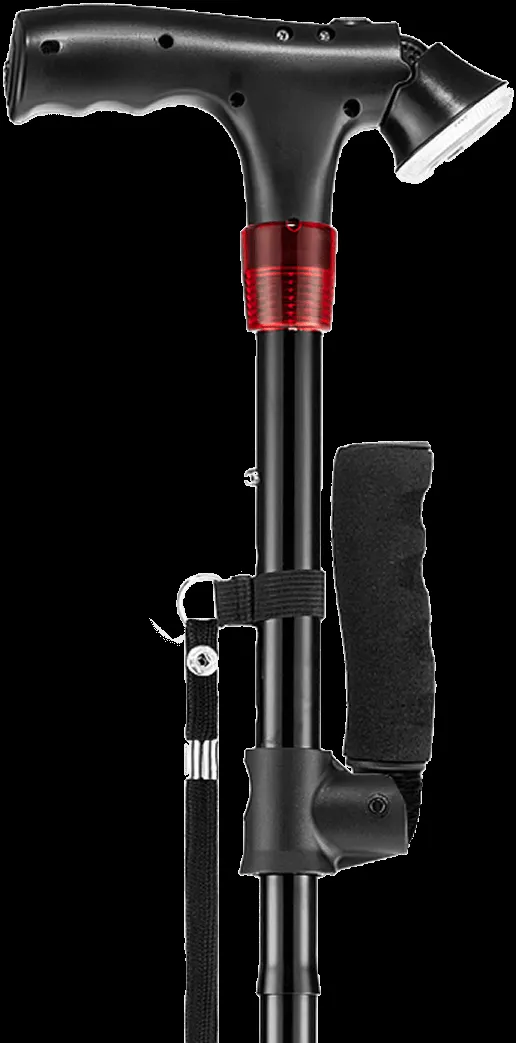
More stability than a single-point cane
Ready Walker: pivoting four-point base that stands on its own, a second handle for standing up, LED light and alarm. $59.99 with a 30-day money-back guarantee.
Check today's price →$59.99 · ships from Ohio · 30-day guarantee
Why consider the Ready Walker?
The Ready Walker has a pivoting four-point base that stands on its own, so it doesn't fall over when your parent lets go. It adds a second, lower handle to help push up from chairs and bed, a built-in LED light for nighttime and an alarm to get attention. It costs $59.99 with a 30-day money-back guarantee. Read our Ready Walker review and self-standing cane benefits.
What if your parent doesn't want a cane?
Many older adults resist canes because they feel it signals aging. Focus on independence: a cane helps them keep doing what they love. Modern canes come in many styles. A physical therapist's recommendation often carries weight. See when an aging parent refuses help.
When is a walker better?
If your parent needs to put significant weight on the aid, has balance problems on both sides or is very unsteady, a walker may be safer than a cane. See walker vs cane.
Why does the right aid matter?
Falls are common and dangerous for older adults; the CDC reports more than one in four adults 65+ fall each year. The right aid, fitted properly and used correctly, is one part of fall prevention.
How much does the Ready Walker cost?
The Ready Walker is $59.99, with a 30-day money-back guarantee and shipping from Ohio.
Can trekking poles replace a cane?
Some active older adults use two trekking poles for walks, which can add stability on trails. But they're not designed to bear weight the way a cane is, and they don't replace a cane recommended for balance problems or weakness. Ask a therapist before switching.
Which handle is most comfortable?
- Offset handle: puts weight directly over the shaft.
- Ergonomic or palm grip: spreads pressure across the hand, good for arthritis.
- Derby or T-handle: easy to grip and hang on a chair.
Comfort matters: if the handle hurts, your parent won't use the cane.
Why does the tip matter?
A worn, smooth rubber tip slips easily. Replace it when the tread wears down. For winter, consider an ice tip attachment. See cane ice tips.
What about decorative walking sticks?
Decorative or antique walking sticks often have hard tips, unusual heights and handles not meant for weight-bearing. They're lovely accessories but not substitutes for a medical cane.
Which is better for travel?
A folding cane packs easily and can be used in airports and on uneven sidewalks. See holiday travel with elderly parents.
Why see a physical therapist?
A therapist can assess your parent's balance and strength, recommend the right aid, set the height and teach safe use on stairs and curbs. A few sessions can make a big difference in confidence and safety.
Which is better on stairs?
On stairs, a cane is used with a handrail: going up, lead with the stronger leg; going down, lead with the cane and the weaker leg ("up with the good, down with the bad"). Walking sticks aren't designed for this kind of support. See stair safety for seniors.
What about walking at night?
A cane with a built-in light helps your parent see the path and be seen. Add night lights inside the home. See night-time fall prevention.
How much do canes cost?
Basic canes are inexpensive; specialized designs with wider bases, lights and extra handles cost more but add stability and convenience.
Can someone use both?
Yes. Some people use a cane for daily life and a pair of trekking poles for nature walks, with their therapist's okay.
Which hand holds the cane?
The hand opposite the weaker leg. This mirrors natural walking and gives the best support. Walking sticks are often held in either hand or used in pairs.
What's the takeaway?
For support and balance, choose a properly fitted cane; for trail rhythm, choose a walking stick or poles. When in doubt, ask a physical therapist.
What mistakes should you avoid?
- Using a borrowed cane without adjusting the height.
- Holding the cane on the same side as the weaker leg.
- Relying on a hiking pole for weight-bearing support.
- Keeping a worn, slippery rubber tip.
- Placing the cane too far forward or to the side.
Is a cane a good gift?
If your parent has said they'd like one, a stylish, well-fitted cane can be a thoughtful gift. Involve them in choosing it, since comfort and style affect whether it gets used.
Does cane weight matter?
Lighter aluminum or carbon fiber canes are easier to lift with each step, which helps with fatigue and arthritis. Bases that stand on their own add a little weight but mean the cane doesn't need to be propped up or picked up from the floor, which many older adults find easier overall.
Should you choose an adjustable cane?
Adjustable canes make it easy to fine-tune height for different shoes and to share between settings. Make sure the locking button clicks securely.
Do canes come in nicer styles?
Yes. Many canes come in colors and patterns, which can make them feel more personal and less clinical.
When should a cane be replaced?
When it's bent, the height lock slips or the handle is cracked.
Should your parent try before buying?
If possible, yes. Trying a few canes at a medical supply store with a therapist's guidance helps find the right handle, weight and height for comfort and support.
The bottom line
A cane is a medical support aid fitted at wrist height and used on the opposite side of the weaker leg; a walking stick is for steadiness and rhythm on walks and trails. If your parent needs support, choose a cane, get it fitted and consider a more stable, self-standing design.
For extra stability, our pick is the Ready Walker. Check today's Ready Walker price.
Sources
- AAOS OrthoInfo. How to Use Crutches, Canes and Walkers.
- Centers for Disease Control and Prevention. Older Adult Falls Data.
- Official Ready Walker product page, checked October 2026.
Frequently asked questions
What is the difference between a cane and a walking stick?
A cane is a support aid fitted at wrist height; a walking stick is for rhythm and steadiness on walks.
Can a walking stick replace a cane?
Not if your parent needs support for balance problems or weakness.
Which hand should hold a cane?
The hand opposite the weaker or painful leg.
How tall should a cane be?
The top should reach the wrist crease with arms relaxed.
When is a quad or self-standing cane better?
When more stability is needed than a single-point cane provides.
When is a walker better than a cane?
When someone needs to bear significant weight or is unsteady on both sides.

Laura Bennett
Laura Bennett is the pen name of the Aging Parents at Home editorial team at Iqueda Media LLC. We write for adult children who want to help their aging parents stay safe and independent at home. The team researches daily-living and safety products, reads the official guidance from public health and safety organizations, and checks prices, policies and buyer feedback. We are not doctors, nurses or physical therapists. Her guides are built on official public health and safety guidance, manufacturer information, checkout and return policies, and buyer feedback, and are updated when offers change. More about Laura.