
- When: most people start with a walker, then move to a cane when their surgeon or physical therapist says they're ready, often a few weeks after surgery.
- Which hand: hold the cane in the hand opposite the new hip.
- How: move the cane and the operated leg forward together, then step through with the other leg.
- Height: the handle should be at wrist level with arms relaxed, elbow slightly bent.
- Stairs: "up with the good, down with the bad," holding the rail.
- Follow your hip precautions and your therapist's plan.
Hip replacement is one of the most successful surgeries for older adults. Most people walk on the new hip the same day or the next, and many return to everyday activities within a few months. Walking aids are a big part of that recovery: usually a walker first, then a cane, then walking on your own. Using a cane correctly protects the new joint, reduces pain, improves balance and helps prevent falls during the weeks when muscles are still healing. This guide explains when to switch to a cane, which hand to use, how to walk and use stairs, how to set the right height, how to sit and stand safely, home setup tips and when to stop using the cane.
In this guide:
- walker to cane: when to switch
- which hand holds the cane
- walking step by step
- stairs, chairs and cars
- setting the right height
- home setup and fall prevention
General information for families, not medical advice. Always follow the instructions of your parent's surgeon and physical therapist, including any hip precautions. Call the surgeon for new pain, swelling, fever or redness at the incision, and call 911 for a fall with injury, chest pain or trouble breathing.
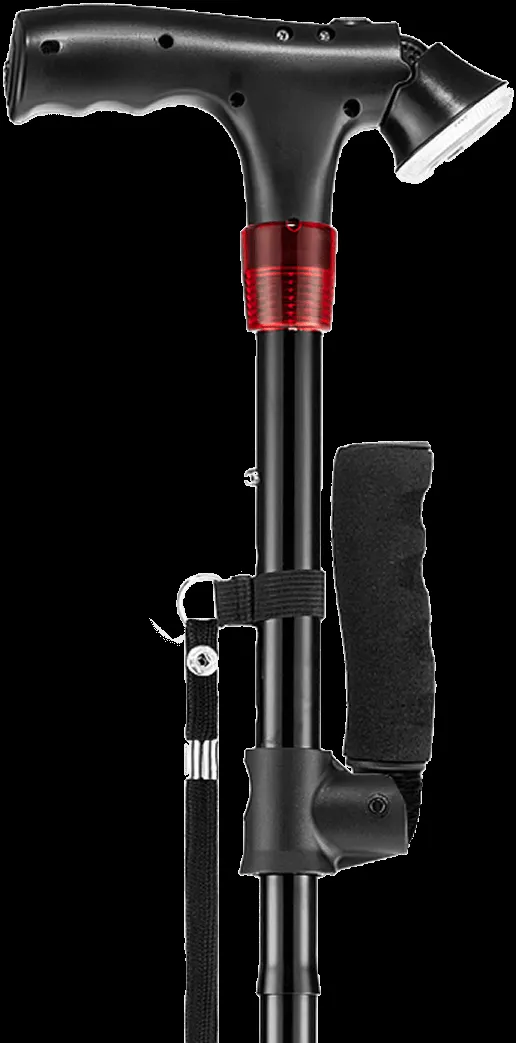
Our pick: the Ready Walker Cane
Self-standing folding cane with a 4-point pivoting base, a second handle for standing up, LED light and alarm. Supports up to 300 lb.
Check today's price →$59.99 · ships from Ohio · 30-day guarantee
When do you switch from a walker to a cane?
Timing depends on the person, the type of surgery and how fast strength and balance return. Many people move from a walker to a cane a few weeks after surgery, when they can walk without limping much, bear weight comfortably and feel steady. The physical therapist usually decides, often after testing balance and walking. Don't switch early just to feel independent; a fall on a new hip can be serious. The AAOS OrthoInfo site has a guide to using crutches, canes and walkers.
Which hand should hold the cane?
Hold the cane in the hand opposite the new hip. If the right hip was replaced, hold the cane in the left hand. This way the cane supports the operated side as it takes weight and helps you walk with a more natural rhythm. It may feel backward at first, but it quickly becomes natural.
How do you walk with a cane after hip surgery?
- Stand tall, with the cane about 4 inches to the side of your stronger foot.
- Move the cane and the operated leg forward together.
- Put weight through the cane and the operated leg as allowed.
- Step through with the stronger leg.
- Take small, even steps and look ahead, not down.
- Turn with small steps, never pivoting on the operated leg.
See how to use a cane for the basics.
A cane that stays upright when you sit
Ready Walker is a self-standing cane, so it stands on its own next to the chair or bed and there's no bending to pick it up. $59.99, with a 30-day guarantee, ships from Ohio.
Check today's price →$59.99 · ships from Ohio · 30-day guarantee
How do you set the right cane height?
Stand in your usual shoes with arms relaxed at your sides. The top of the handle should line up with the crease of the wrist, and your elbow should bend slightly (about 15 to 20 degrees) when you hold it. A cane that's too high pushes the shoulder up; too low makes you lean. See how to measure cane height.
How do you use stairs with a cane after hip replacement?
- Going up: hold the rail, step up with the stronger leg, then bring the operated leg and cane up.
- Going down: hold the rail, put the cane and operated leg down first, then the stronger leg.
- Remember: "up with the good, down with the bad."
- Take one step at a time and have someone nearby at first.
See how to use a cane on stairs and stair safety for seniors.
How do you sit and stand safely?
- choose a firm chair with armrests and a higher seat
- back up until you feel the chair behind your legs
- slide the operated leg forward slightly
- reach back for the armrests and lower yourself slowly
- to stand, scoot forward, push up with both arms and keep the operated leg slightly forward
- get your balance before reaching for the cane
Follow any hip precautions about bending or crossing legs. See how to stand up from a chair.
What about getting into a car?
Back up to the seat, sit down first, then swing both legs in together, keeping the knees apart as your therapist advises. Move the seat back and recline it slightly for room. A plastic bag on the seat can help you swivel. See getting in and out of a car.
How do you set up the home for recovery?
- clear paths and remove throw rugs and cords
- add night lights between the bedroom and bathroom
- use a raised toilet seat and grab bars
- place everyday items between waist and shoulder height
- set up a recovery chair with armrests
- keep a phone within reach
See fall prevention for seniors and the hospital discharge checklist.
When can you stop using the cane?
Many people use a cane for a few weeks to a couple of months, then stop when they can walk without a limp, feel steady and the therapist agrees. Some keep a cane for longer walks, uneven ground or bad weather. Using a cane longer than needed is better than a fall.
Which exercises help recovery?
Follow the exercise plan from the physical therapist. It usually includes walking, gentle strengthening for the hip and thigh muscles and balance work. The NIA explains how strength, balance and endurance exercise help older adults. See balance exercises for seniors.
Where does Ready Walker fit in?
After hip replacement, bending to pick up a cane that slipped off a chair can be hard and may go against hip precautions. Ready Walker is a self-standing cane: its base lets it stand upright on its own next to the chair, bed or toilet, so it's always within reach. It's adjustable, folds for travel and costs $59.99, with a 30-day guarantee and shipping from Ohio. Check with the therapist that a cane is right for your stage of recovery. Read our Ready Walker cane review and why self-standing canes help.
What are hip precautions?
Depending on the surgical approach, the surgeon may give precautions for the first weeks, such as not bending the hip past 90 degrees, not crossing the legs and not turning the operated leg inward or outward. These protect the new joint while it heals. Precautions vary, so follow your parent's surgeon's instructions exactly, and ask the therapist to show safe ways to dress, sit, bathe and pick things up. A reacher, sock aid and long-handled shoe horn help.
What if walking with the cane hurts?
Some soreness during recovery is normal, especially after exercise. But sharp pain, pain that gets worse, new swelling in the leg, warmth or redness at the incision, fever or calf pain need a call to the surgeon. Calf pain and swelling can be a sign of a blood clot, which needs prompt medical care. Shortness of breath or chest pain is an emergency: call 911.
How do you walk outdoors with a cane?
- start on flat, even surfaces like sidewalks and indoor malls
- avoid wet leaves, ice and gravel in the early weeks
- wear supportive shoes with non-slip soles
- add an ice tip to the cane in winter; see cane ice tips
- walk with someone at first and carry a phone
How can family help during recovery?
Family members can set up the home before surgery, drive to appointments, help with meals and walk alongside during the first weeks. Encourage your parent to do the therapy exercises and walk as directed, even when it's tiring. Notice signs of discouragement or low mood, which are common during recovery. See how to help an elderly parent walk and a caregiving plan.
Can you travel with a cane after hip surgery?
Ask the surgeon when travel is safe, since long trips can raise the risk of blood clots. When cleared, a folding cane fits in a bag, and airports offer wheelchair assistance for long walks to the gate. On flights or long car rides, walk or do ankle exercises every hour.
How do you get in and out of bed?
Keep the cane or walker within reach of the bed, sit on the edge first, then swing the legs in or out together as the therapist shows. A firm mattress at the right height makes it easier. See how to help a parent get out of bed.
The bottom line
Using a cane after hip replacement:
- switch from a walker when the therapist says you're ready
- hold the cane in the hand opposite the new hip
- move the cane and operated leg together, then step through
- on stairs: up with the good, down with the bad
- set the handle at wrist height and follow your hip precautions
Ready Walker is a self-standing cane that stays within reach, $59.99 with a 30-day guarantee.
Our pick: the Ready Walker Cane
Self-standing folding cane with a 4-point pivoting base, a second handle for standing up, LED light and alarm. Supports up to 300 lb.
Check today's price →$59.99 · ships from Ohio · 30-day guarantee
Frequently asked questions
Which hand do you hold a cane in after hip replacement?
In the hand opposite the new hip. If the right hip was replaced, hold the cane in the left hand.
When can you switch from a walker to a cane after hip surgery?
When your surgeon or physical therapist says you're ready, often a few weeks after surgery.
How long do you need a cane after hip replacement?
Many people use one for a few weeks to a couple of months, until they walk steadily without a limp.
How do you climb stairs with a cane after hip surgery?
Up with the good leg first, down with the operated leg and cane first, holding the rail.
What height should a cane be?
The handle should line up with your wrist crease when your arms hang relaxed, with the elbow slightly bent.
Is a self-standing cane useful after hip replacement?
It can be, because it stays upright when you sit, so you don't have to bend to pick it up.

Laura Bennett
Laura Bennett is the pen name of the Aging Parents at Home editorial team at Iqueda Media LLC. We write for adult children who want to help their aging parents stay safe and independent at home. The team researches daily-living and safety products, reads the official guidance from public health and safety organizations, and checks prices, policies and buyer feedback. We are not doctors, nurses or physical therapists. Her guides are built on official public health and safety guidance, manufacturer information, checkout and return policies, and buyer feedback, and are updated when offers change. More about Laura.